A protein shape becomes a template
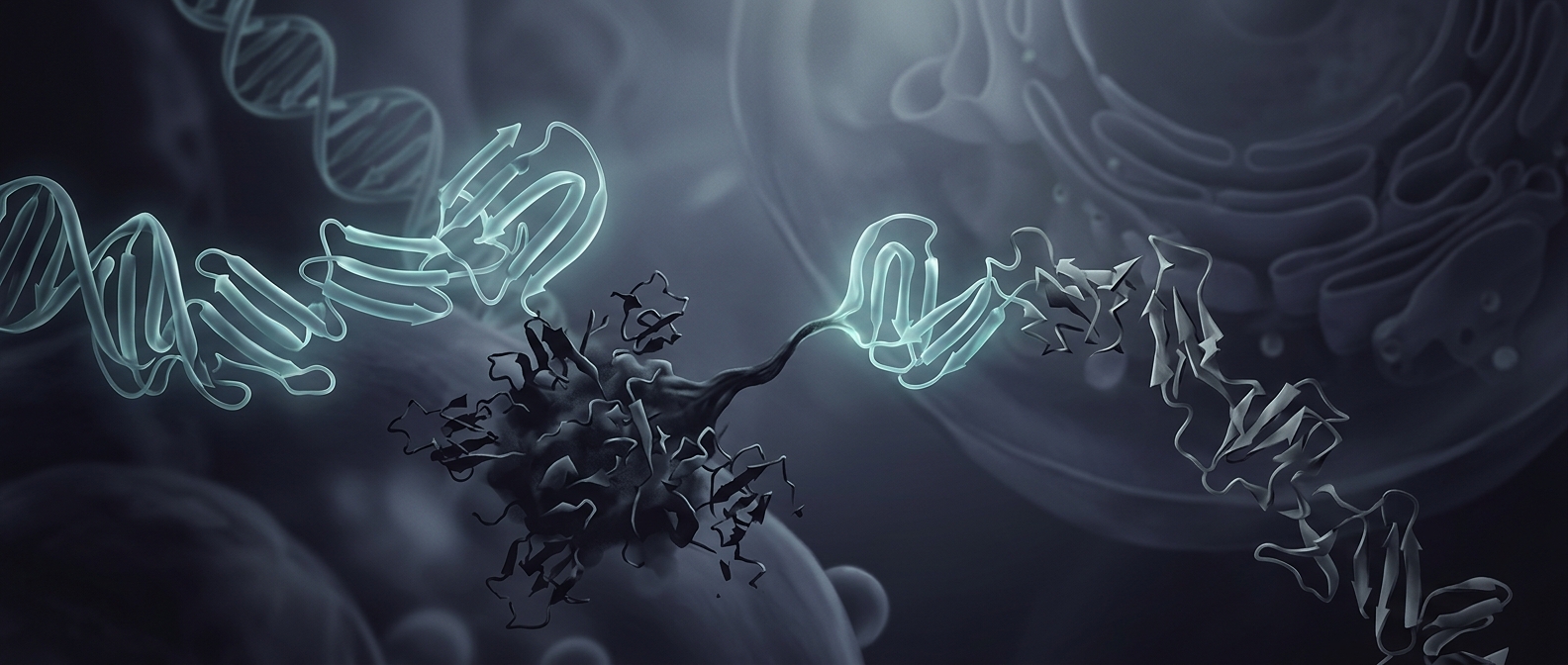
Proteins are chains of building blocks that fold into shapes their cells can use. In prion disease, a prion protein adopts an abnormal shape that can bind to the same kind of normally folded protein and induce it to change shape, too. The process is called templated misfolding: the abnormal protein does not copy a gene; it passes on a structural pattern.
Each newly misfolded protein can help convert others, so the change can spread through tissue. The abnormal forms also tend to resist the cell’s usual systems for breaking down unwanted proteins. They can accumulate in clusters, though the exact steps that injure cells are not fully understood.
Why the brain is especially vulnerable
Prion diseases, such as Creutzfeldt-Jakob disease, progressively damage the brain. As nerve cells are lost and tissue architecture breaks down, tiny spaces can give affected brain tissue a porous, sponge-like appearance under a microscope. The visible damage is the end of a longer process: protein shape changes build up over time, disrupting the tissue that supports thinking, movement, and other vital functions.
Prion diseases can arise without a known exposure, result from inherited changes that make misfolding more likely, or—rarely—be acquired through particular contaminated tissues or medical exposures. They are not spread by ordinary social contact. Their unusual biology explains why they are difficult to treat: the harmful pattern is carried by a protein’s shape, not by a piece of genetic material that conventional treatments could simply target.