A car that carried its own power plant
A steam car did not need a gearbox to turn engine power into motion. Heat boiled water in a compact boiler; the resulting steam pushed pistons, which drove the wheels. The boiler and burner were therefore not accessories but the heart of the vehicle—and they had to work while the car bounced, climbed, and accelerated.
Steam also meant water was part of the fuel supply in a practical sense. As the engine used steam, the car needed a way to replace the water and keep it circulating through the boiler. Pumps and controls had to maintain the right flow while the burner kept adding heat. Too little water could expose heated boiler surfaces that were meant to be cooled by it.
The danger hidden inside the boiler
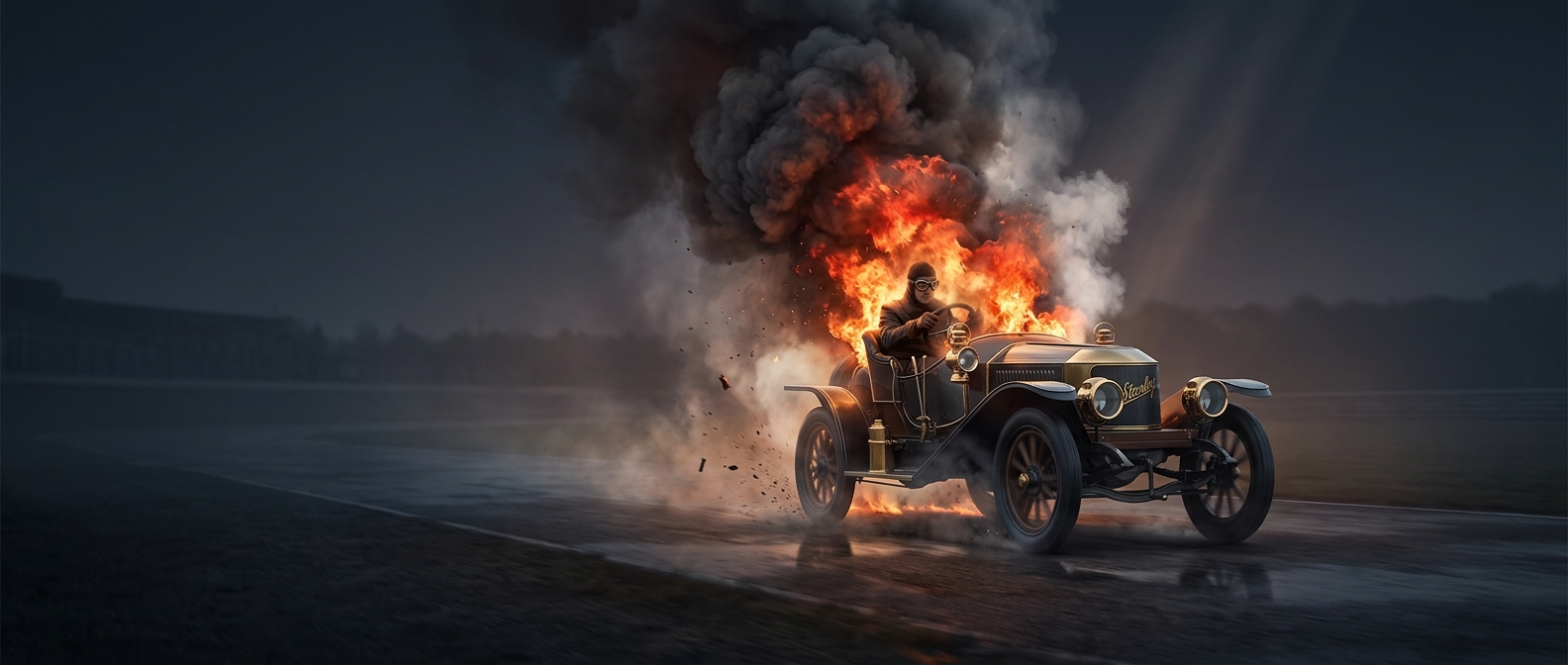
A boiler is a pressure vessel: a container designed to hold pressurized steam. Its metal must withstand both heat and pressure. If water fell too low, exposed metal could overheat and weaken. A failure could release the boiler’s stored pressure abruptly, turning a mechanical problem into a severe hazard.
That created a demanding engineering tradeoff. A car needed a boiler small and light enough to travel, yet strong and carefully controlled enough to contain steam at high pressure. The driver could not treat water level as a minor maintenance detail; it was directly tied to whether the power plant remained safe. In a steam car, keeping the boiler supplied was part of keeping the car in motion—and keeping its pressure contained.