A tower that gets less stable with every step
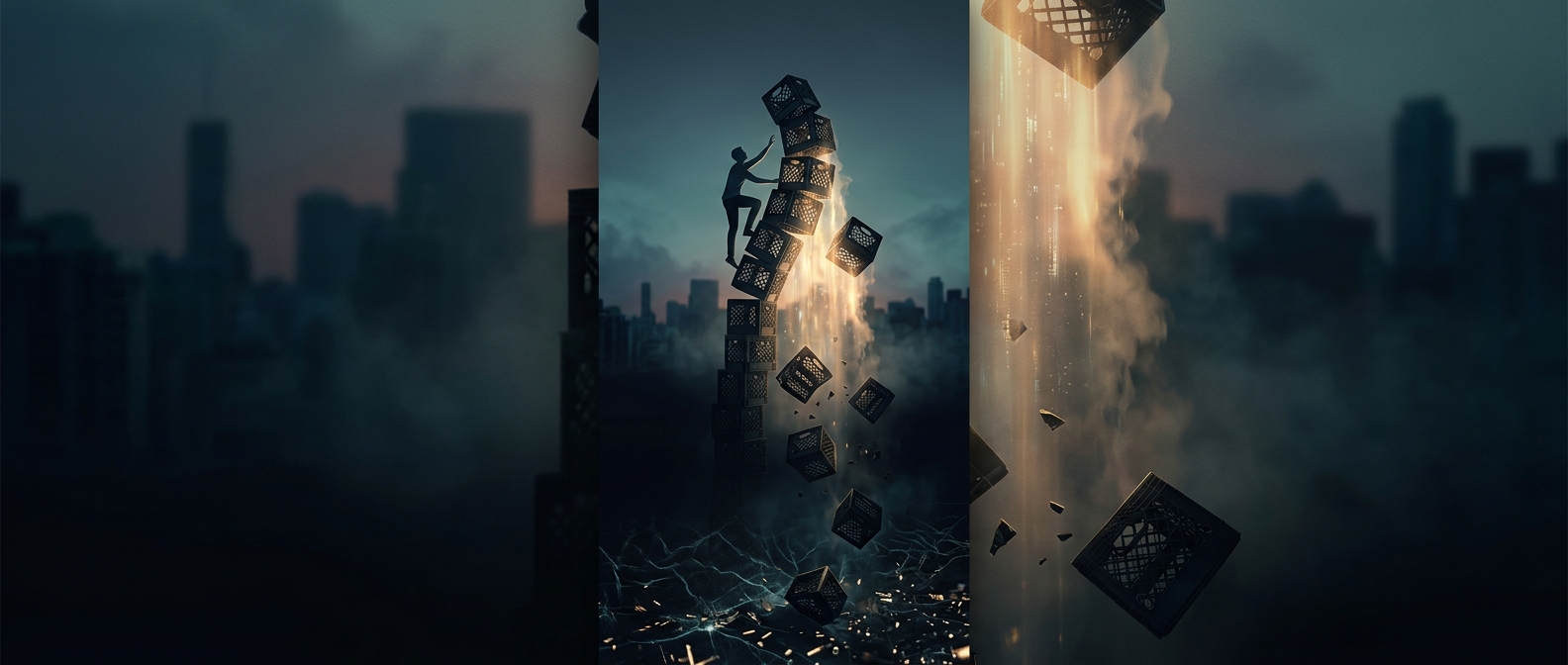
Milk crates are built to hold goods, not to form a staircase. In the challenge, people stacked them into a pyramid and tried to climb up one side and down the other. Each crate shifted slightly underfoot; as the climber rose, their weight also pushed against a taller, less stable stack. A small wobble near the top could bring the whole structure down.
The fall was part of the spectacle—but it was also the point at which the stunt stopped being a game. Crates could slide out, and a person could tumble from several feet up onto a hard surface. Unlike a controlled athletic fall, there was no padded landing or dependable way to predict where the crates would go.
The spectacle turned into a warning
The format rewarded a visible test of nerve: each successful climb invited another attempt, while a collapse made for dramatic footage. But injuries and emergency-room visits changed what viewers saw in those clips. The same wobbling tower that had made the challenge exciting now showed how quickly a stunt could end in a painful fall.
That shift helped the trend burn out. The risk was built into the setup, not an unusual mishap that could be solved by a simple technique. As the novelty wore off and the consequences became harder to ignore, the challenge became less an invitation to copy a daring climb than a warning about what could happen when a stack of crates was mistaken for a structure meant to bear a person’s weight.