How a “steel birds” line became a 9/11 prediction
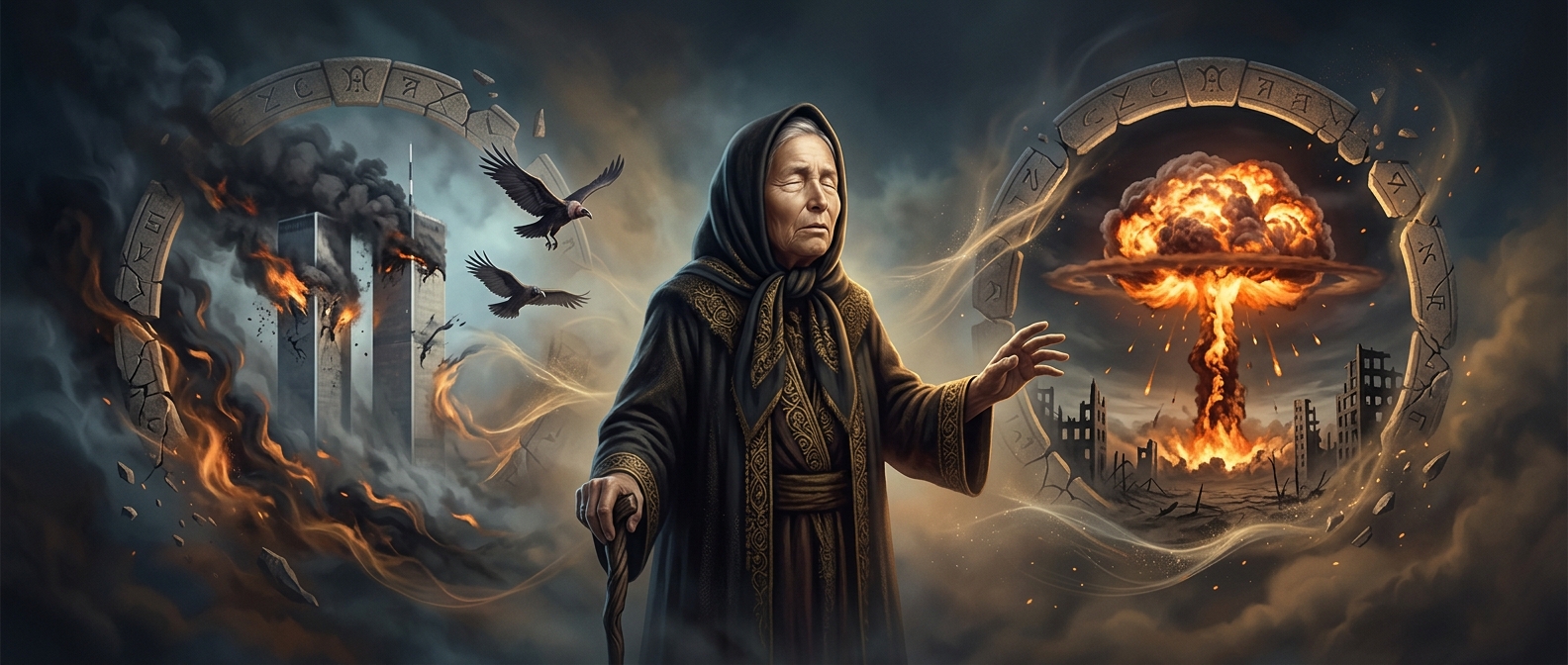
Baba Vanga was a Bulgarian mystic whose followers and later retellings credited her with foreseeing major events. The phrase often presented as her prediction of the September 11 attacks describes “steel birds” striking “the American brethren.” After the attacks, that imagery seemed to fit passenger planes hitting the World Trade Center. But the fit depends on wording attributed to Vanga after the fact: there is no well-established contemporaneous record showing that she made this precise prediction before 2001.
That gap matters because a prediction is testable only if its wording and timing are fixed in advance. A vivid phrase passed along through translations, recollections, and later publications can be reshaped as people connect it to an event.
Why failed predictions fade from the story
The same collections of claims include a nuclear World War III supposedly set for 2010 and the disappearance of Europe by 2016. Neither happened. Yet an apparent hit can travel farther than several misses: it is dramatic, easy to summarize, and gains meaning from hindsight. Broad or poetic language also leaves room to match it to more than one event.
This is a familiar pattern in prophecy lore. People remember the striking correspondence and may overlook the claims that did not come true. That does not require deliberate deception; repetition and selective attention can make an uncertain attribution sound increasingly settled.
The important distinction
Vanga’s fame rests partly on predictions attached to her name, but attribution is not proof that she stated them in advance. The “steel birds” line is best understood as a story later linked to 9/11, not as a securely documented forecast. The failed 2010 and 2016 predictions show why the full record matters: a prophecy should be judged by what was recorded beforehand, including the predictions that missed.