Why a diamond can burn without melting
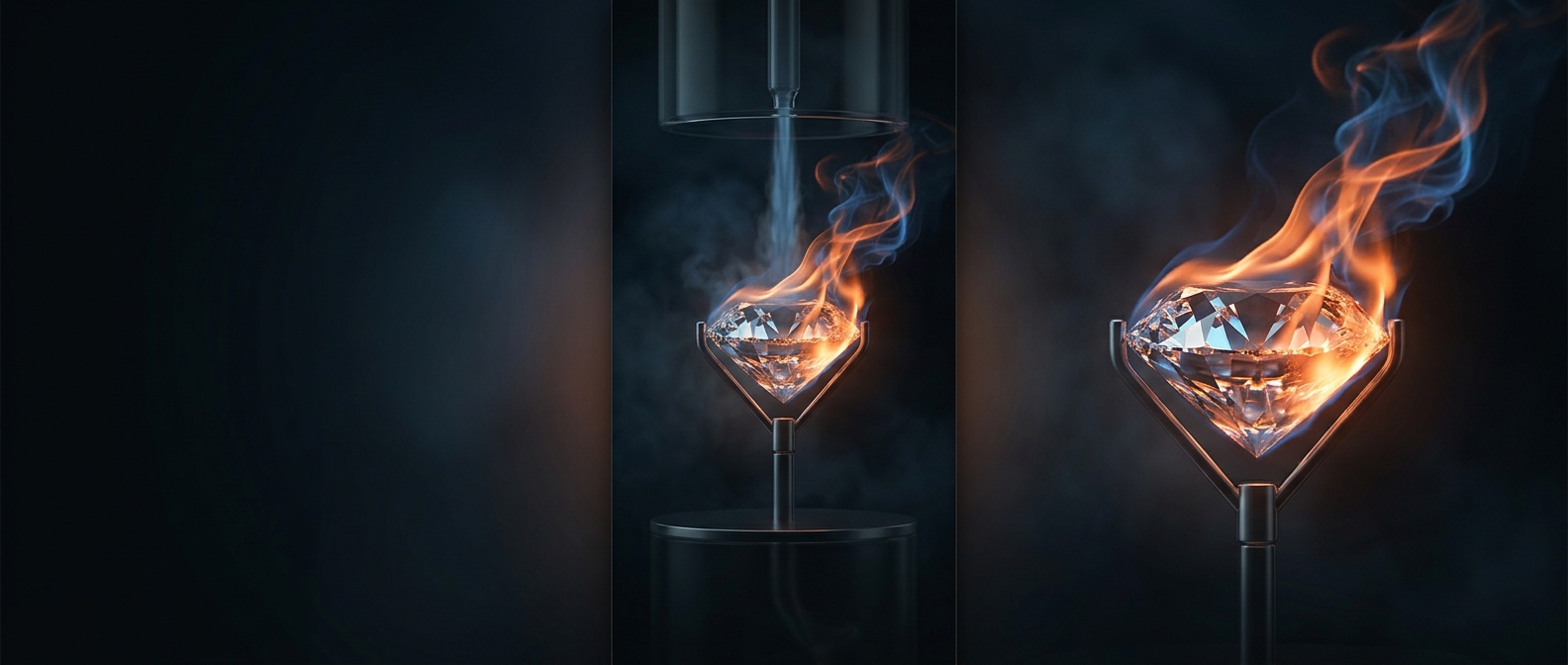
A diamond is a crystal made of carbon atoms. Its hardness comes from the way those atoms are bonded in a rigid, three-dimensional network—not from being chemically inert. In air hot enough to start the reaction, oxygen can combine with carbon at the diamond’s surface, producing carbon dioxide gas.
That distinction explains why the diamond need not become liquid first. Melting is a physical change; burning is a chemical change. Melting would loosen the crystal’s structure while leaving its carbon as carbon. Combustion instead rearranges the atoms: oxygen joins the carbon, and the resulting gas escapes into the air.
The reaction begins at the surface
Oxygen cannot react with carbon sealed inside an untouched crystal; it reaches the diamond from the outside. Heat supplies the energy needed to get the reaction going, and as surface carbon is converted to gas, more of the crystal is exposed. Under suitable conditions, the diamond is gradually consumed rather than pooling into a molten drop.
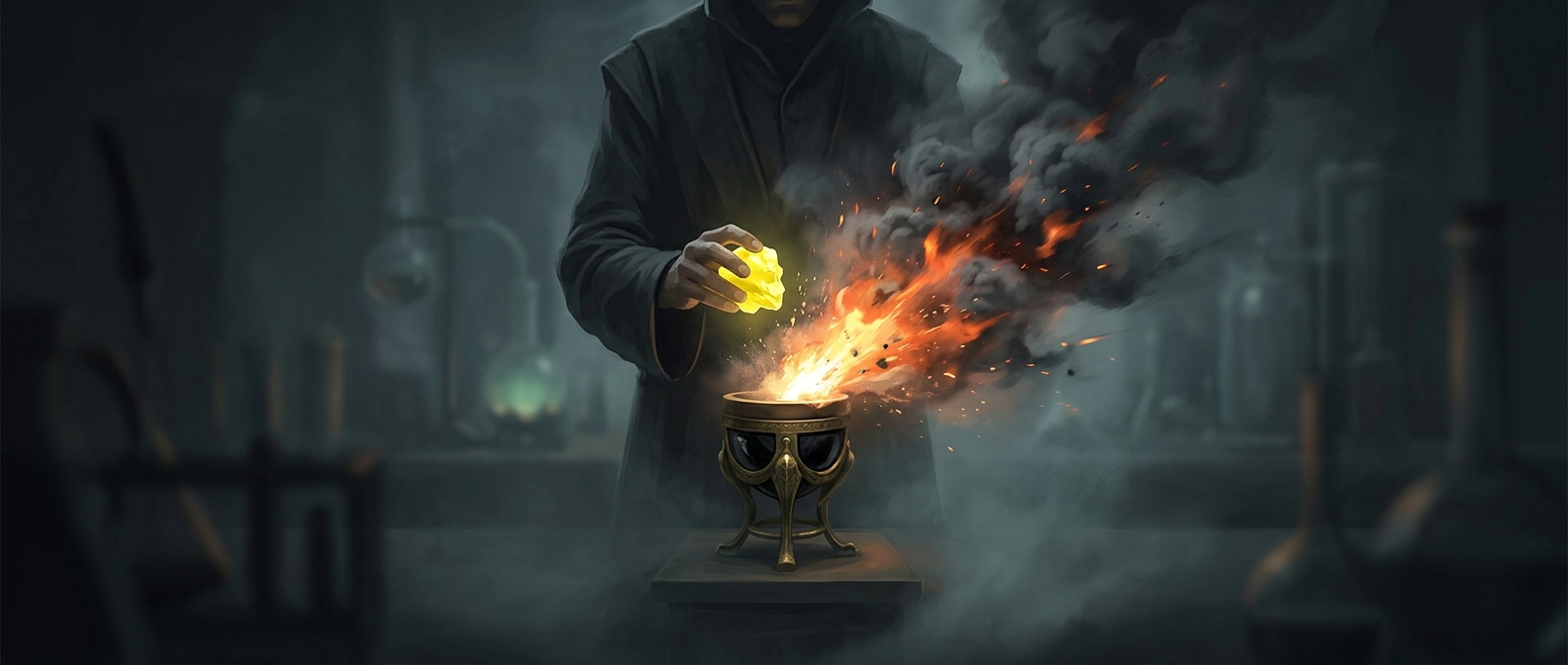
The phrase “go up in smoke” is vivid but not quite literal: carbon dioxide is invisible. What disappears is the solid diamond, while the products of the reaction disperse as gas. The memorable point is that a material famous for surviving scratches can still be destroyed by a different kind of stress: enough heat and oxygen can change its chemistry before it ever melts.