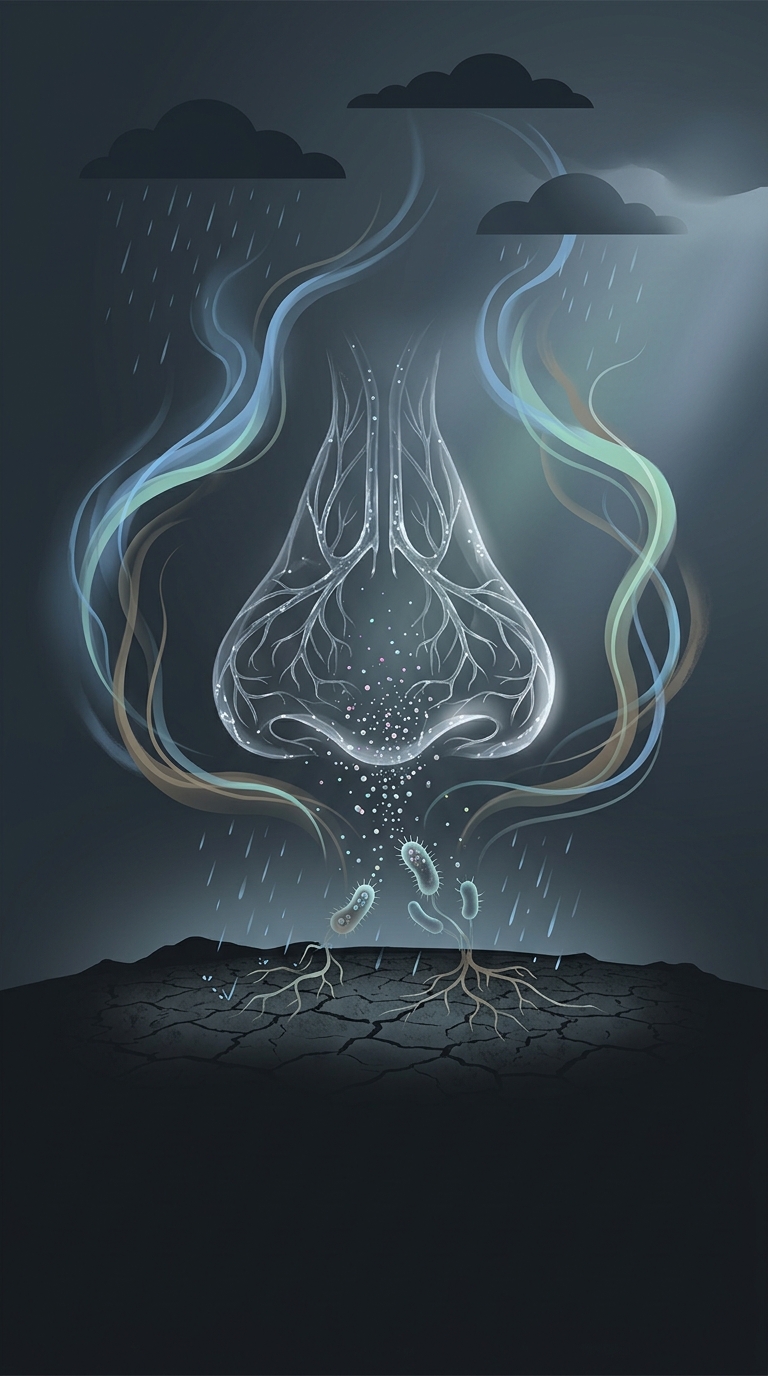
How rain turns soil into an airborne scent
A dry patch of ground can hold scent-producing compounds without sending much of them into the air. When a raindrop hits, it traps a small pocket of air against the soil. The pocket forms a bubble that rises through the water on the surface and bursts, flinging tiny droplets upward. Those droplets carry volatile compounds—molecules that readily evaporate and travel through the air—toward a nearby nose.
This process is especially effective on porous ground, where water can spread through small spaces between grains. The impact does more than wet the surface: it briefly converts material in the soil into a fine airborne mist.
Two ingredients, different origins
The familiar smell is a blend, not a single substance. Some of its notes come from oils that certain plants release and that can linger in dry soil. Another key note comes from geosmin, an earthy-smelling compound made by soil microbes, including bacteria. Geosmin can be present in soil even when the ground looks bare.
Rain helps these compounds reach the air, but the scent depends on what has accumulated locally. Soil type, plant material, and microbial activity all affect the mixture, which is why the smell can seem stronger or different in one place than another.
Why the first drops can smell strongest
After a long dry spell, compounds have had time to collect at the surface. The first impacts can launch droplets carrying that buildup; as rain continues, the ground becomes saturated and the supply of easily released material changes. The result is a brief sensory event: the rain does not create the earthy smell so much as lift it from the soil and deliver it to the air.