What Changes When a Ritual Becomes a Post?
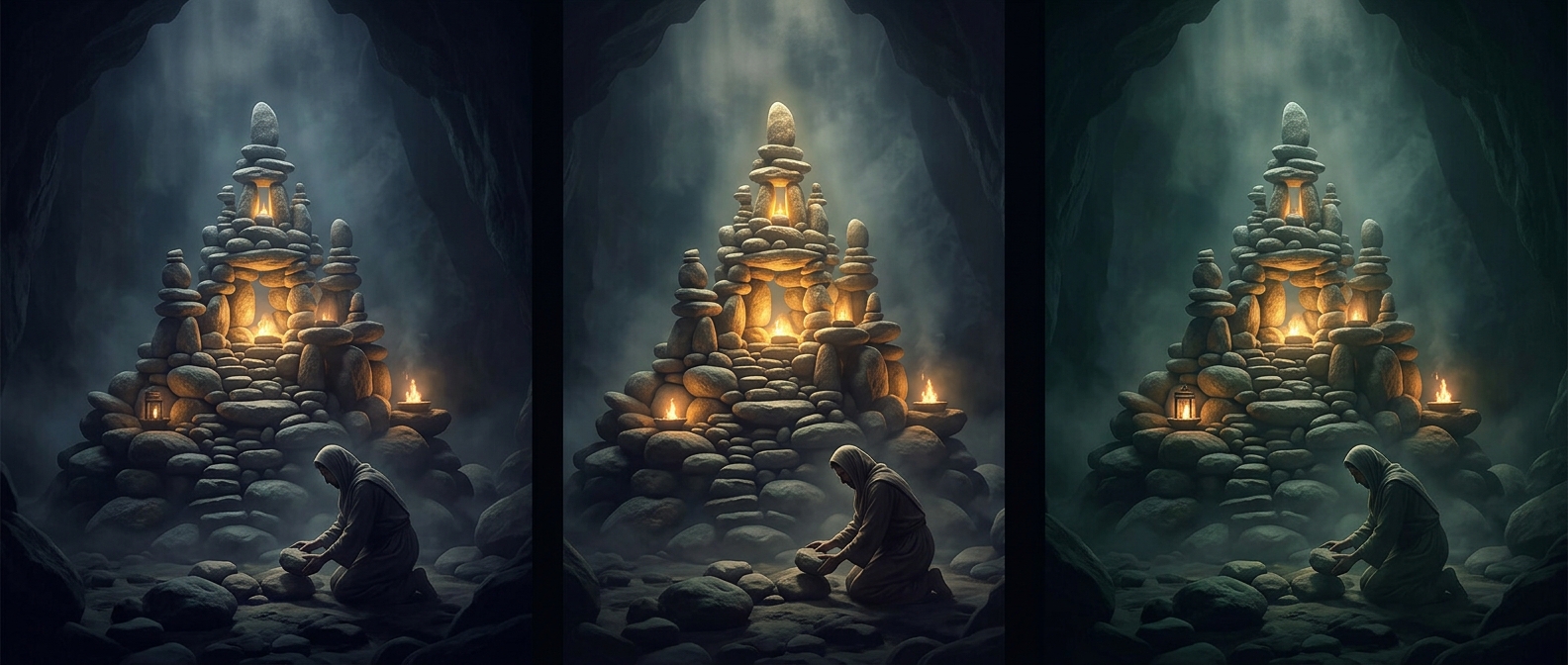
A private ritual can be slow, repetitive, and meaningful precisely because no one else is watching. Posting it changes the setting: the camera becomes an audience, and a short video has to make its meaning legible quickly. A candle, a spoken phrase, or a crystal can serve as a visual cue that viewers recognize even if they do not share the creator’s beliefs.
That does not make every online practice insincere. Some people use videos to document a routine, find others with similar interests, or learn a practice they encountered elsewhere. Others stage rituals partly for entertainment. The same image can carry devotion for its maker and comedy, curiosity, or skepticism for a viewer.
The Platform Shapes the Practice
Short-form feeds reward material that is easy to recognize and watch: a striking setup, a clear sequence, and a satisfying ending. Creators may therefore compress or dramatize practices that, outside the video, are less visual or take longer. Hashtags and comments also turn a solitary act into a conversation, where people compare interpretations, ask questions, or repeat a trend.
This visibility has a tradeoff. A ritual detached from its community or history can become a set of aesthetic props, especially when viewers encounter it only as a quick clip. But online circulation can also give people a place to experiment with meaning beyond formal institutions. The screen does not settle whether a ritual is profound or performative; it makes both interpretations visible at once. A candlelit video can be someone’s sincere practice and someone else’s meme—and the comment section is part of how that tension plays out.