Four letters carry the sequence
DNA is built from four chemical bases, usually abbreviated A, C, G, and T. A genome sequence is a record of their order—more like a very long string of letters than a complete blueprint showing every detail of a working body. Because there are only four possible letters at each position, a computer can represent each one with very little data. That is why a sequence containing billions of positions can fit in a few gigabytes.
The file does not contain billions of separate instructions for making body parts. Much of the sequence does not directly specify proteins, and the effects of a gene depend on when and where cells use it. The same DNA is present in nearly all the body’s cells, but a skin cell and a nerve cell behave differently because they activate different sets of genes.
A sequence is not a living genome
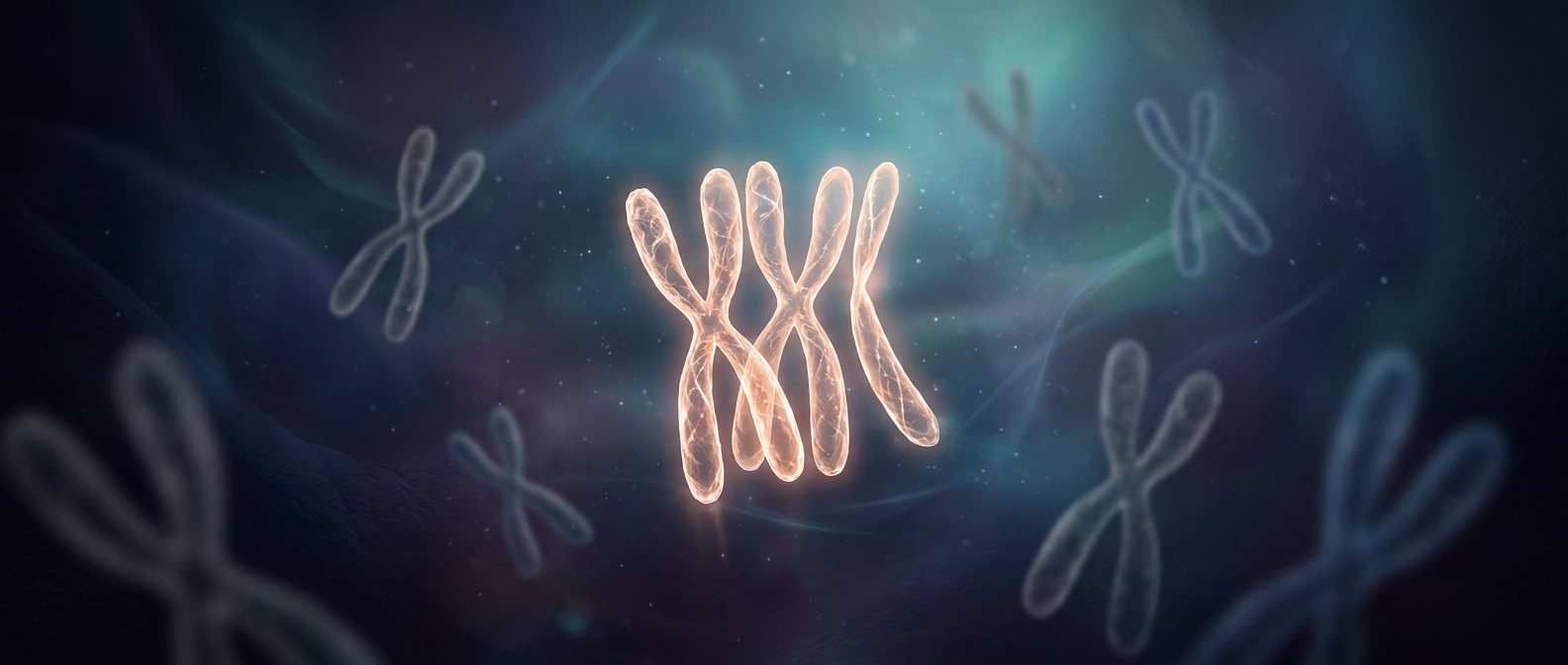
A digital record preserves the order of bases, not the physical chromosome wrapped inside a cell, the cell’s machinery, or the chemical marks that help regulate gene activity. It also does not automatically explain what a particular sequence does. Reading the letters is a starting point; interpreting them requires biological context.
That distinction matters in medicine. A sequence can reveal a genetic variant—a difference in DNA—but whether it affects health may depend on the variant’s function, the person’s other genes, and how the relevant cells operate. The compact file is a map of the letters, not a miniature copy of the person.