How a 3D image can appear without a headset
A headset creates depth by showing each eye a slightly different picture. The brain combines those views into a sense of distance. A display that works without a headset has to deliver those separate views through the air instead: for example, by directing different images toward different viewing positions. As a viewer moves, the perspective may shift, helping the image seem to occupy space rather than lie flat on a screen.
That is the basic challenge behind headset-free 3D: the display must put the right view in the right place. A patent can describe a proposed system for doing that and for letting a viewer interact with the image. The patent’s existence alone, however, does not establish which optical method it uses in practice—or that the system was built.
What “interactive” adds
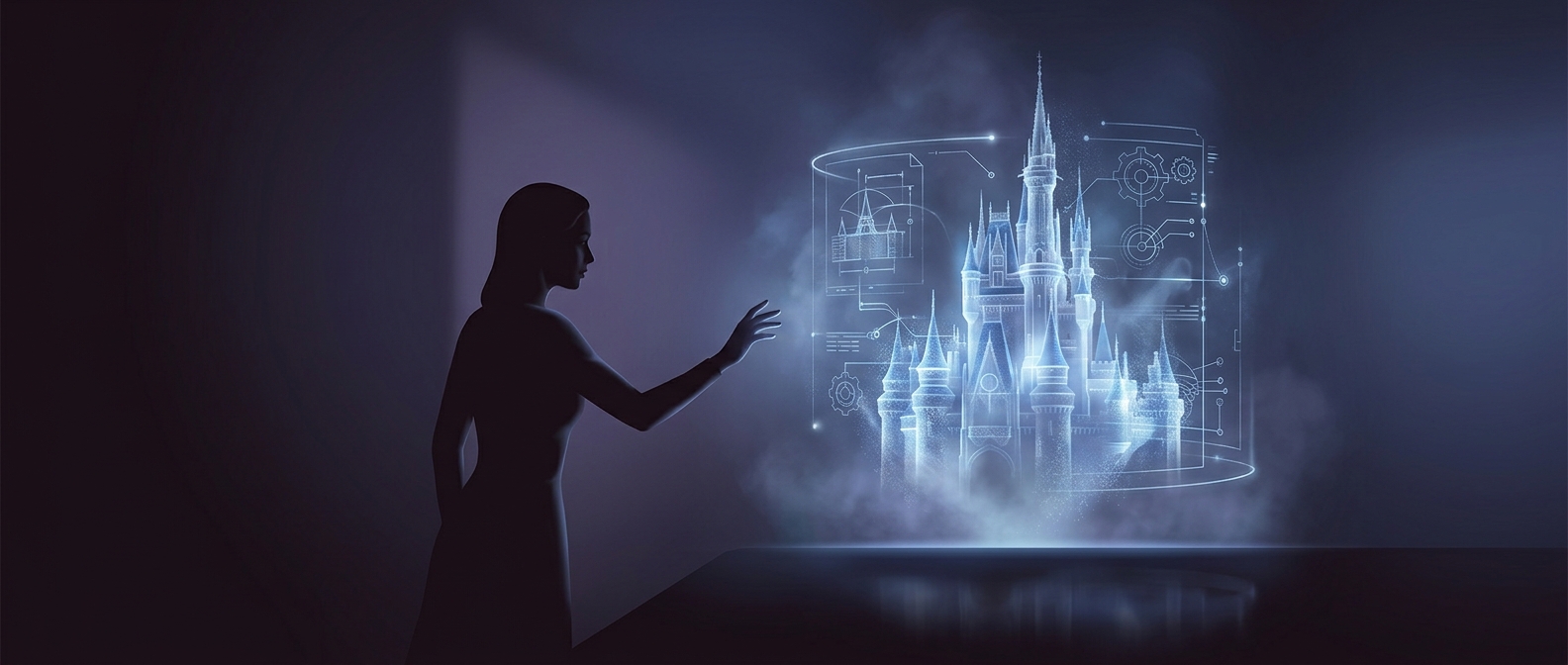
A static 3D effect can change as someone changes position. Interaction goes further: the system must detect an action, such as a gesture or touch, and update the displayed scene in response. That means coordinating the image with some way of sensing the viewer or the environment. The experience can feel immediate only if those pieces work together quickly enough that the response follows the action naturally.
In a park setting, the appeal would be an illusion guests could encounter without first putting on equipment. But a patent is a description of an invention, not a report that a finished attraction is operating. Turning the idea into a public experience would still depend on making the visuals convincing from useful viewing positions and making the interaction reliable amid real-world movement and crowds.