The Stampede Was a Crowd-Animation Problem
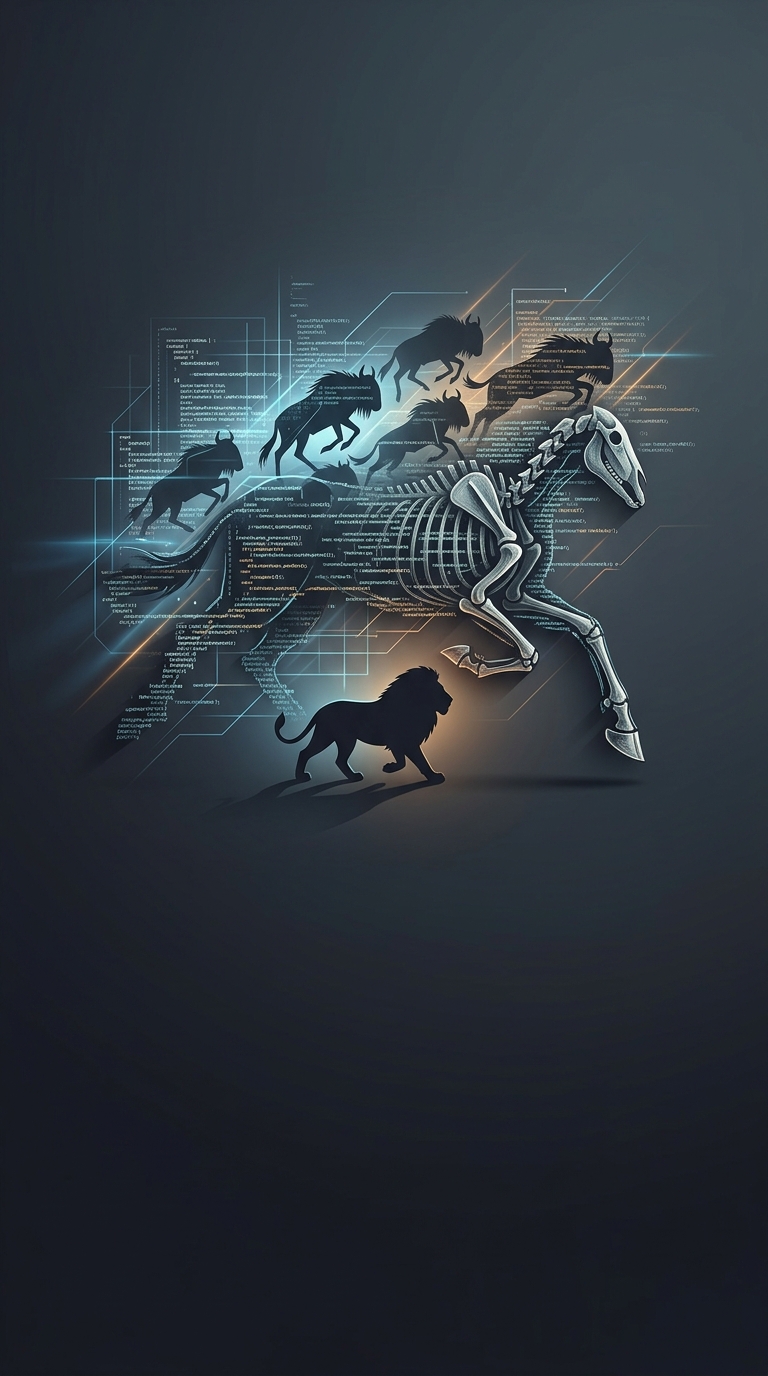
A wildebeest stampede is not just a row of animals moving across the screen. Each animal needs room to run, turn, and respond to the herd around it. If two computer-generated bodies occupy the same space, they appear to pass through one another—a visual flaw called clipping. Even a brief collision can make a large, fast-moving herd look weightless or artificial.
The challenge in The Lion King was to make the animals feel like a crowd without letting the crowd become a tangle. A new animation program gave the filmmakers a way to manage the wildebeests’ movement as a group, rather than treating every overlap as a problem to fix by hand.
Small Rules, Large-Scale Motion
Crowd animation works by coordinating many individual paths. A useful system has to account for where an animal is headed and how nearby animals constrain its route. When one wildebeest changes direction or slows, the surrounding motion must still look like a herd surging forward—not a collection of unrelated figures.
That is the difference between merely multiplying animated animals and simulating a stampede. The computer can help keep bodies separated, while artists shape the movement so the herd serves the scene: a forceful mass racing through the landscape, with enough variation to feel alive.
Why a Short Scene Took So Much Work
The finished sequence lasts only two and a half minutes, but its apparent simplicity depends on many moving parts behaving convincingly at once. A flaw repeated across a crowd becomes conspicuous: one animal cutting through another can undermine the whole rush. Building the tool was therefore part of making the scene, not just a technical step behind it.
The memorable result is a useful reminder of how movie magic is often made: a few minutes of chaos on screen can require years of engineering to make that chaos look natural.