A tooth became a battlefield identification tag
Major General Joseph Warren was killed at the Battle of Bunker Hill in June 1775. In the confusion after the fighting, he was buried in a shallow grave alongside other dead. When the grave was opened later, identifying a body by its face alone was difficult: time and burial had changed its appearance, and the dead had not been marked in a way that made recognition easy.
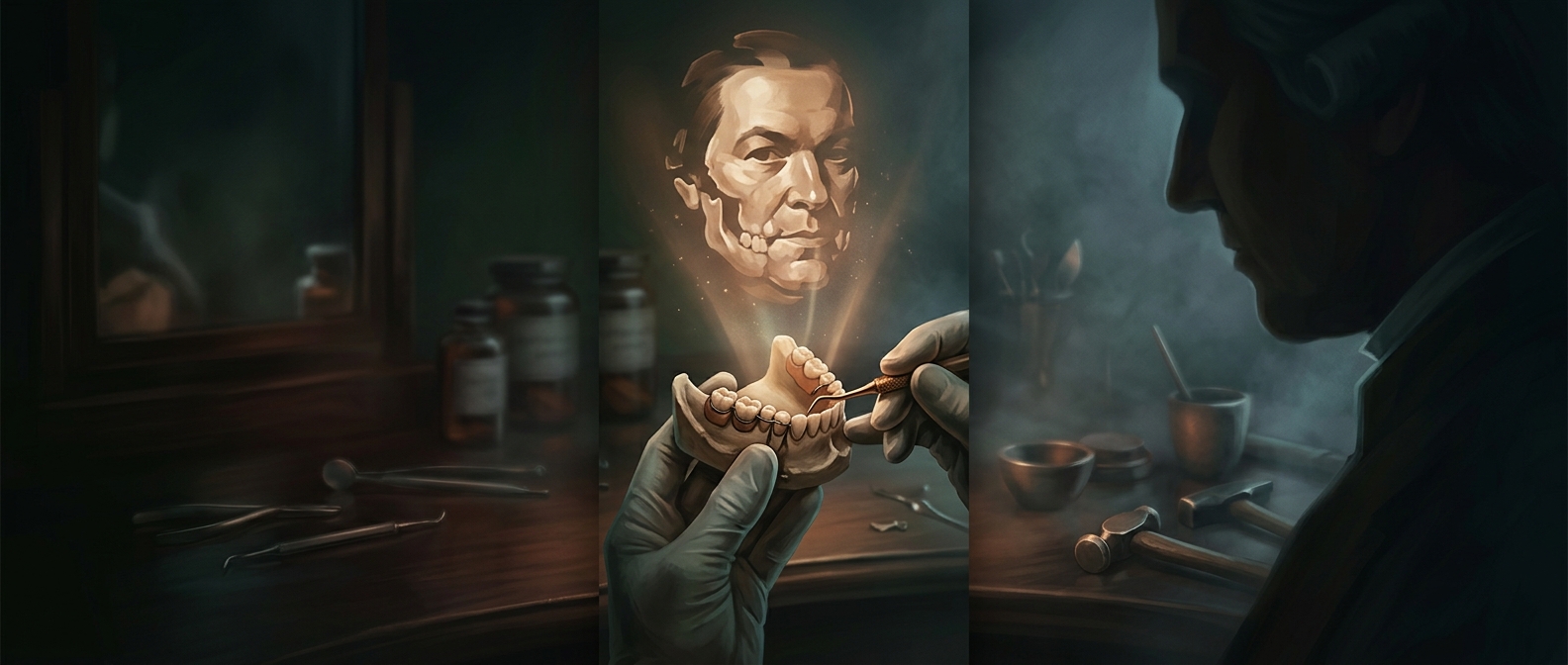
Paul Revere recognized Warren through dental work he had made for him. A silver wire in the appliance matched Revere’s own handiwork—a small, distinctive feature that survived when other clues did not. Revere was known primarily as a silversmith, but he also practiced dentistry, making and fitting artificial teeth.
Why the detail mattered
The wire was not an accidental piece of metal lodged in Warren’s mouth. It was part of a dental device, and Revere knew both its construction and its patient. That combination turned an otherwise ordinary object into personal evidence: he could identify not just the kind of appliance, but the work he himself had done.
The recognition gave Warren’s remains a name again and allowed him to be properly honored and reburied. In a setting where uniforms, records, and familiar faces could fail, a tiny piece of skilled craftsmanship carried an unusually intimate record of who the dead man had been.