A deliberate break with inherited wealth
In the traditional account, Layman Pang did not lose his fortune through accident or misfortune. He chose to sink it because he believed riches could keep him and his family attached to comfort, status, and the fear of losing what they owned. The boat made that choice concrete: instead of turning their valuables into a new source of security, he removed them from circulation.
That decision reflects a Buddhist concern with attachment—the habit of treating possessions, status, or even familiar ideas about the self as things that must be held on to. In this view, the problem is not simply owning objects; it is letting them govern one’s attention and choices. Pang’s act is remembered as an unusually stark way of refusing that hold.
Renunciation without leaving family life
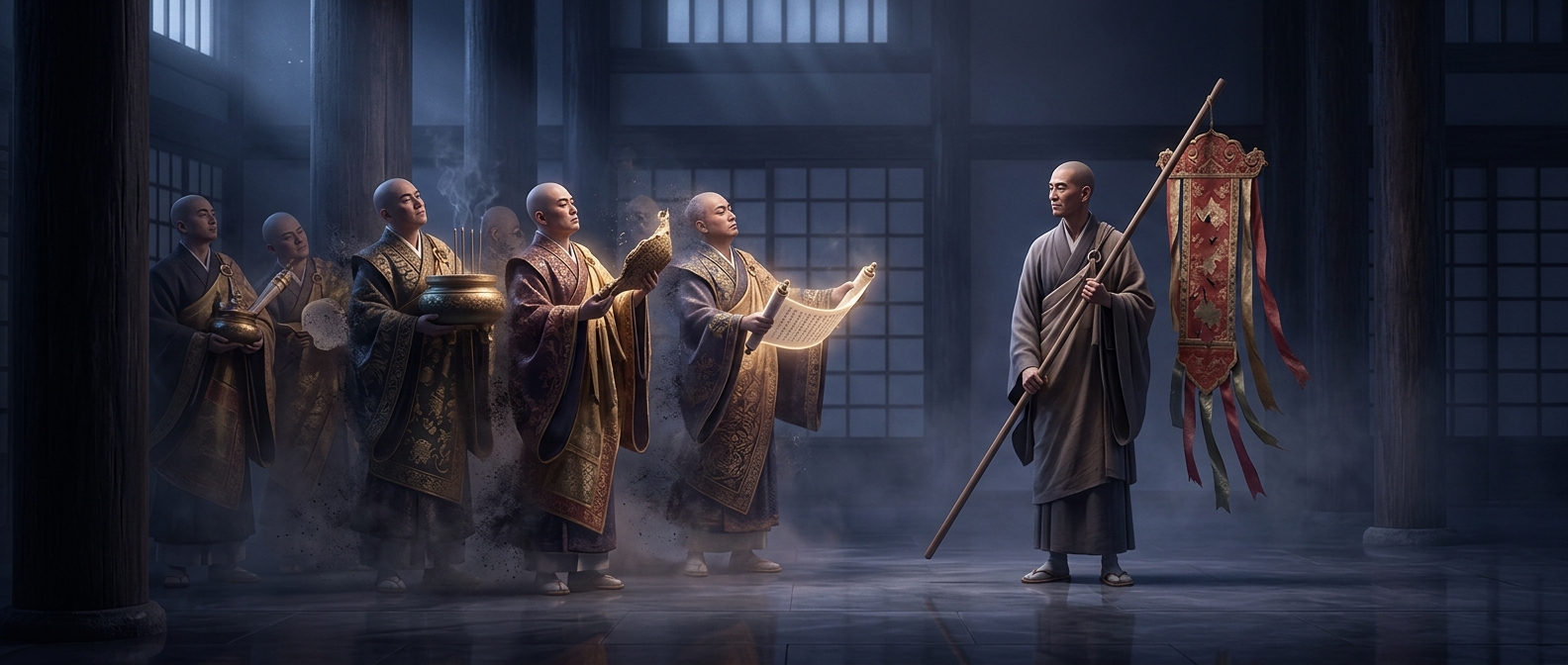
Pang is remembered as a lay Buddhist: someone who pursued religious practice while remaining outside a monastery. That makes the story more than a tale of rejecting luxury. It presents awakening as something sought within ordinary life, rather than something reserved for people who abandon households altogether.
The episode does not establish that everyone must destroy their property to become enlightened. Its force lies in the scale and finality of Pang’s personal decision. He treated wealth not as a resource to preserve for later, but as a burden he believed stood between his family and the life they wanted to lead. In the story, the river carries away more than valuables: it marks the moment a prosperous household chose not to organize its future around keeping them.