A wall changes more than the view
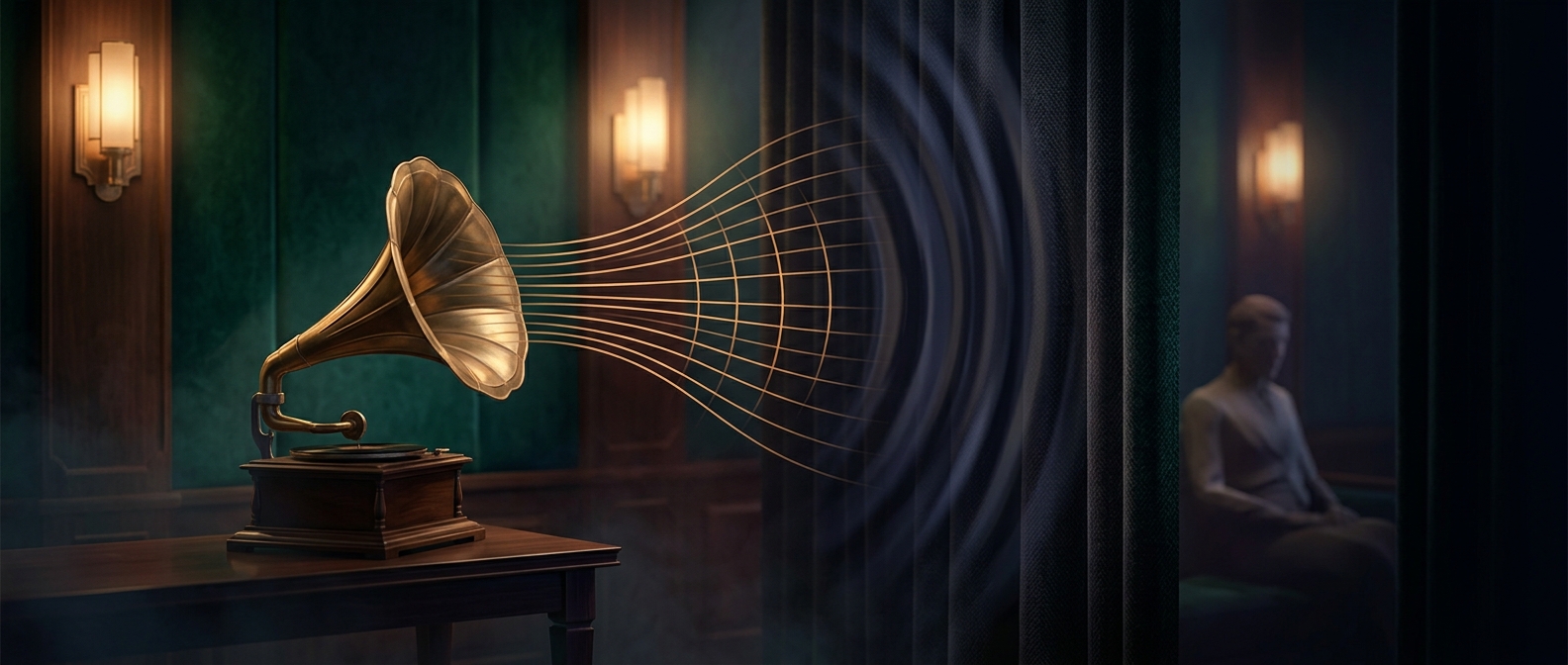
A gramophone in BioShock is treated as a sound source inside the world, not simply as music laid over the action. As the player moves, the game compares the player’s position with the gramophone’s and checks whether the environment puts a wall between them. When the path is obstructed, it changes the sound while the music is playing.
That is a form of audio occlusion: the game simulates how an obstacle alters sound reaching a listener. In everyday life, walls tend to weaken and dull sound, especially its sharper details. The game’s filtering gives the brass a muffled character, suggesting that the music is traveling through the building rather than arriving directly.
Music becomes part of the space
Because the effect responds to movement, the same gramophone can sound different as the player crosses a doorway or rounds a corner. The change offers a subtle clue about the room’s layout and the source’s location, even when the player cannot see it. It also helps the music feel attached to Rapture’s rooms and corridors instead of behaving like a fixed soundtrack.
The design payoff is small but immediate: a wall the player can see also seems to matter to the world’s sound. A tune heard clearly in one room can become a distant, softened trace just a few steps away.