A small idea built around getting bigger
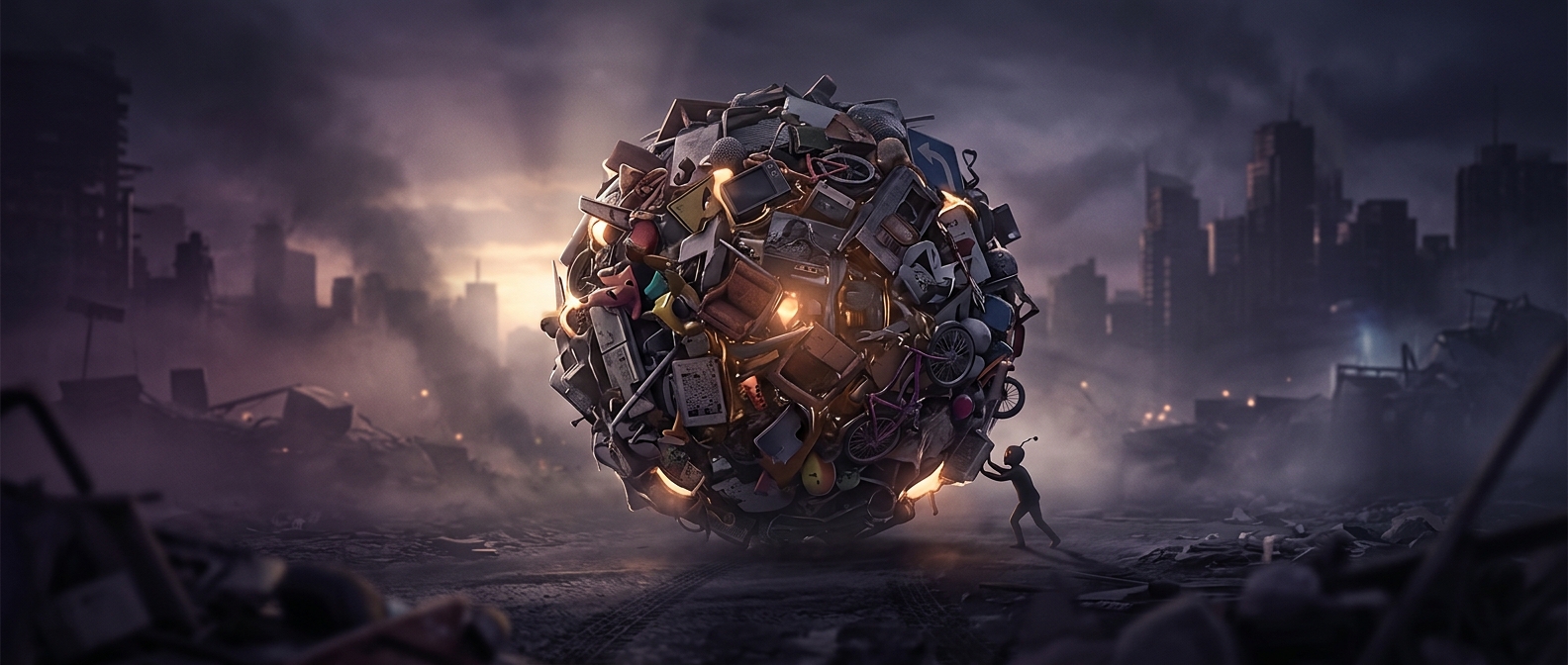
Keita Takahashi’s student concept for Katamari Damacy began with an unusually simple action: push a sticky ball through a cluttered space and let it collect things. The project’s low-budget premise became the game’s central design advantage. Instead of requiring elaborate combat systems or a large cast of characters, it could make play hinge on one physical-feeling question: What can this ball pick up now?
Size turns the world into a level
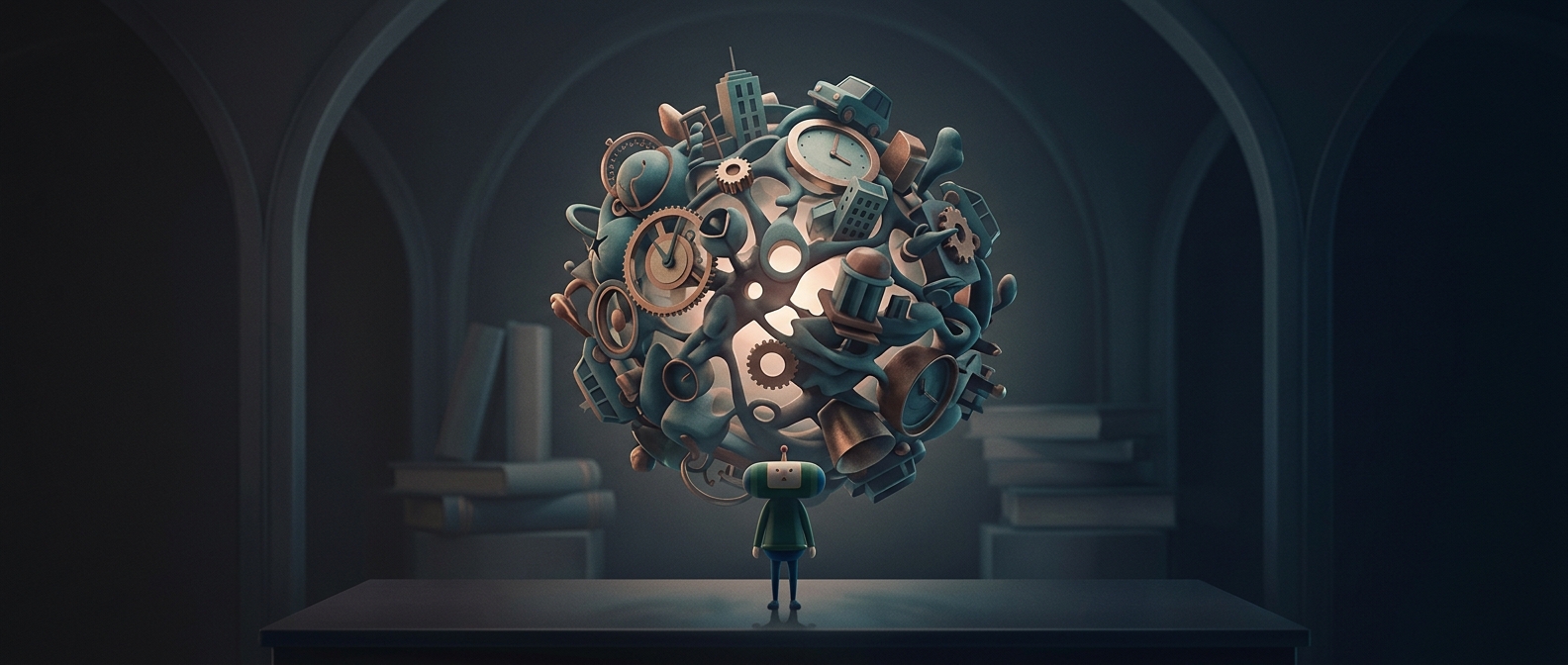
The ball, called a katamari, can absorb objects smaller than itself. At first, that means rolling over tiny items such as paperclips. As the katamari grows, objects that once blocked its path become collectible, and familiar rooms take on a new scale. A desk is no longer just furniture; it is a landscape of obstacles and potential pickups. Eventually, the same rule can bring much larger targets into reach.
That gradual change gives the game its progression without needing a conventional ladder of weapons or abilities. Growth itself is the reward—and the key to opening up more of the environment. The player can see, and feel, the consequences of every successful pass across the floor.
Clutter becomes comedy
The concept also makes ordinary objects do double duty. They are scenery, obstacles, and prizes, often all at once. The contrast between the katamari’s humble beginnings and its increasingly absurd haul supplies the humor: a ball that starts among household odds and ends can eventually gather things on a scale that makes the opening feel almost impossibly small.
That is how a modest student idea could support a whole game. Its memorable spectacle grows directly from its simplest rule: keep rolling, and the world that once seemed enormous becomes something you can pick up.