The 78-card deck has two layers
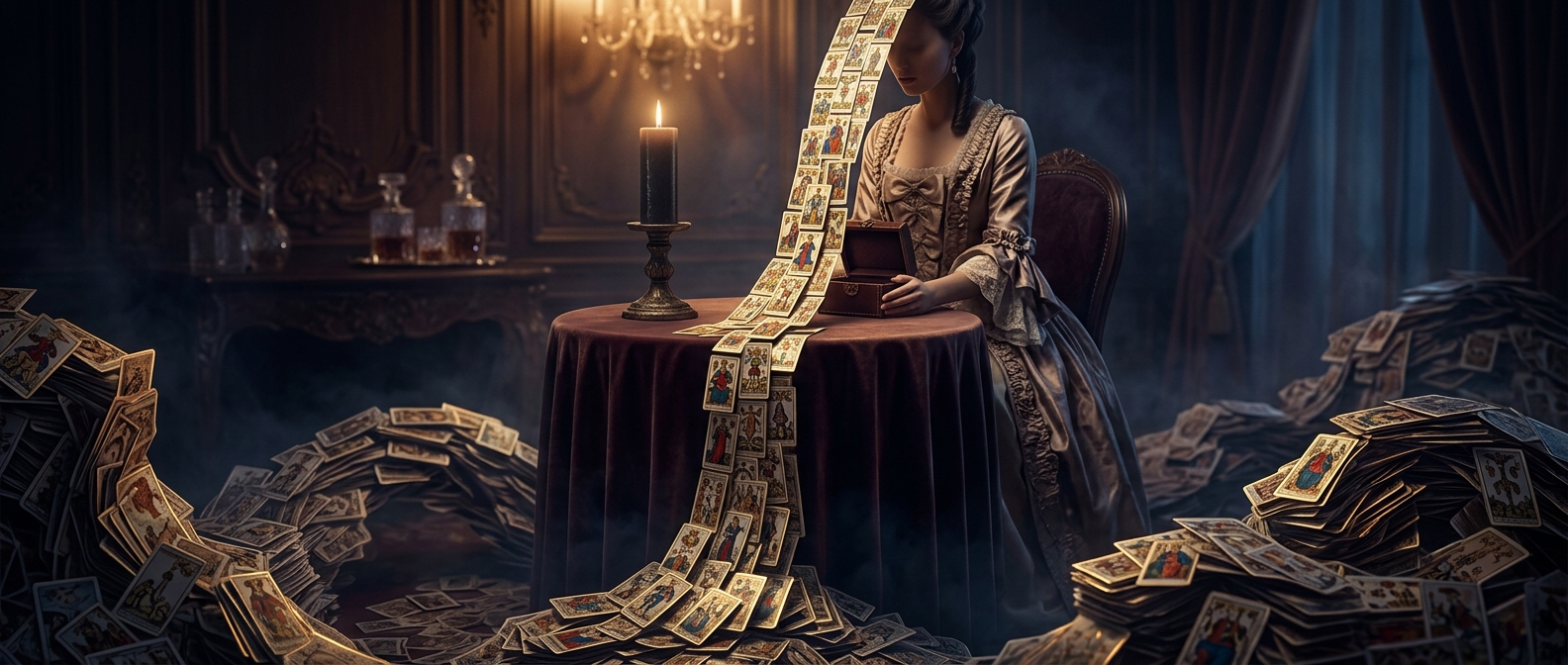
A traditional tarot deck combines 56 cards arranged like a playing-card deck with 22 additional cards, often called the Major Arcana. The 56 are divided into four suits. Each suit has ten numbered cards and four court cards, making 14 cards per suit and 56 altogether.
The other 22 cards form a separate sequence of illustrated figures and symbols. In tarot’s original card games, most of these functioned as trumps: cards that could beat cards from the ordinary suits. The Fool has a special role in many traditional games, so it is not simply another trump in every version.
Why add the extra cards?
Tarot developed as a card game in Renaissance Italy. Its trump sequence added a new tactical layer: a player could use a powerful trump to win a trick even when they lacked a high card in the suit led. The deck’s extra cards were therefore part of the game’s design, not just decoration.
Later, tarot became associated with fortune-telling, and the illustrated trump cards took on symbolic interpretations. That later use helped make the 22-card sequence especially recognizable, but the basic 78-card structure comes from the deck’s two-part design: four ordinary suits plus a separate set of trump-like cards.