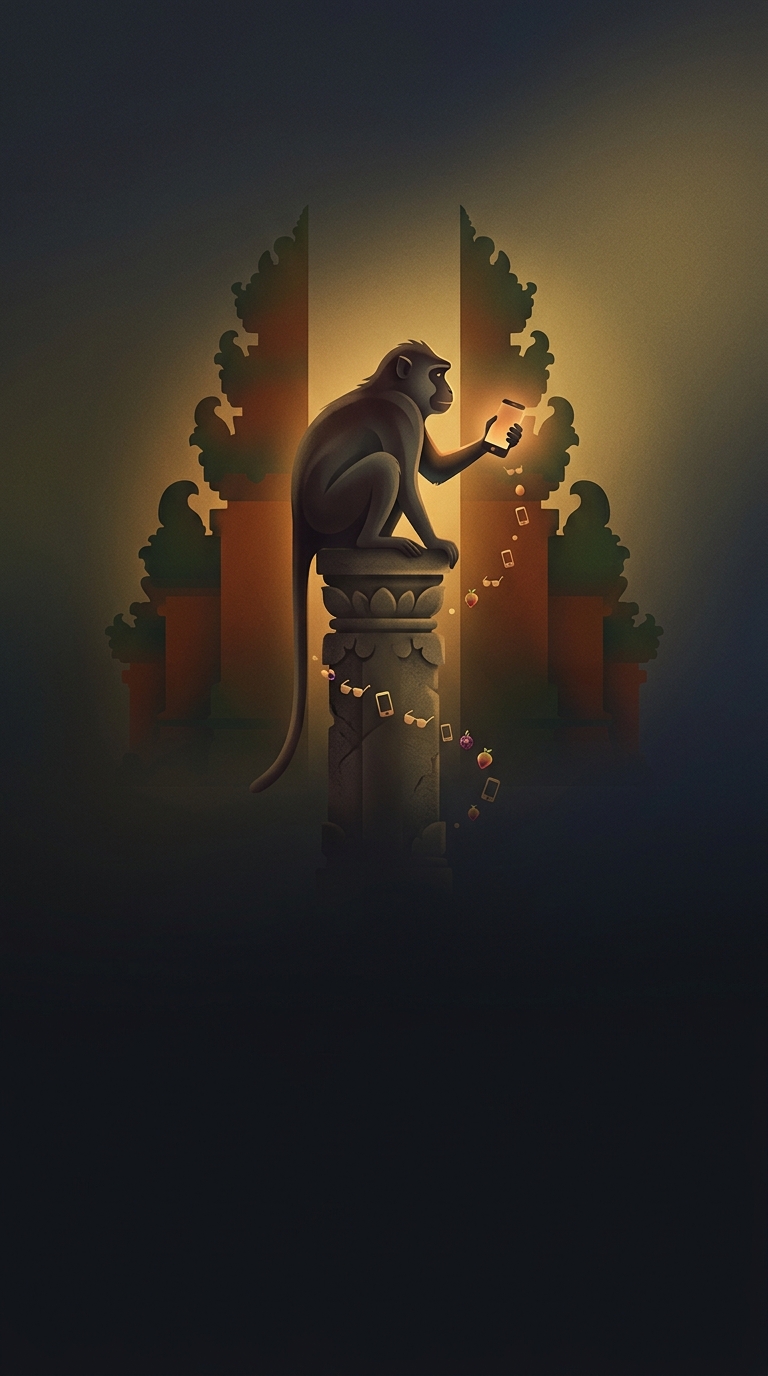
How a stolen phone becomes a bargaining chip
At Uluwatu Temple, a tourist’s loose sunglasses or phone can become more than an easy grab. Once a macaque has the object, the visitor may offer food to get it back. If the monkey releases the item after receiving a desirable treat, that exchange can reward the behavior: the animal has learned that taking something from a person can produce food.
The tactic works because the two sides value the same object differently. To a visitor, a phone is precious; to a macaque, it is something to hold until a better payoff appears. The animal does not need to understand the object’s monetary value—only that people react strongly and sometimes offer food.
A behavior that can spread through the troop
Young macaques learn by watching others, and older animals can pass along successful habits. When juveniles see a theft followed by a food reward, they have an opportunity to learn the sequence: seize an item, keep hold of it, and wait for an exchange. Repeated successes can make the behavior more familiar across the group.
That is why the pattern can look like an organized enterprise, even though it is better understood as learned animal behavior shaped by repeated encounters with tourists. Human responses help sustain it: a visitor who pays in food to recover a belonging may unintentionally make the next theft more rewarding. At the temple, a snack can therefore function not just as a treat, but as the price of getting a personal item back.