Why flies target the face
In much of inland Australia, the persistent nuisance is the bush fly, a small fly whose larvae develop in animal dung. When conditions favor breeding, adult numbers can rise sharply, and exposed people become conspicuous targets in open country with little shelter.
A face offers what a fly needs. Around the eyes and nose, it can find moisture and salts in tears, sweat, and skin secretions; the mouth and breath provide additional cues. The fly is not trying to attack. It is seeking a quick drink or nutrients, and it may return moments after being brushed away.
The practical cost of being outdoors
That repeated landing makes ordinary tasks surprisingly difficult. Flies can interrupt conversation, meals, photography, and work, while moving hands away from tools or food to protect the eyes and mouth. A brimmed hat or mesh head net helps by putting a physical barrier between the person and the flies; shade and a breeze can also make outdoor stops more comfortable.
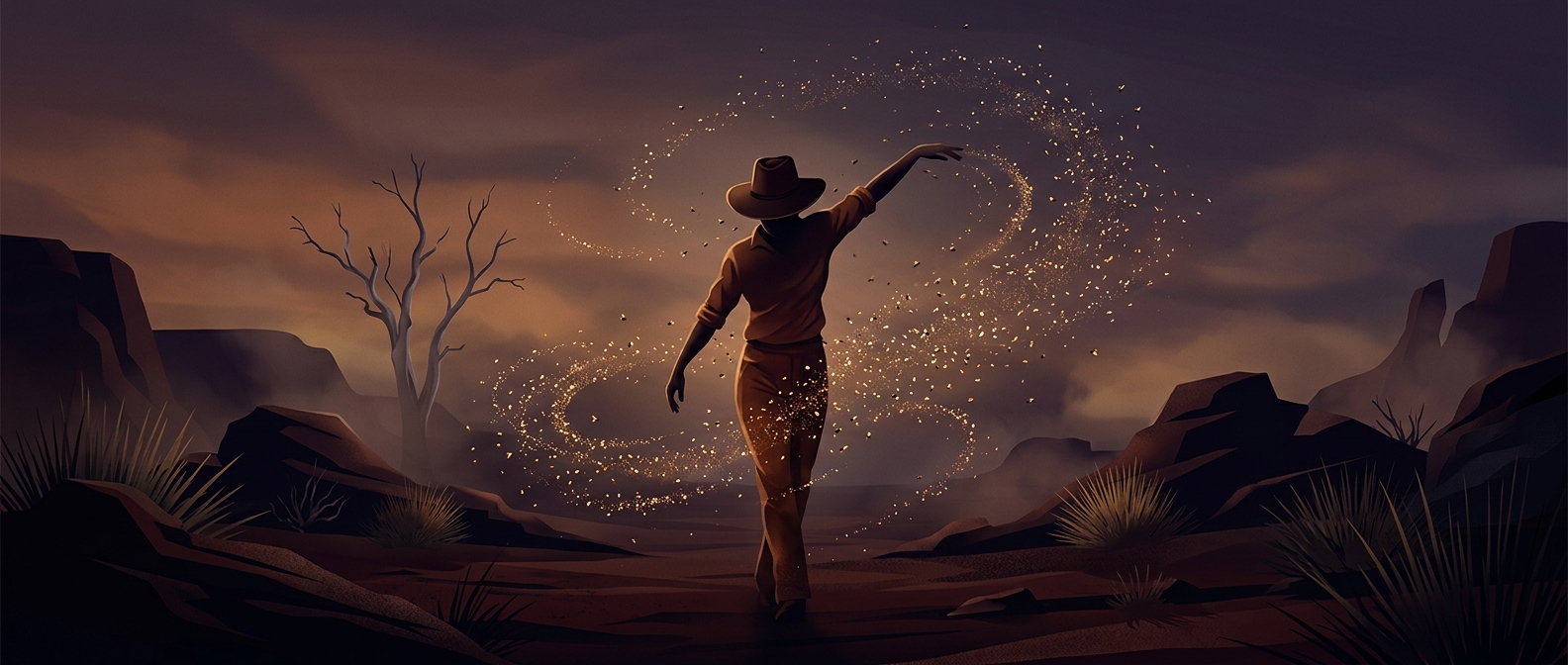
The nuisance is highly local and seasonal, so a quiet stretch of road can become uncomfortable after conditions support a fly population nearby. The “salute” is less a gesture than a running piece of fieldcraft: a hand kept ready because the next landing may come before the last one has been forgotten.