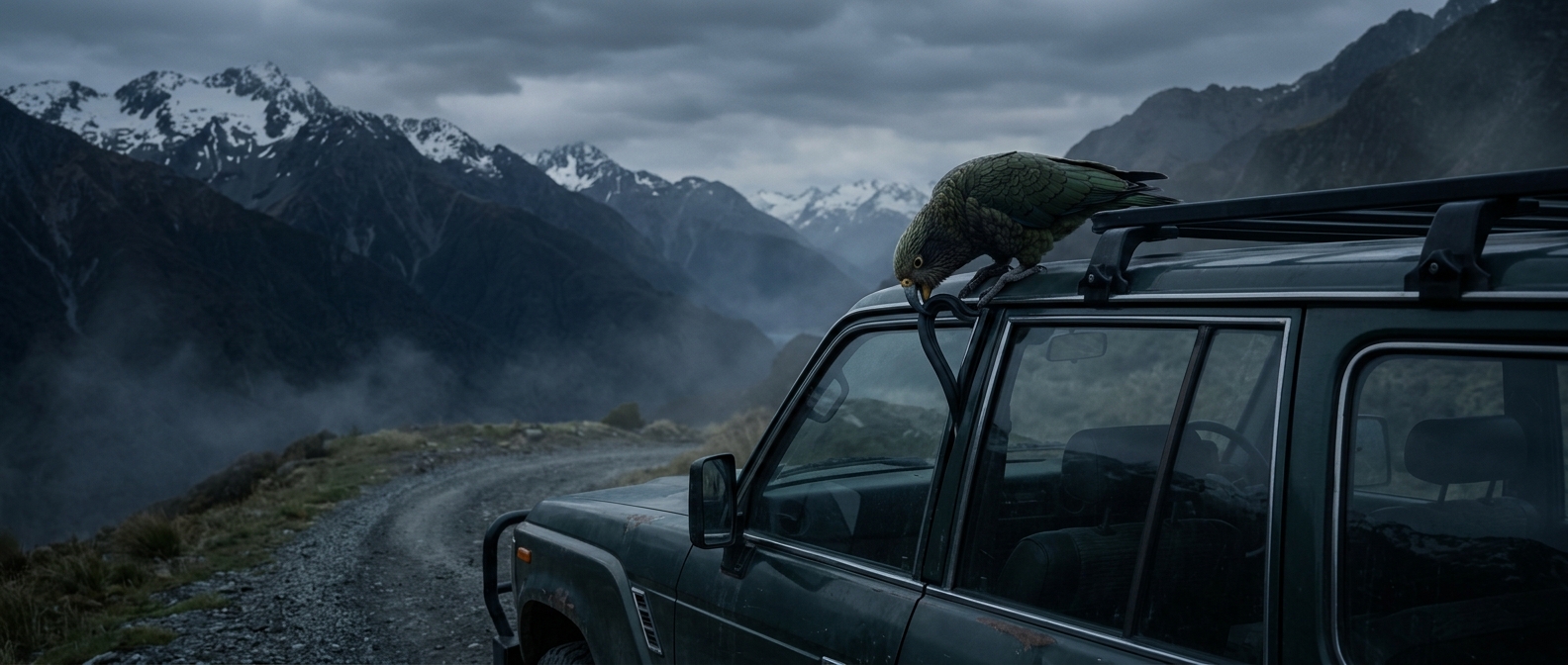
Why a parked car becomes a puzzle for a kea
A car presents a kea with a collection of unfamiliar parts that can be tested: rubber can be tugged, flexible plastic can be bent, and loose edges can be gripped with a strong beak. The bird’s curiosity turns ordinary fittings into something like a hands-on puzzle. Pulling at a seal or wiper can reveal how it moves—and whether it comes away.
Kea live in New Zealand’s mountainous regions, where they encounter cars at places people visit. A vehicle left unattended offers a concentrated set of objects to investigate, especially if a piece is already loose or easy to manipulate. The damage is a side effect of that investigation, not a practical attempt to use the car.
Curiosity has a cost
For the bird, dismantling a trim piece is rewarding because it responds to repeated effort. For a car owner, the same behavior can mean damaged seals, exposed edges, or a missing antenna. This mismatch helps explain why a brief encounter can become expensive: the kea is focused on the part that gives way, not on preserving the vehicle.
The striking detail is that the car need not be moving to attract attention. When people and vehicles enter kea habitat, even a parked machine can become an interactive object—one that invites a clever bird to keep pulling until something changes.