A river fed far from the dry country
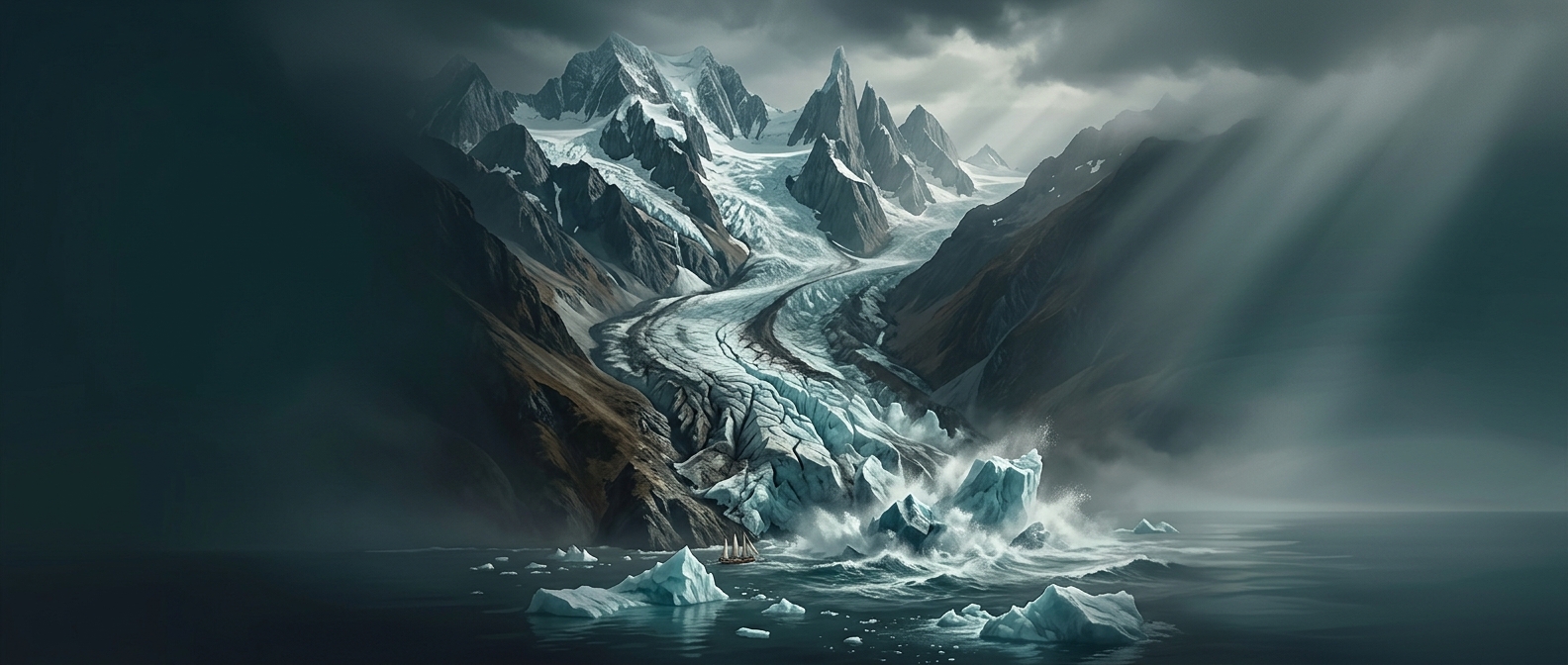
The Murray begins in the Australian Alps, where rain and some snowmelt feed headwater streams. It then travels west across southeastern Australia, gathering water from tributaries and a vast drainage basin—the land whose runoff ultimately flows into the river. By the time it reaches the drier interior, much of its water has come from places far upstream, so the landscape beside the channel can look much harsher than the river’s source.
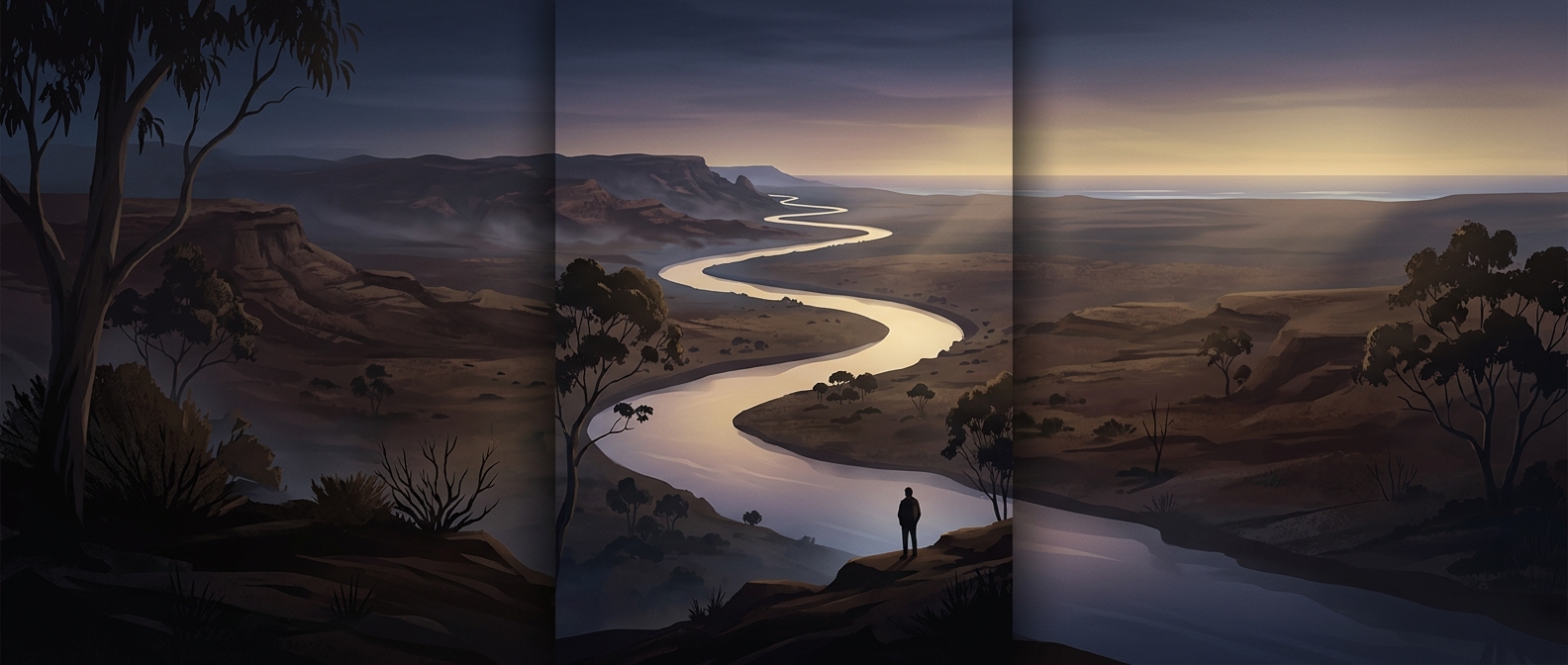
Near Wentworth, the Murray meets the Darling River, one of its major tributaries. The two rivers’ combined flow continues toward the coast through a region where dependable surface water is scarce. Dams and other water-management works now regulate much of the Murray’s flow, storing water for dry periods and supplying farms and towns; the river’s volume is therefore shaped by both weather and human decisions.
From inland channel to coastal wetlands
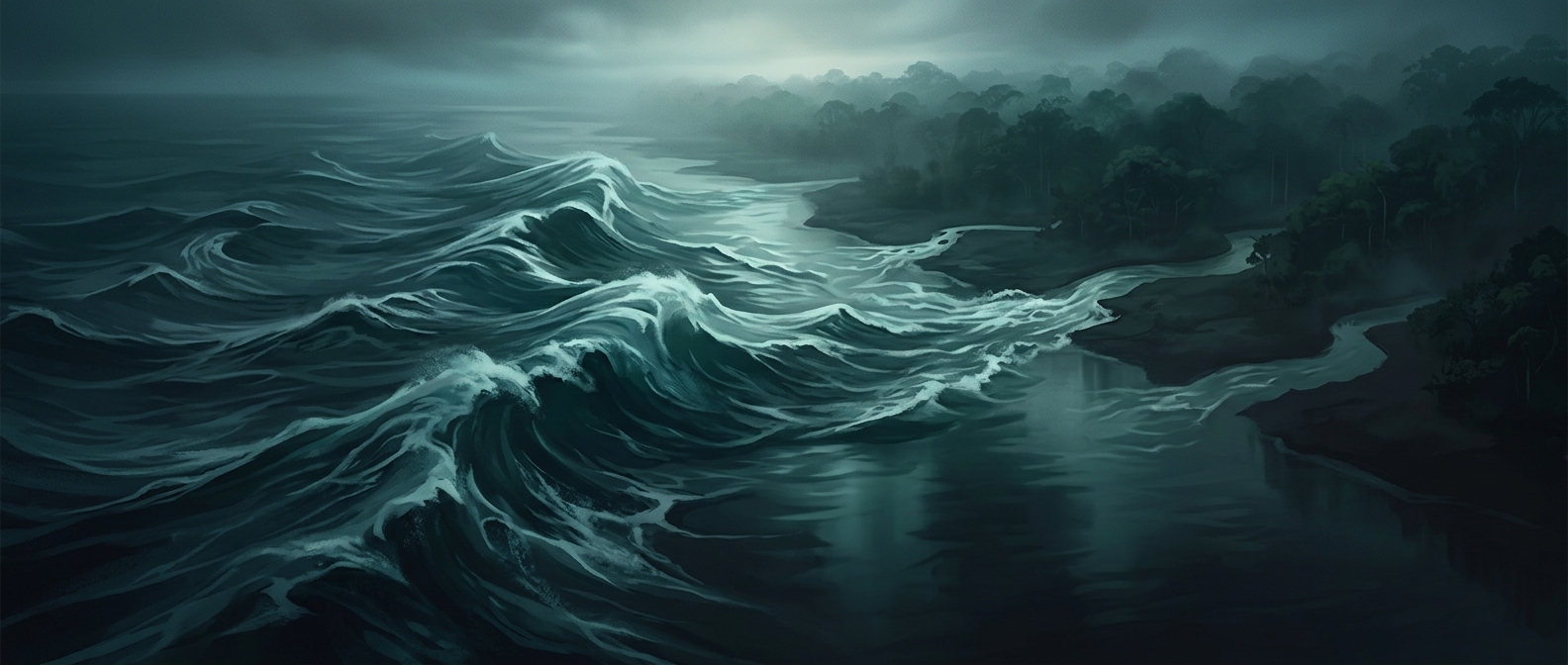
Near its end, the Murray spreads into lakes and wetlands before reaching the sea at the Murray Mouth, near the Coorong. This transition is important: the river does not simply stop at the edge of the dry interior. It carries freshwater and sediment through a connected system of channels, lakes, and coastal habitats.
That long connection—from alpine catchment to the sea—helps explain why the Murray matters well beyond the places where it is visible. Water taken or stored upstream can affect farms, communities, and wetlands hundreds of kilometres downstream.