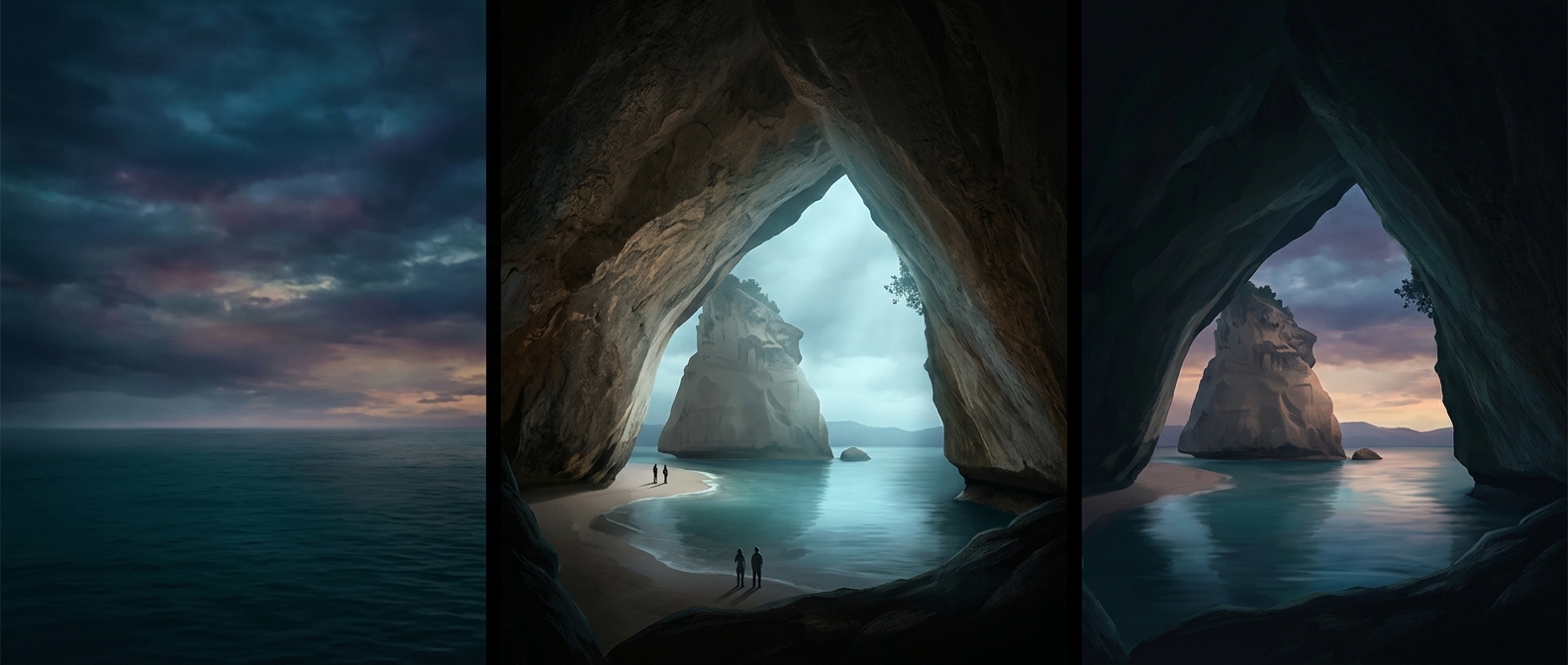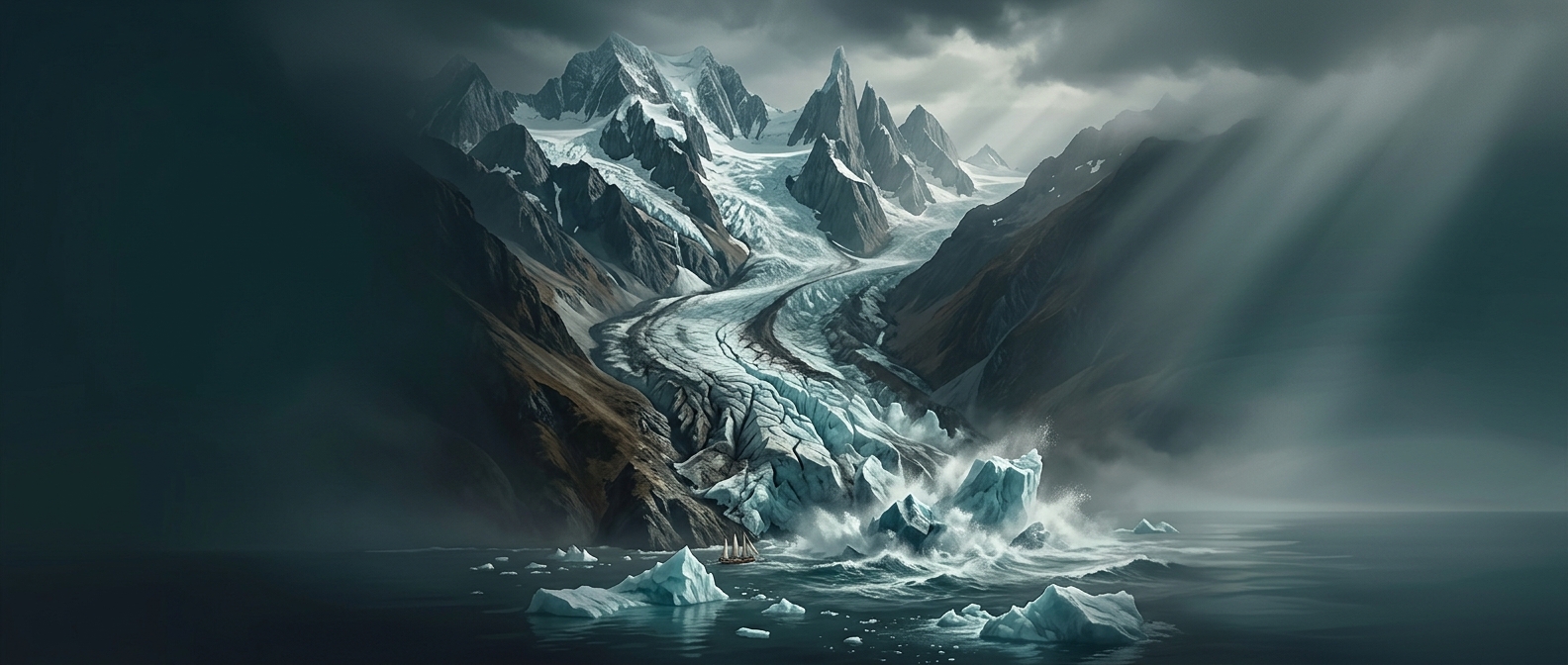
Why New Zealand’s glaciers descend into rainforest
On the South Island’s western side, the Southern Alps rise sharply from the Tasman Sea. Moist air arriving from the sea is forced up the mountains, where it cools and drops heavy rain on the lower slopes and snow at higher elevations. That combination places temperate rainforest and glacier-feeding snowfields unusually close together.
The glaciers are not simply frozen rivers sliding down to sea level. Snow piles up in high mountain basins, compresses into ice, and flows downhill under its own weight through steep valleys. In places, those valleys carry the ice far below the surrounding peaks, into a mild, wet landscape where ferns and dense forest thrive.
A sharp boundary between two climates
The contrast is striking because the transition happens over a short distance: rain-soaked vegetation fills the valley while bare rock and ice occupy the higher slopes. The greenery does not mean the glacier is in a warm, stable setting. Its survival depends on the balance between snowfall added above and ice lost through melting and break-off below; that balance can shift, changing how far the ice reaches down the valley.
For visitors, the meeting of ice and forest makes the terrain’s vertical scale visible. A single valley can show how the same ocean-fed weather produces both lush lowland growth and the snowfall that sustains glaciers high above.