Why Whitewater Makes a Canoe Hard to Control
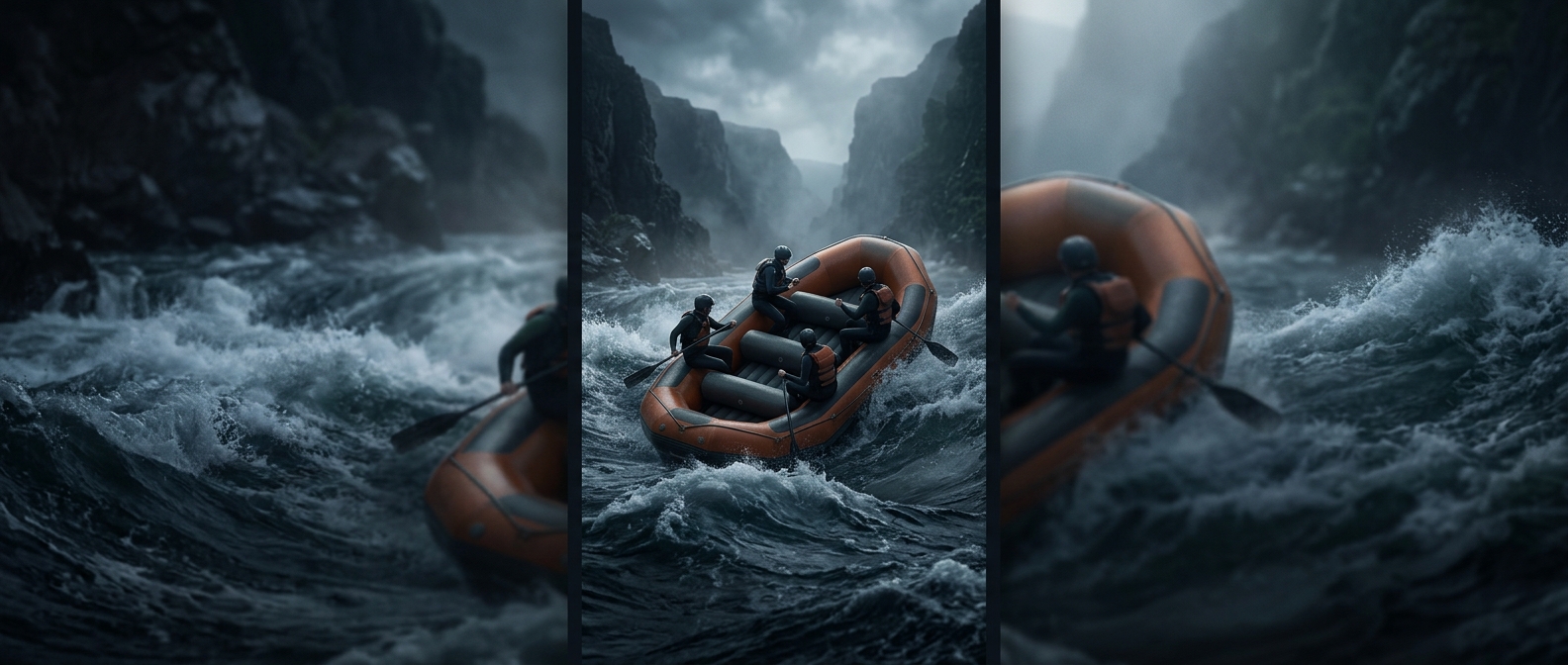
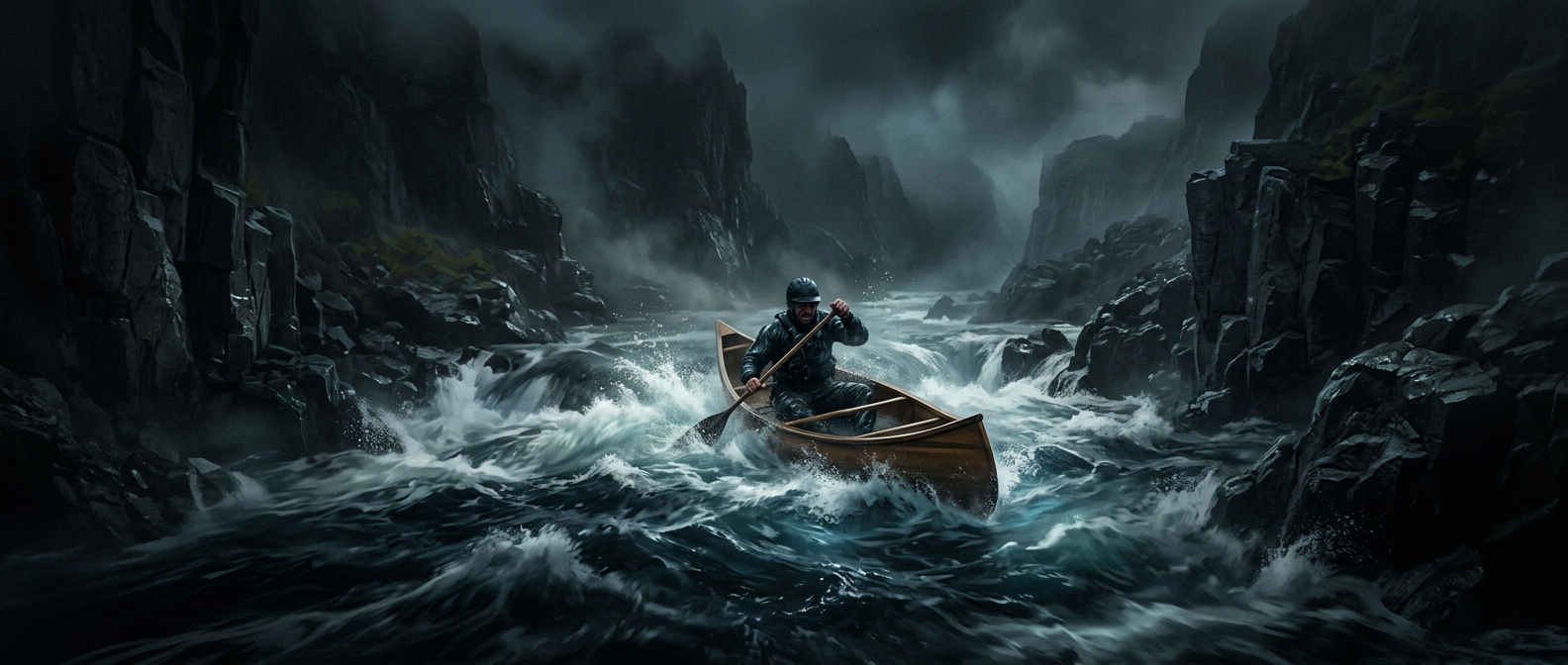
Rapids are not simply fast water. As a river squeezes around rocks or drops over a ledge, its flow breaks into uneven currents, swirling pockets, and standing waves. White foam can obscure the underwater shapes causing those changes, so paddlers may have only a short time to spot a hazard and choose a line through it.
A canoe also responds to the current across its whole hull. Water pushing one end harder than the other can swing the boat sideways; if a wave pours over the gunwale, the upper edge of the hull, the canoe can take on water and become difficult to steer. The challenge is to keep the boat pointed where the paddlers intend while the river keeps applying force from changing directions.
The River Offers Clues—and Little Time
Experienced paddlers look beyond the foam for features such as eddies: calmer pockets of water behind rocks, where the current may curl back upstream. These can provide a pause between rapids, while the main current carries the canoe onward. Reading those patterns before entering a rapid matters because once the boat is in the strongest flow, there may be little room to change course.
A capsize can turn a brief passage into a more complicated recovery. A paddler must contend with moving water and cold exposure while trying to reach shore or regroup; loose equipment may travel separately downstream. That is why whitewater trips depend on preparation and suitable conditions, not just fast reactions. In a rapid, the route chosen before the first big wave may matter more than any stroke made after it.