Mining reshaped the island’s food landscape
Nauru’s phosphate wealth came from deposits across its raised interior. Extracting them left much of that land rough and difficult to farm, shrinking the space available for growing food. The damage was not just a change in scenery: it weakened the island’s ability to supply its own diet.
From local land to imported meals
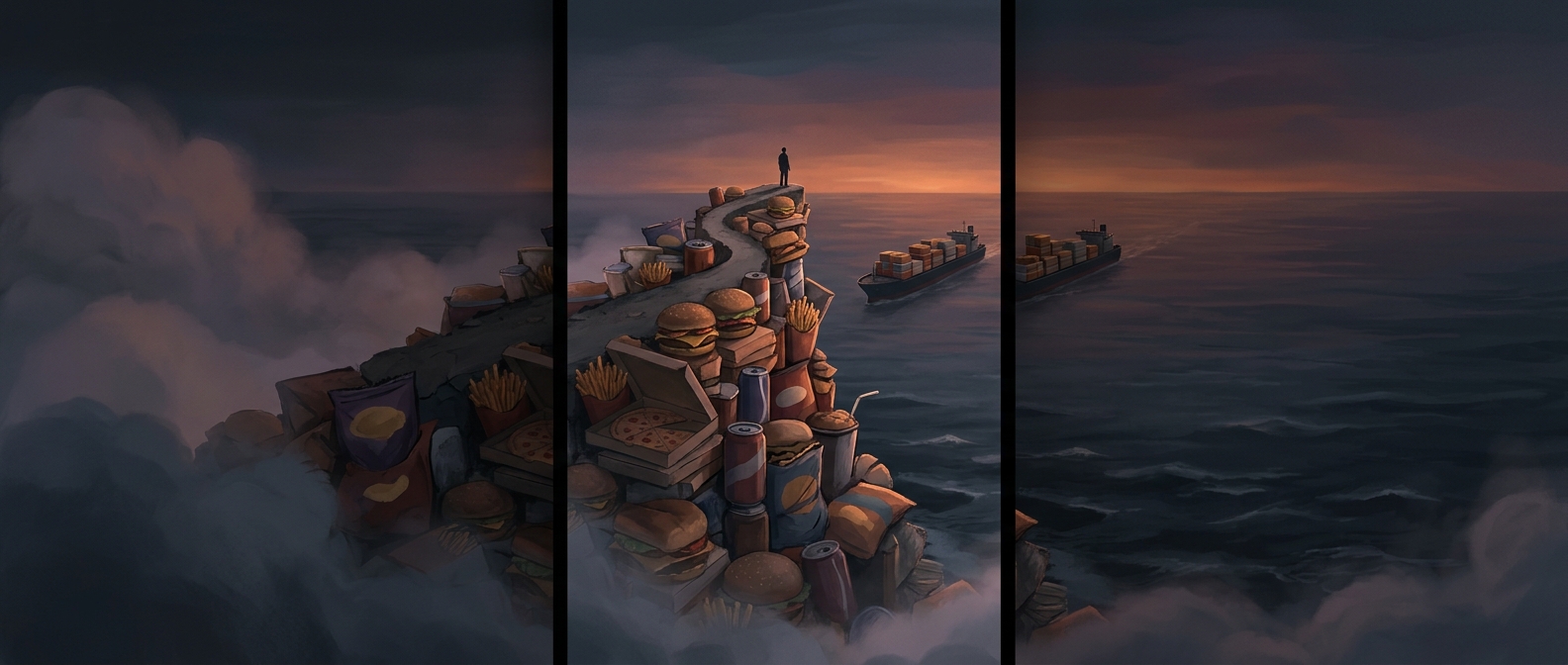
Nauru is remote, so food brought in by ship must travel a long way and keep well. As local food production became harder, imported goods became more important. Shelf-stable packaged foods fit that supply chain better than fresh foods: they can withstand long transport and storage, and are readily available when local harvests cannot fill the gap.
Mining income also connected the boom to consumption. Money from phosphate exports made it possible to buy goods from abroad, including food. But income alone could not restore farmland; the mining landscape had lasting consequences for what could be produced at home.
A change with lasting health stakes
A diet increasingly dependent on imported processed foods can make calorie-dense, highly refined options a larger part of everyday eating. That shift helps explain why the mining story is also a health story, although obesity has many influences and cannot be attributed to one cause alone.
The striking legacy is that a resource extracted from Nauru’s soil helped finance a new food supply even as extraction made the soil less able to feed the people living there.