Why the sheep-to-people ratio fell
The ratio is a snapshot of how New Zealand’s rural economy has changed, not a measure of how much land is covered by sheep farms. For decades, sheep farming shaped the country’s open hill pastures and supplied wool and meat for export. But the economics of farming shifted: wool became less valuable, and some land and investment moved toward other uses, including dairy farming and forestry. Farmers also adapted their operations rather than simply maintaining the enormous flocks of earlier decades.
A familiar landscape, a changing industry
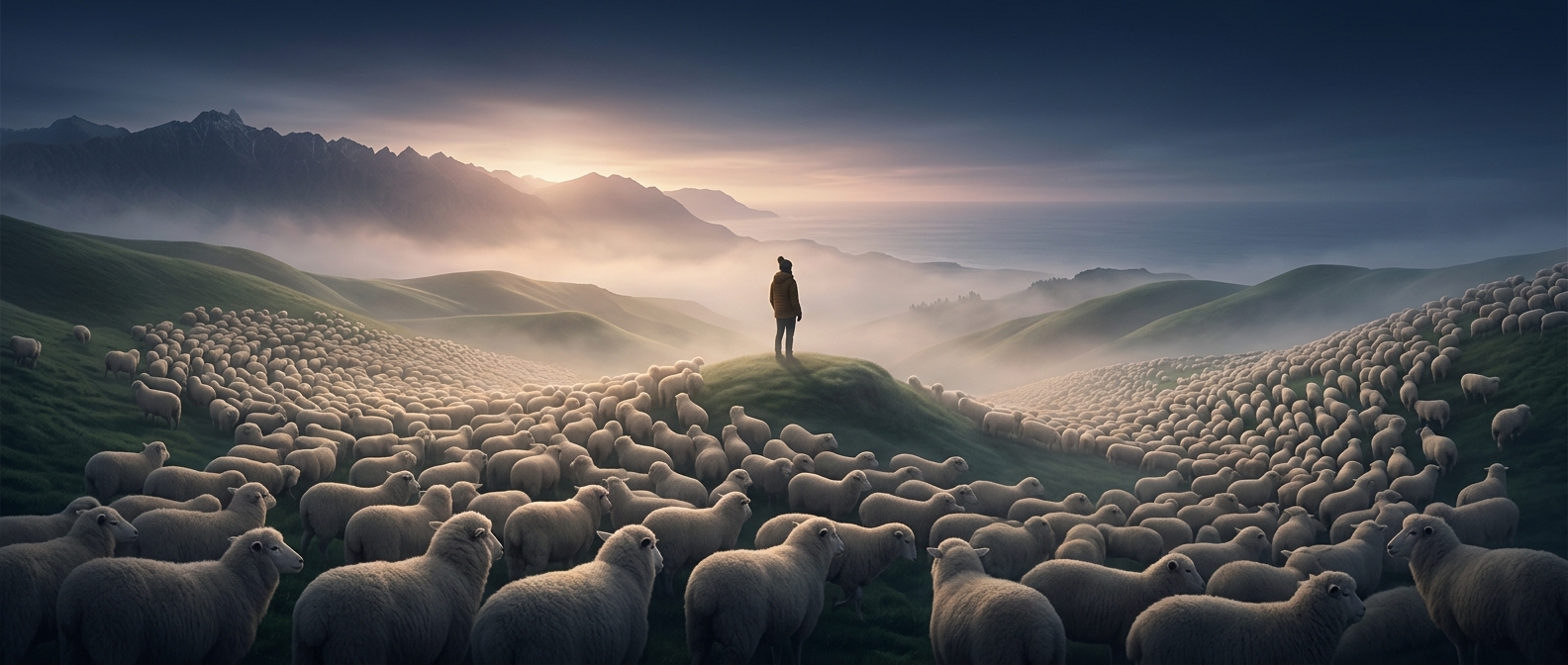
Sheep remain a conspicuous part of New Zealand’s countryside, especially on pastoral farms, where grazing animals turn grass into products that can be sold overseas. Yet the national total can fall even while sheep farming remains visible and economically significant. Farms differ widely: some raise sheep, some combine sheep with cattle, and others have changed to different kinds of production.
The comparison with the human population also has a built-in limit. It is a countrywide average, not a promise that a visitor will encounter five sheep for every person in any particular place. Sheep are concentrated on farmland, while people are concentrated in towns and cities.
That makes the changing ratio a small clue to a larger shift: New Zealand’s pastoral identity persists, but its farms are responding to different markets and competing uses for land. A drive through sheep country can still feel like an encounter with the country’s agricultural past—on farms whose numbers and business choices belong to a newer one.