
A closer look
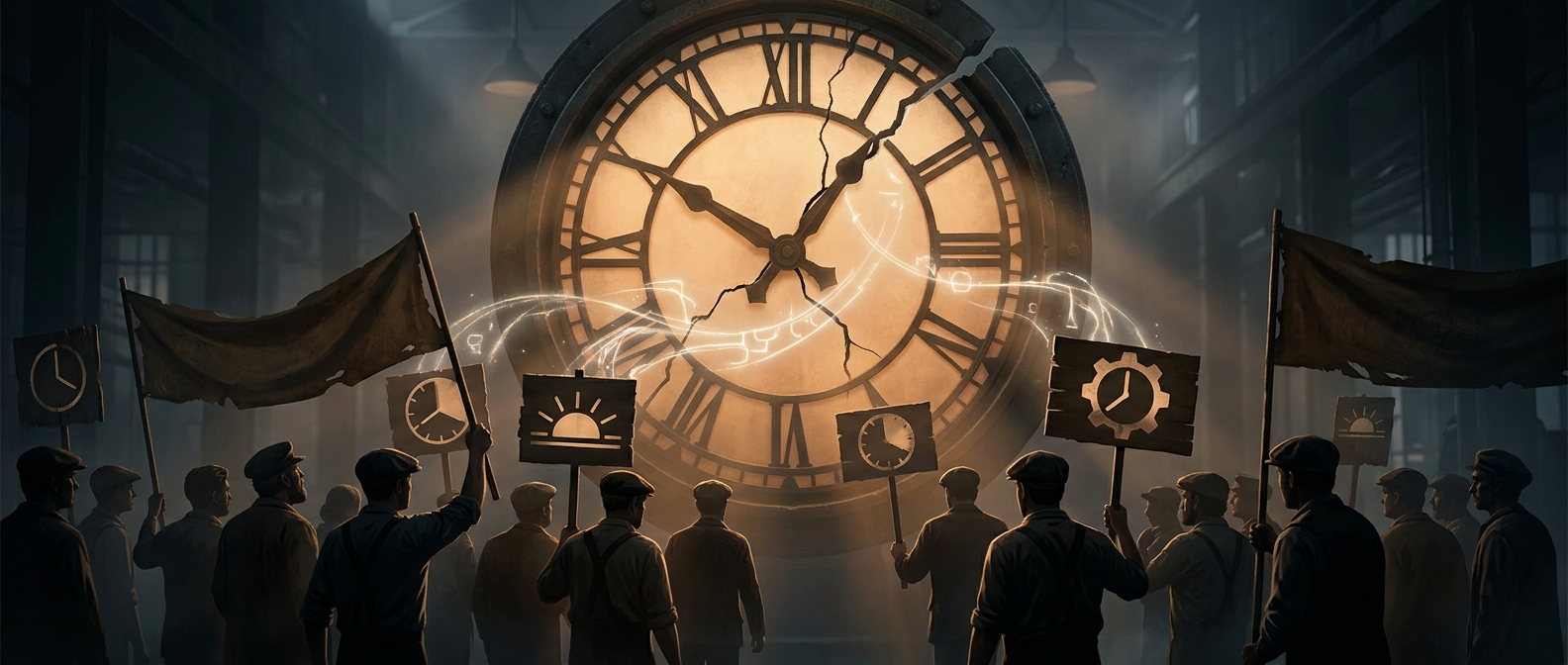
Henry Ford widely popularized the standard five-day, forty-hour workweek in 1926 not out of the goodness of his heart, but because he realized his factory employees needed actual free time to buy and drive the cars they were building. Before this revolutionary corporate realization, industrial workers were grinding six days a week until they basically dropped dead at their assembly stations. Ford simply figured out that exhausted, perpetually broke people make terrible consumers. So the beloved weekend wasn't some generous gift from benevolent capitalist overlords, it was a highly calculated economic strategy to make sure you had exactly enough downtime to blow your wages on mass-produced consumer goods. A full century later, we are still firmly locked into this exact same artificial schedule, desperately living for two pathetic days of freedom before returning to the corporate inbox