How a rinse can spread contamination
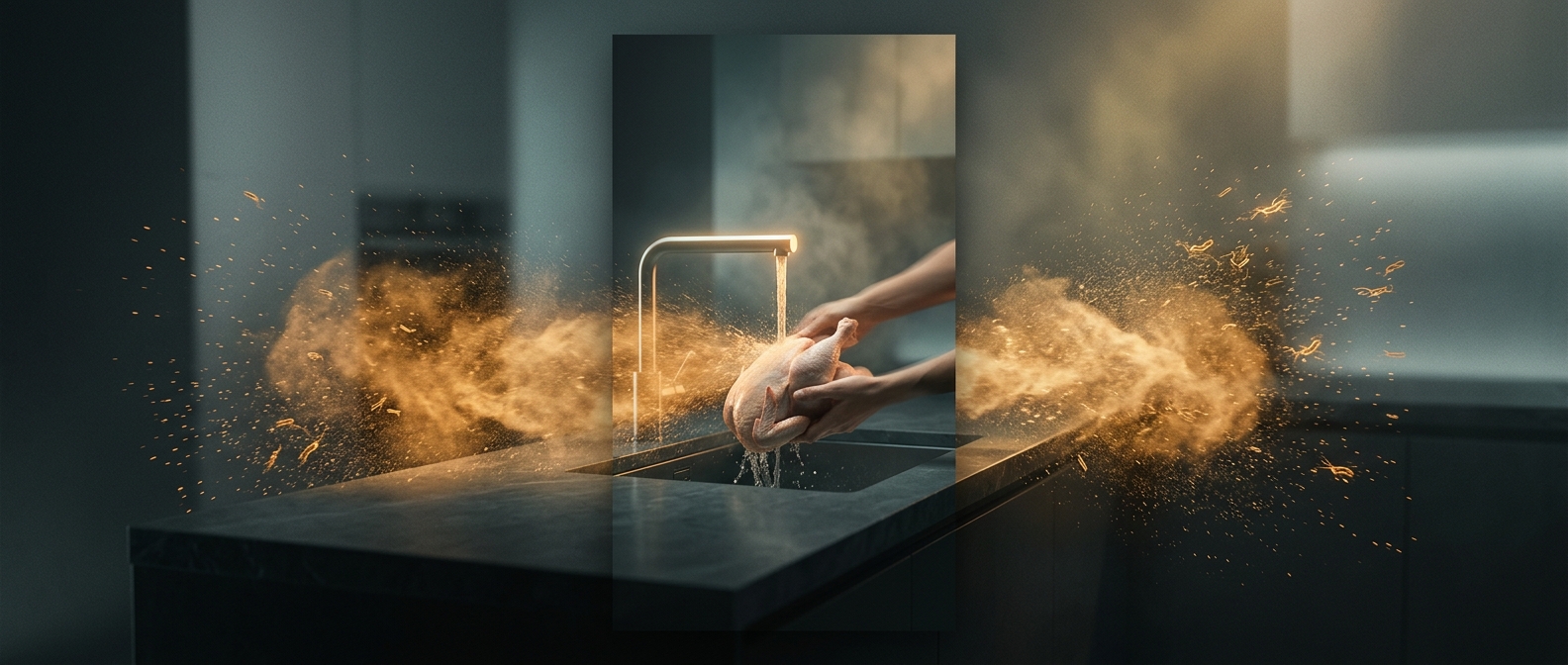
Raw chicken can carry bacteria such as Salmonella or Campylobacter on its surface. Rinsing does not reliably remove them: water may dislodge some bacteria, but it does not make the meat safe. Instead, splashes can carry tiny contaminated droplets onto the faucet, sink, nearby dishes, or food that will not be cooked.
That creates a hidden transfer problem. A counter or utensil does not need to look wet or dirty for bacteria to have reached it, and touching a contaminated surface can move them onto hands or ready-to-eat food.
Let cooking do the safety work
The useful step is to cook chicken thoroughly, rather than trying to clean it with water. Heat kills harmful bacteria throughout the meat when it reaches a safe internal temperature. Use a food thermometer in the thickest part, avoiding bone, to check doneness; color alone is not a dependable test.
Keep raw chicken and its juices away from foods that will be eaten without cooking. Wash hands and clean utensils, boards, and surfaces that touched the raw meat with hot, soapy water. If the chicken is wet, pat it dry with a paper towel and discard the towel, or simply place it directly in the pan.
The practical payoff is simple: skipping the rinse avoids turning the sink area into another place that needs careful cleaning, while thorough cooking addresses the risk on the chicken itself.