Why dry flour can still carry bacteria
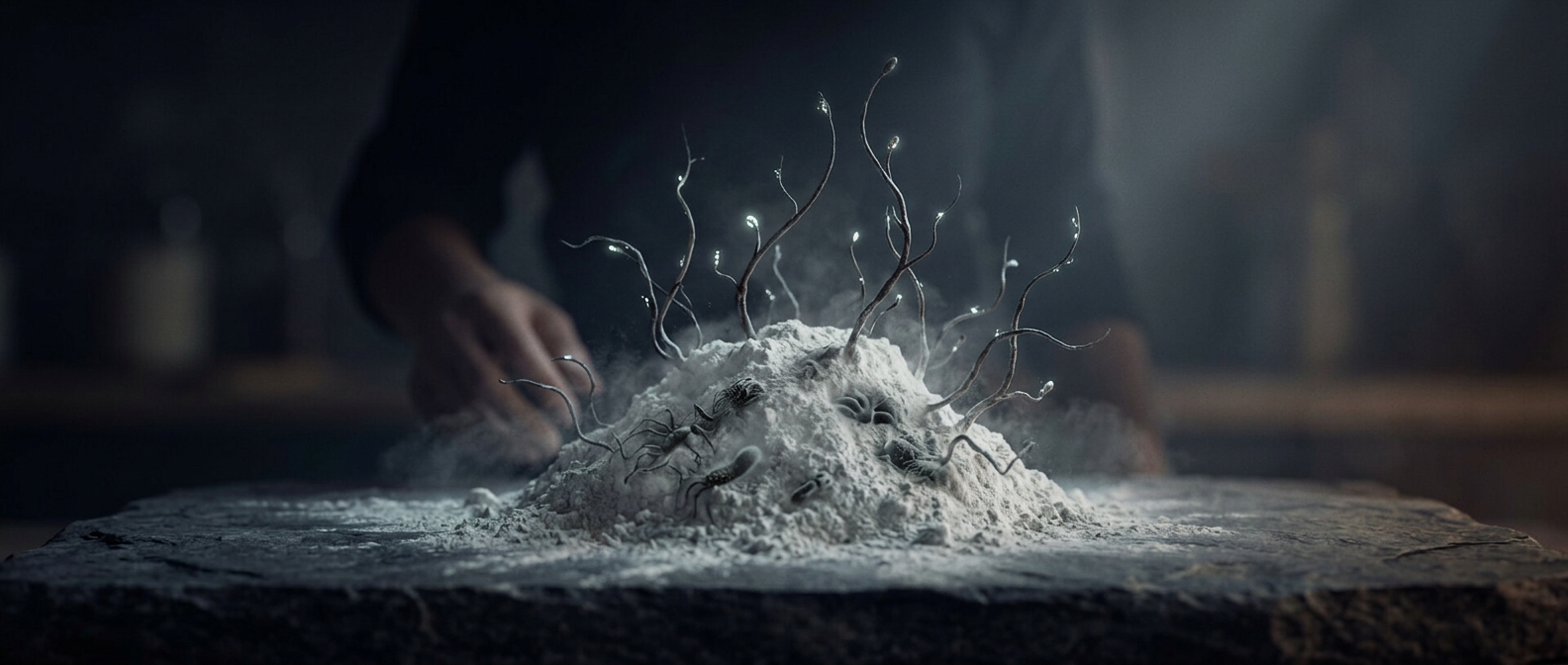
Flour looks inert, but dryness does not reliably kill bacteria. It mainly prevents them from multiplying: without enough available water, E. coli cannot grow. Some cells can nevertheless survive in the dry grain and remain there after milling. When flour is later mixed with water, those survivors can become active again.
Contamination can begin before grain reaches the mill, for example through contact with animal waste in a field or during harvest and handling. Milling turns grain into flour; it is not, by itself, a dependable step for destroying bacteria. Because flour is a raw agricultural ingredient, its appearance and smell cannot show whether it contains harmful microbes.
What changes when dough is baked
Baking exposes dough to heat, which can kill E. coli when the heat reaches it for long enough. Raw dough has not had that treatment, and tasting a small amount is still a way of eating uncooked flour. The same concern applies to batter or dough made with raw flour, even when the recipe also contains other ingredients.
Flour can also spread beyond the bowl: dust or residue on hands, counters, and utensils may transfer bacteria to food that will not be cooked. Keeping raw flour and dough separate from ready-to-eat foods—and washing hands and surfaces afterward—addresses that less obvious route. The key distinction is that dry flour may keep bacteria from multiplying, but only a reliable cooking step can make contaminated flour safer to eat.