The rind is a boundary, not a guarantee
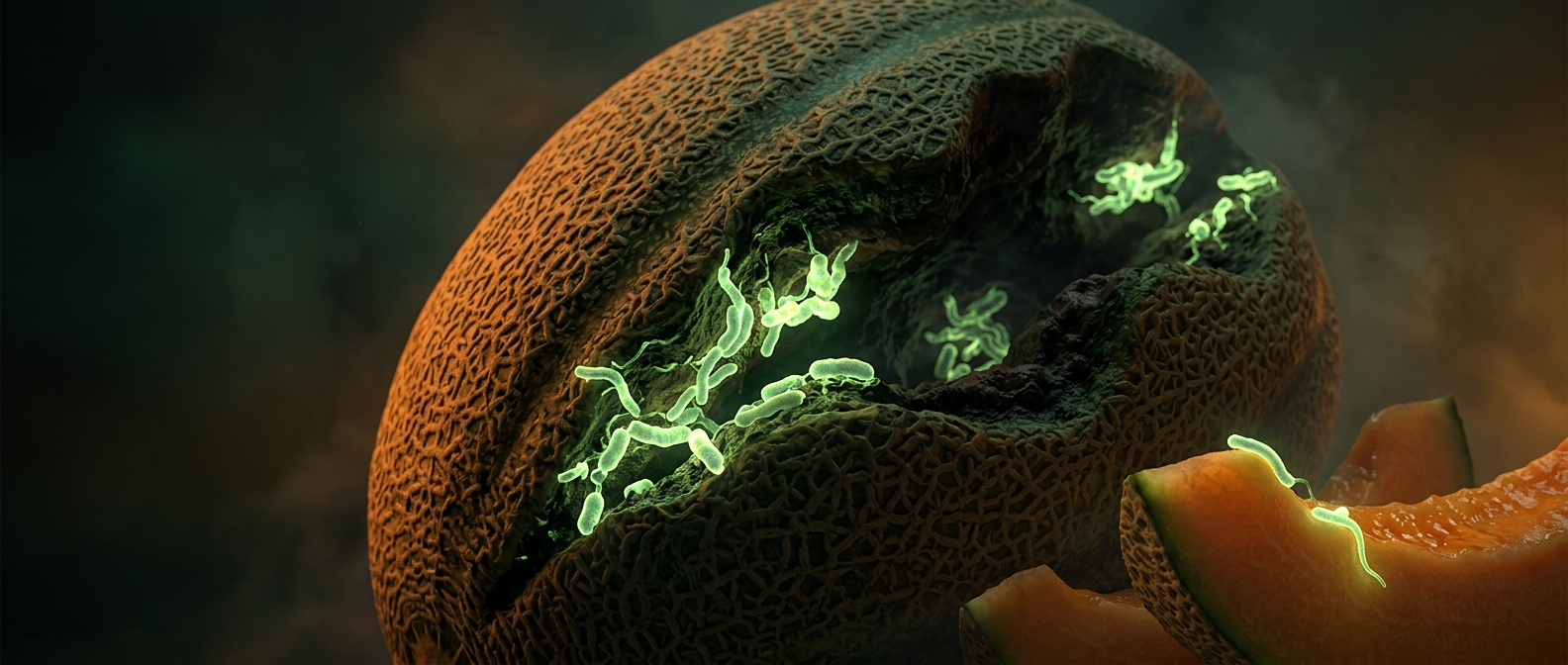
An uncut melon’s tough outer rind helps keep microbes away from the moist flesh inside. But the skin is not sterile: soil, water, handling, and transport can leave bacteria on its surface. Netted or uneven rinds can also make dirt harder to remove than it would be from a smooth surface.
When a knife crosses that skin, anything clinging to the blade can be carried past the rind and deposited on the cut surface. The flesh’s moisture and nutrients can then give microbes a more hospitable place to persist or multiply, especially if cut melon is left warm.
Reduce what the knife can carry
Before cutting, rinse the whole melon under running water and scrub the rind with a clean produce brush. Drying it with a clean towel helps remove loosened dirt rather than leaving it on the surface. Washing cannot make the rind sterile, but it can reduce the material available to transfer.
Use a clean knife and cutting board, and keep the cut flesh away from the unwashed exterior. Once sliced, refrigerate melon promptly and keep it cold; chilling slows bacterial growth but does not undo contamination that has already reached the flesh.
The key is to treat cutting as the moment the rind’s barrier is opened: a little care before the first slice can keep surface grime from becoming part of the food.