How a thumb leaves a trace
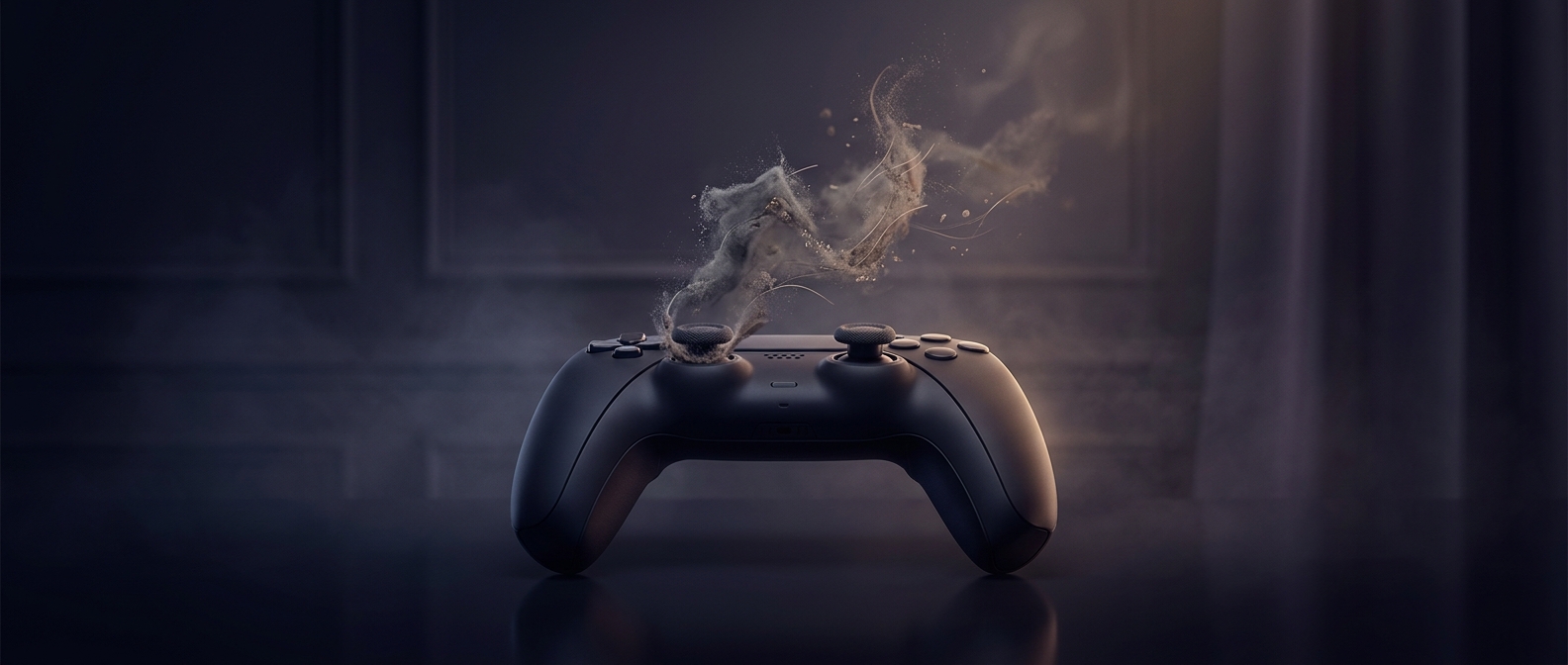
The outer layer of skin is constantly renewing itself. As older cells loosen and shed, ordinary contact can transfer some of them to objects we handle. During play, thumbs repeatedly press, slide, and rub against a controller’s grips and buttons, making that contact a steady source of tiny skin flakes.
Why the residue builds up
A controller is handled often, and its textured surfaces can hold onto particles more readily than a smooth, easy-to-wipe surface. Skin cells are only part of what gets left behind: natural skin oils and sweat can help debris cling, while dust and other grime collect over time. The result is not a visible layer of skin so much as a mixed residue from repeated use.
This is why a controller can feel grimy even when it looks clean. The same friction that helps your thumbs keep a secure grip also continually transfers material onto the places they touch most. Regular cleaning removes that buildup; it does not stop the normal shedding that puts the first traces there.