How a chair arm turns slack into a snag
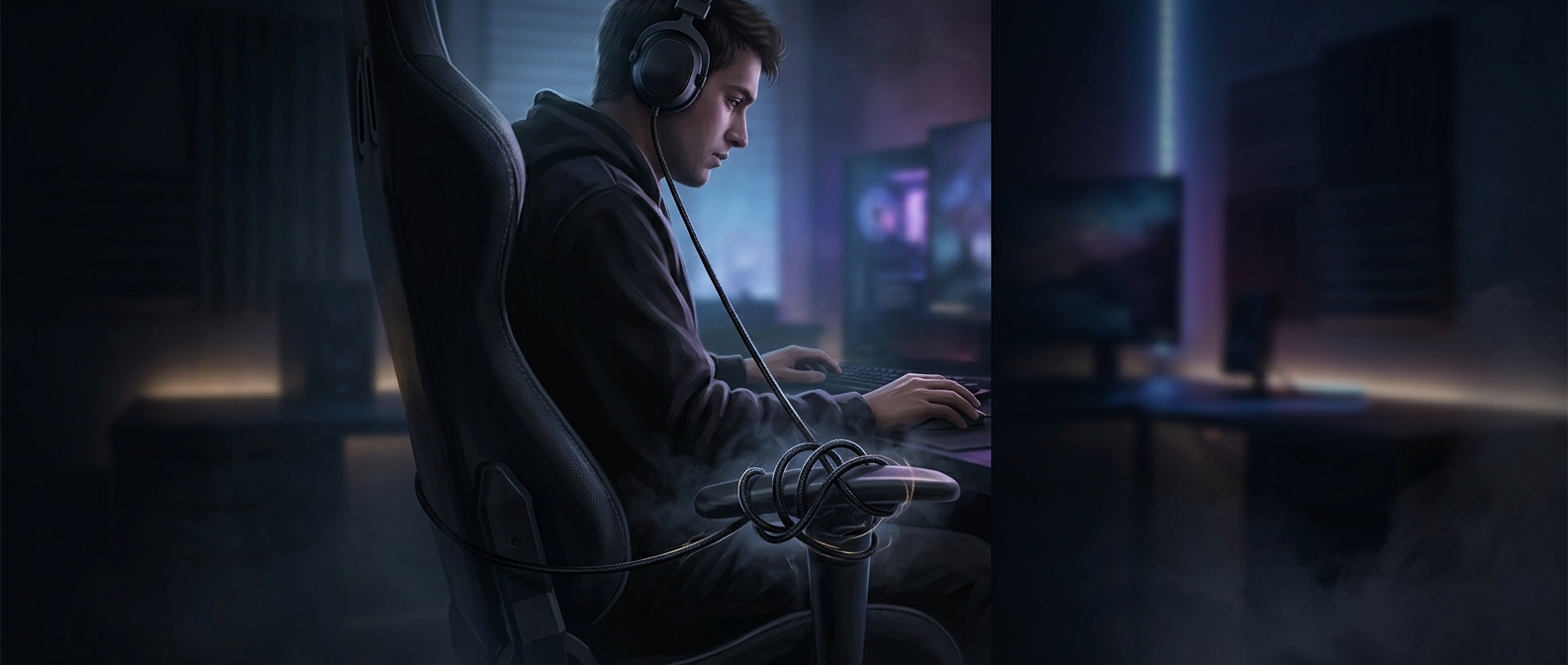
A headphone cable does not need to be tightly wrapped around anything to catch. When it hangs beside a seated person, a loose section can swing behind or beneath a chair arm. The arm acts like a hook: as the person turns, the cable slides around its edge and forms a loop that cannot simply fall free.
The snag becomes noticeable when the listener moves away. Their body pulls one end of the cable, while the chair arm holds the other. That opposing pull quickly takes up the slack, sending a sharp tug to the headphones. A smooth cable may slide off an arm if the pull is gentle and well aligned; a sudden movement, a bulky connector, or a loop caught around the arm makes release less likely.
Why small movements can cause a big yank
While sitting still, the cable’s slack absorbs motion. But once it is caught, that slack is used up all at once. The cable then transmits the movement directly instead of letting it dissipate through a loose curve. Standing or swiveling can therefore pull headphones off before the wearer realizes the cable is trapped.
Routing the cable toward the front of the body, or clipping it to clothing, keeps it away from the chair’s moving edges. The key is not merely having a shorter cable: it is preventing a loose loop from passing behind an arm in the first place.