A fridge can block one hazard, not the whole blast
Radiation and blast pressure are different problems. Dense lead can absorb some penetrating radiation, so a lead-lined enclosure might reduce exposure from certain kinds of radiation. But a nuclear detonation also sends out an intense heat flash and a powerful blast wave—a fast-moving surge of compressed air that can crush buildings and hurl debris.
A refrigerator is not built to withstand those forces. Its thin metal shell and insulation offer little structural strength, and the blast could toss, deform, or rupture it. Being inside the box would not turn it into a protected shelter; the person could be injured by the impact and by the refrigerator’s contents or shattered parts.
Why the movie image is so memorable
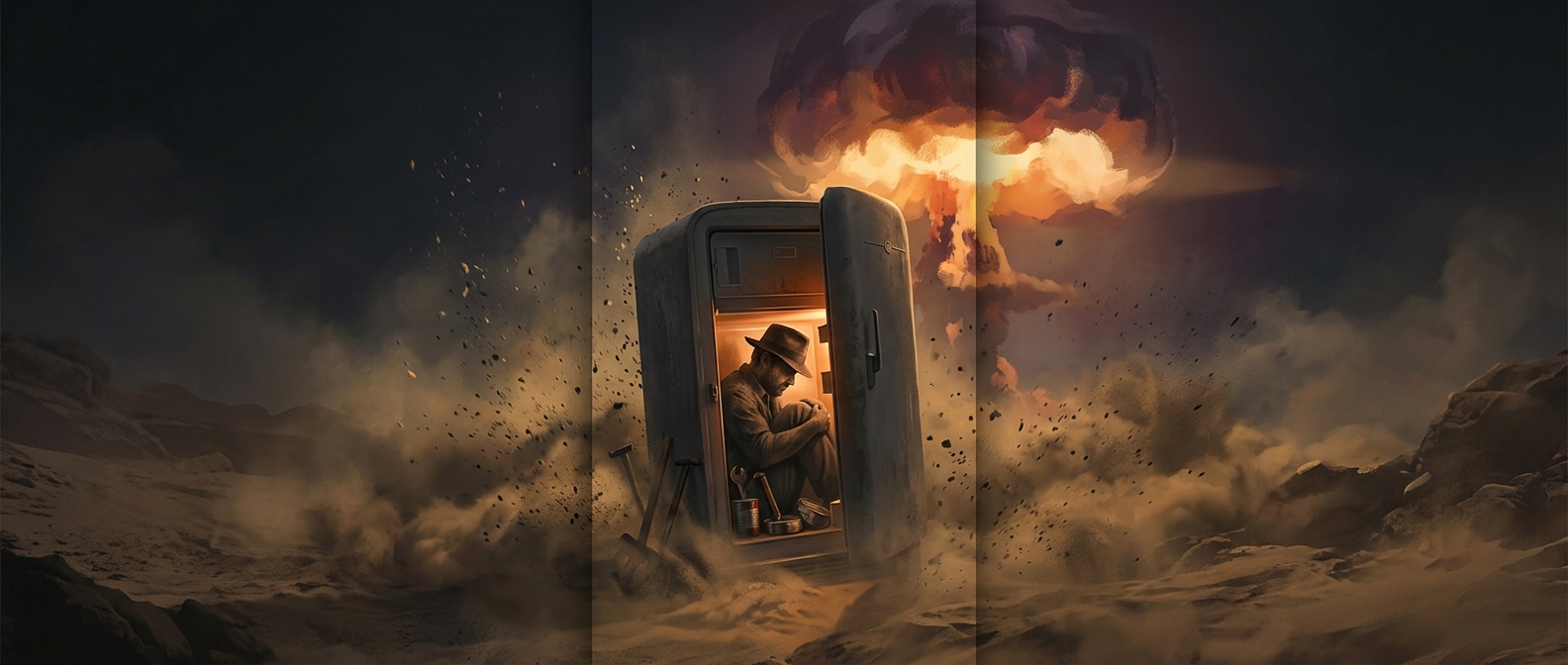
The famous refrigerator escape in Indiana Jones and the Kingdom of the Crystal Skull turns a familiar household object into a last-second bunker. The visual works because a closed metal box feels solid and enclosing. In reality, shielding against radiation does not make an object resistant to heat, pressure, or violent motion—and those hazards arrive together in a nuclear blast.
The practical lesson is less cinematic: survival depends on reaching substantial shelter, especially a basement or the interior of a sturdy building, rather than hiding inside an appliance. A refrigerator might conceal someone from view; it cannot substitute for a structure designed to keep the outside world from reaching them.