A Ticket Turns the Afterlife Into a Travel Office
In Grim Fandango, death does not send everyone straight to the same destination. Newly dead souls must journey through the Land of the Dead toward the Ninth Underworld, and the game gives that passage a sharply practical form: travel tickets. The coveted Number Nine train can carry a soul there quickly; without it, the trip is a long, difficult trek.
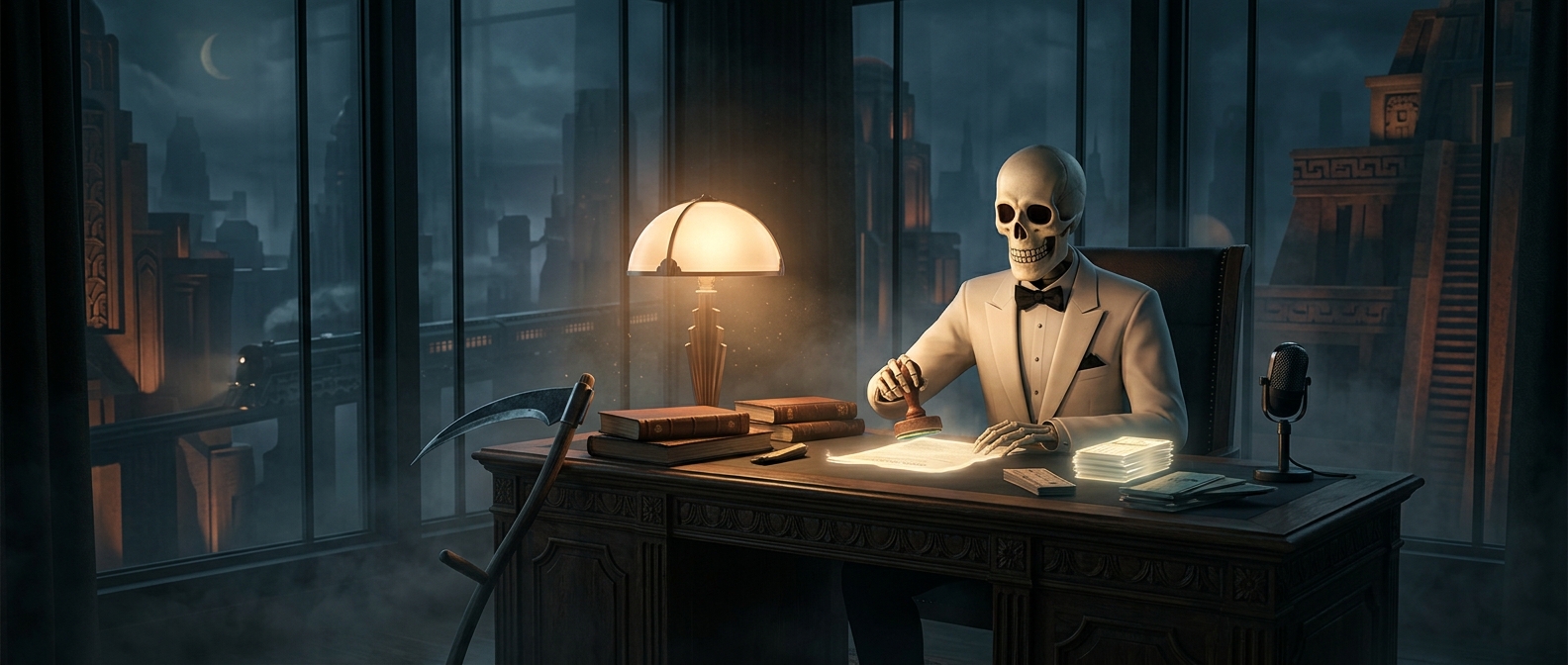
That setup gives Manny Calavera, the game’s skeletal travel agent, a job that is both comic and consequential. He assesses clients’ lives, offers travel options, and tries to make sales in an office where salvation is processed like a vacation package. The joke works because the stakes are real to the characters: a ticket is not just an upgrade but a chance to avoid years on the road.
When Merit Becomes a Sales Problem
The ticket system also makes the game’s central injustice visible. In principle, a person’s virtue in life determines whether they qualify for the express train. In practice, Manny’s work is shaped by quotas, commissions, and a corrupt bureaucracy. The gap between who deserves a ticket and who receives one turns an abstract moral question into something concrete: a seat that can be withheld, sold, or stolen.
That premise supports the game’s noir-style mystery and its puzzles. Manny is not simply solving riddles in a world of skeletons; he is trying to understand why the system fails the people it is supposed to serve. The memorable image of a grim reaper hawking train upgrades is funny precisely because it makes the afterlife feel like an ordinary institution—with paperwork, sales pressure, and people powerful enough to bend the rules.