The Hand of Midas Makes a Myth into a Trap
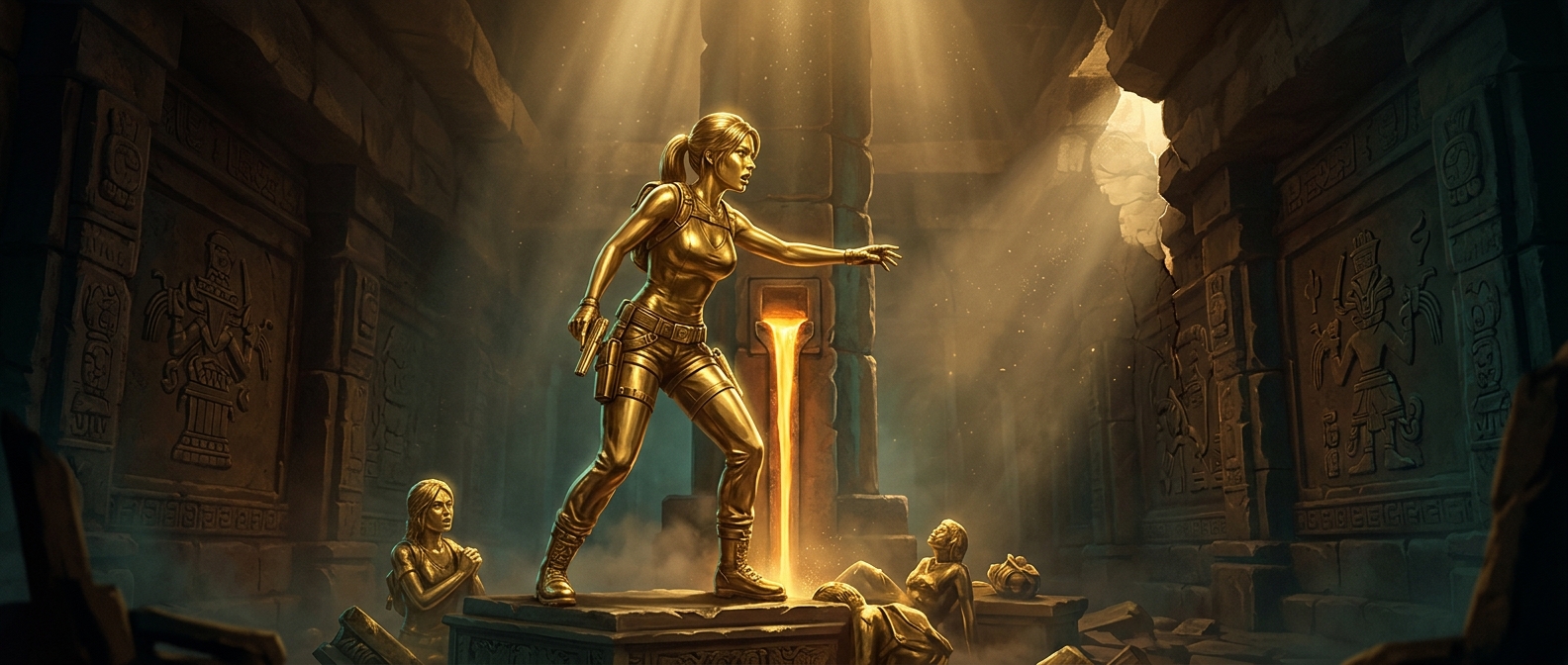
In Tomb Raider, the golden hand is more than a dramatic decoration: touching it turns Lara into a solid gold statue and ends the expedition. The danger draws on the story of King Midas, whose touch transformed things into gold—a gift that became a curse when it made ordinary life impossible.
A Rule the Player Can Learn at a Glance
The trap works because its consequence is instantly legible. A hand associated with transformation sits in a palace built around the promise of treasure; the player can understand the risk without a long explanation. Gold here is not a reward to collect but a hazard to avoid.
That reversal suits Tomb Raider’s exploration-based play. Players inspect unfamiliar spaces, test routes, and decide whether a tempting object is safe. The hand turns that curiosity into a high-stakes choice: get close enough to touch it, and there is no second attempt within that expedition.
The Cost of Wanting the Treasure
Turning Lara into an immovable statue makes the myth’s irony physical. Gold appears valuable, but in this room it strips away movement—the very thing the player depends on to explore. The trap’s memorable punch comes from that contrast: one touch converts an adventurer into an exhibit, and the palace’s treasure becomes the end of the journey.