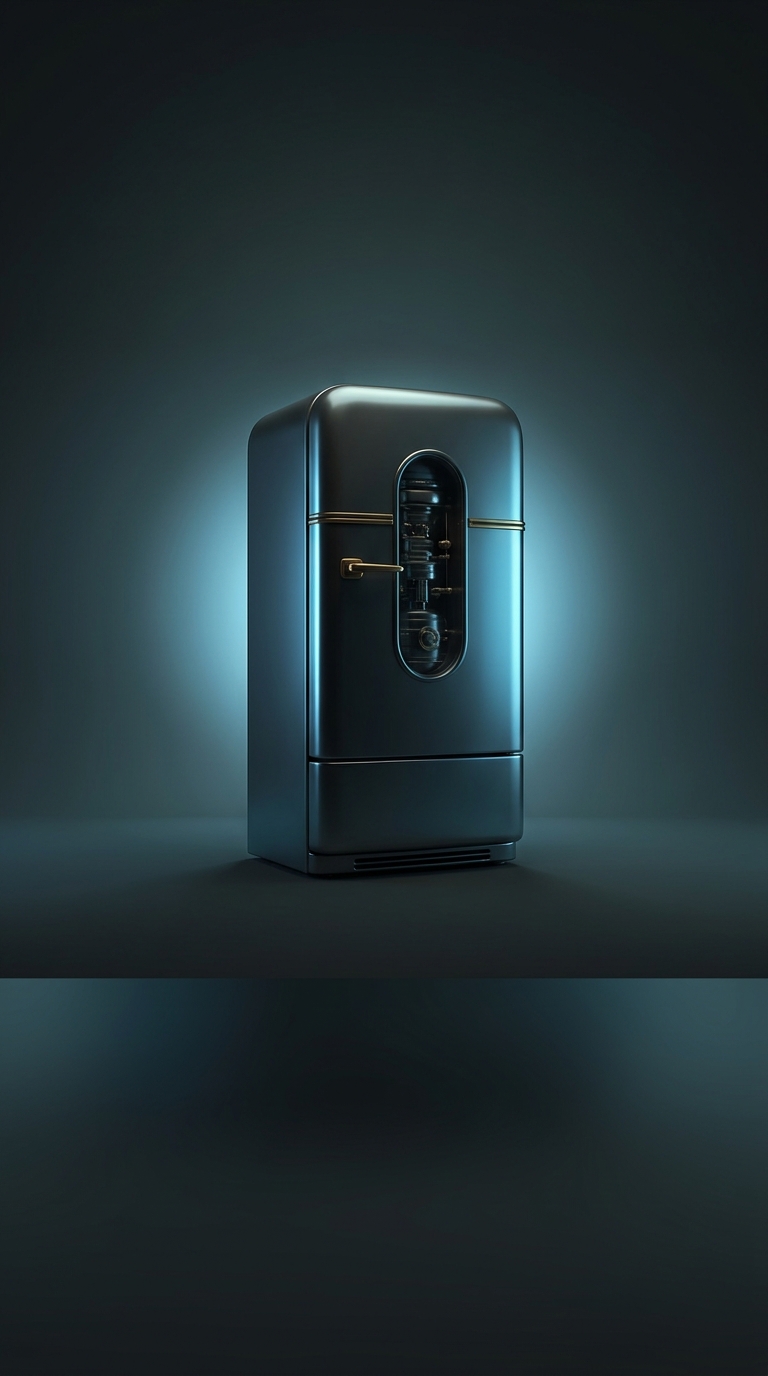
The first time machine was a refrigerator
In an early version of Back to the Future, Marty traveled through time inside a refrigerator. The idea was tied to a dramatic test: he would take the appliance to a nuclear-bomb test site and use the blast to send it—and himself—back in time.
That setup made the refrigerator more than a quirky vehicle. It was a protective enclosure for a dangerous experiment, but it also left Marty’s journey dependent on reaching a fixed location and timing the test precisely.
Why the car worked better
The story’s time machine became a car, giving Marty a way to move around town and making the machine part of the action rather than a stationary container. The switch also created a memorable visual image: an ordinary-looking vehicle that could suddenly vanish from the road.
There was a practical concern with the refrigerator idea, too. Filmmakers worried that children might imitate the scene and climb into a refrigerator, where they could become trapped. The DeLorean solved a storytelling problem and avoided centering the adventure on an appliance that might invite a dangerous imitation. In the finished film, the time machine could race toward its destination under its own power—right up to the moment it disappeared.