Why Water Is a Hard Boundary in Splatoon
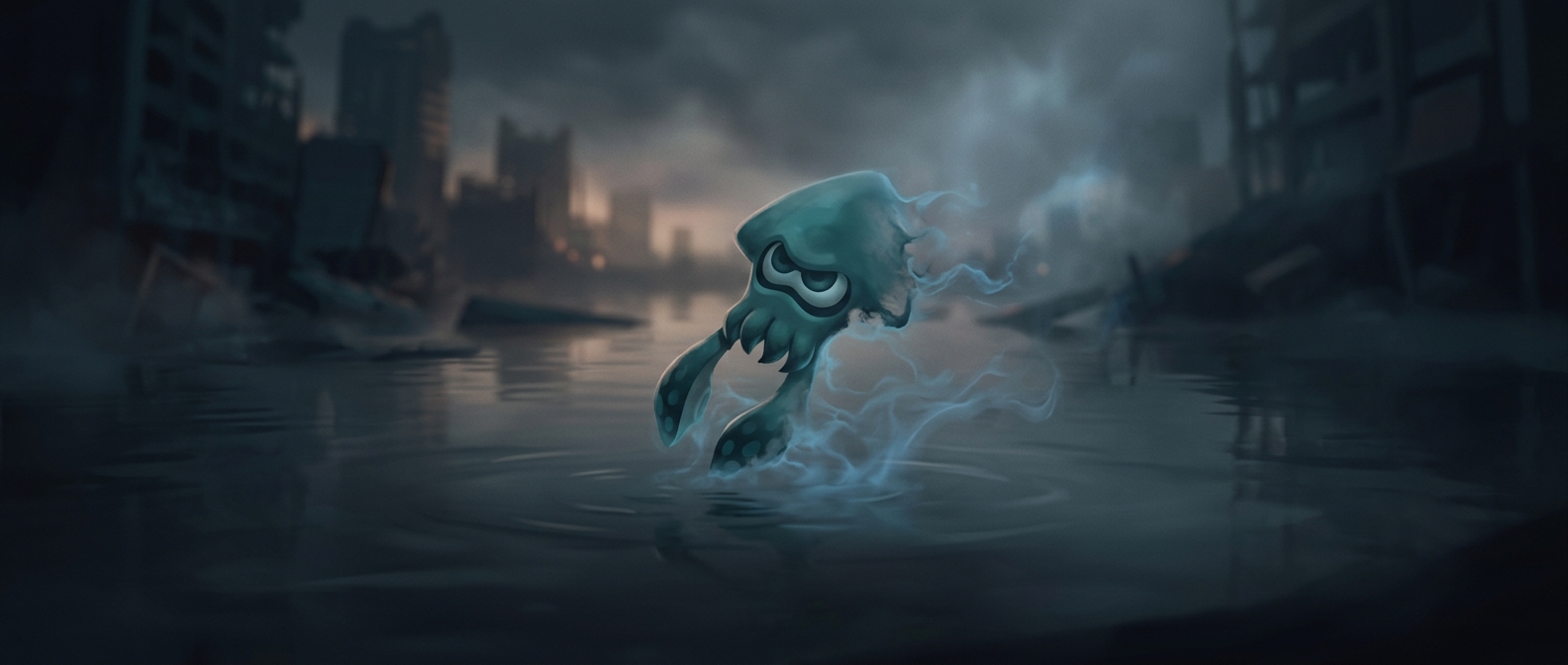
In Splatoon, water is not simply terrain that slows an Inkling down. Touching it causes the character to splat immediately, whether it is a deep pool or a shallow patch. The game treats water as fundamentally incompatible with these ink-bodied beings, not as something they can wade through or learn to swim in.
That makes their name and shape a little misleading: Inklings can become squid-like, but they are not ordinary marine animals. Their signature movement is swimming through ink of their own team’s color. In squid form, they can slip beneath that ink, hide, and move quickly; uninked ground, by contrast, limits their movement. Water offers no alternative route.
A Rule That Shapes the Match
The danger gives ink a job beyond marking territory. A team’s ink creates the paths its players can travel, while water cuts those paths off. A careless leap near a pool can end a push instantly, and a strip of water can force players to take a longer route or fight for a narrow crossing. The boundary is easy to read, so players can plan around it without needing a warning meter or a complicated swimming system.
It also supports the setting’s central contrast: these creatures have adapted to life on land, but their world is still organized around ink. They can transform into squid and move fluidly—provided they are swimming in the right substance. **In Splatoon, a puddle is not a small obstacle; it is a change of medium that their bodies cannot survive.**