A tiny animation made Mario’s command look like a hit
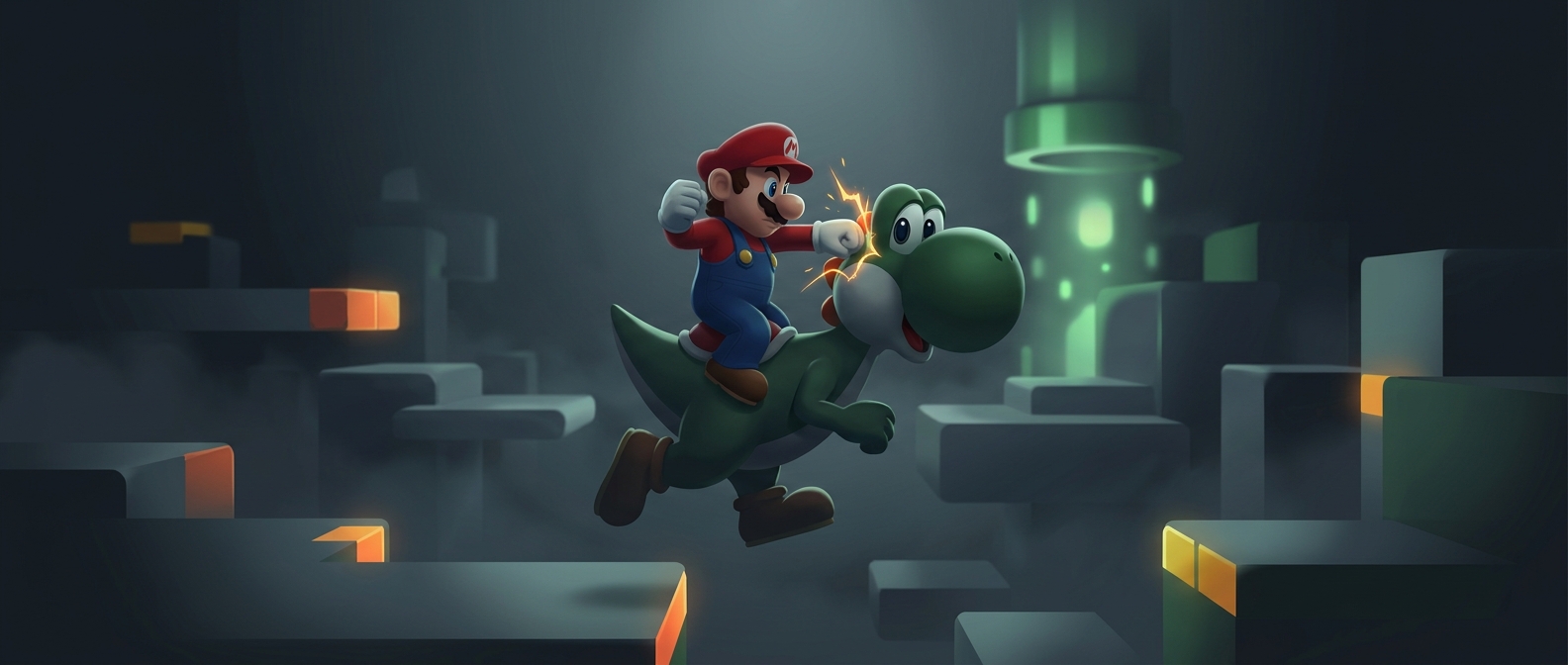
In Super Mario World, pressing the action button while riding Yoshi makes the dinosaur shoot out his tongue to grab nearby objects. The original sprites—the small drawings used to animate characters—show Mario’s arm moving down toward Yoshi’s head at the same moment. Read frame by frame, the gesture looks less like a signal and more like a strike.
That overlap is the source of the joke: Mario’s movement and Yoshi’s tongue animation happen together, so the player sees an apparent cause-and-effect sequence in a few compact poses. The game does not pause to explain the gesture; its meaning has to register quickly while the player is moving through a level.
Why the picture leaves room for interpretation
A sprite animation has to communicate an action with very little time and visual detail. Here, the important result is unmistakable—Yoshi’s tongue shoots forward—but Mario’s arm gives the command an unexpectedly rough visual explanation. The confirmed sprites make the reading hard to unsee, even though the mechanic itself is simply a button press.
The detail is a reminder that game animation can tell a slightly different story from the controls: a harmless input can look startling when two characters’ movements line up. Once noticed, the next tongue flick comes with a new question—what, exactly, is Mario doing up there?