How a Flea Circus Made the Tiny Seem Alive
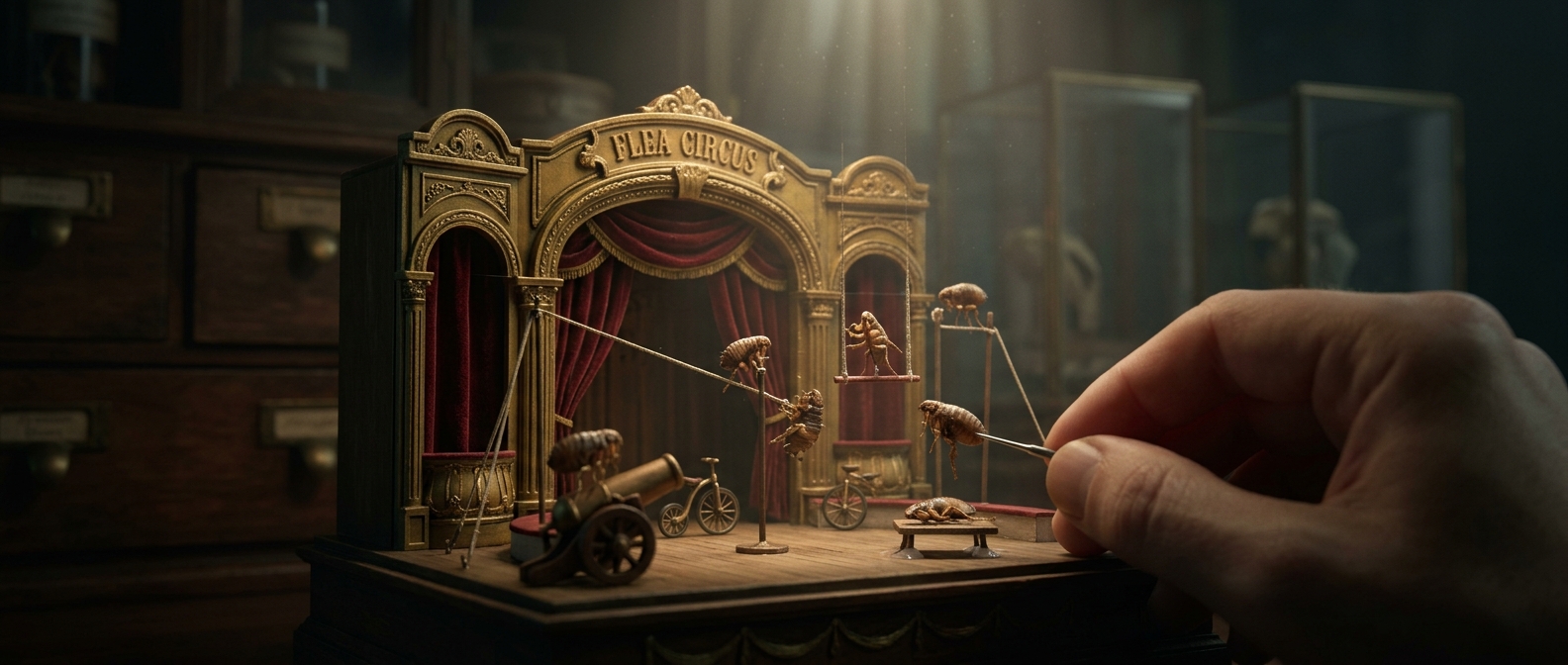
A flea is too small for an audience to follow unaided, so the spectacle depended on turning its minute body into part of a visible stage trick. In some flea-circus displays, the flea was already dead: its body was attached to a fine wire, while hidden magnets helped move the wire or a miniature prop.
The Trick Was in the Movement
A performer could use the concealed mechanism to make a flea seem to pull a tiny carriage, dance, or struggle against a load. Because the wire was difficult to see and the flea itself was so small, motion from the apparatus could be read as effort from the insect. The flea supplied the convincing shape; the hidden mechanism supplied the action.
That arrangement solved a practical problem for the showman. A live flea’s movements were unpredictable, but a dead one could be positioned for a repeatable display. The performance depended less on training an insect than on controlling what the audience could see.
A Circus Built on Scale and Concealment
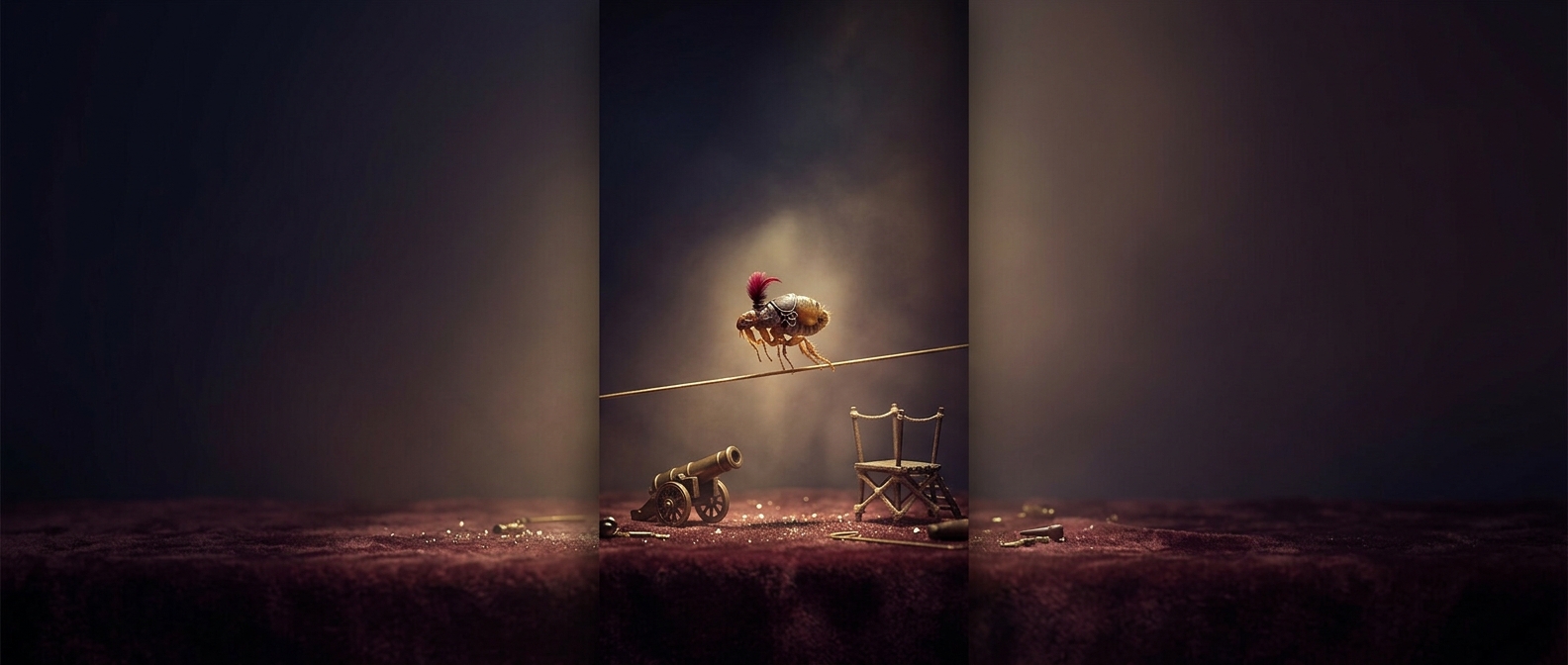
Flea circuses were miniature illusions as much as animal acts. Magnification and tiny props helped make the scene legible, while concealed wires and magnets kept the mechanics out of view. The smaller the subject, the easier it was for a subtle movement to look like a remarkable feat.
The striking detail is that the apparent performer did not always perform at all: a hidden mechanism could turn a motionless flea into the star of the show.