How a Flea Could Seem to Pull a Cart
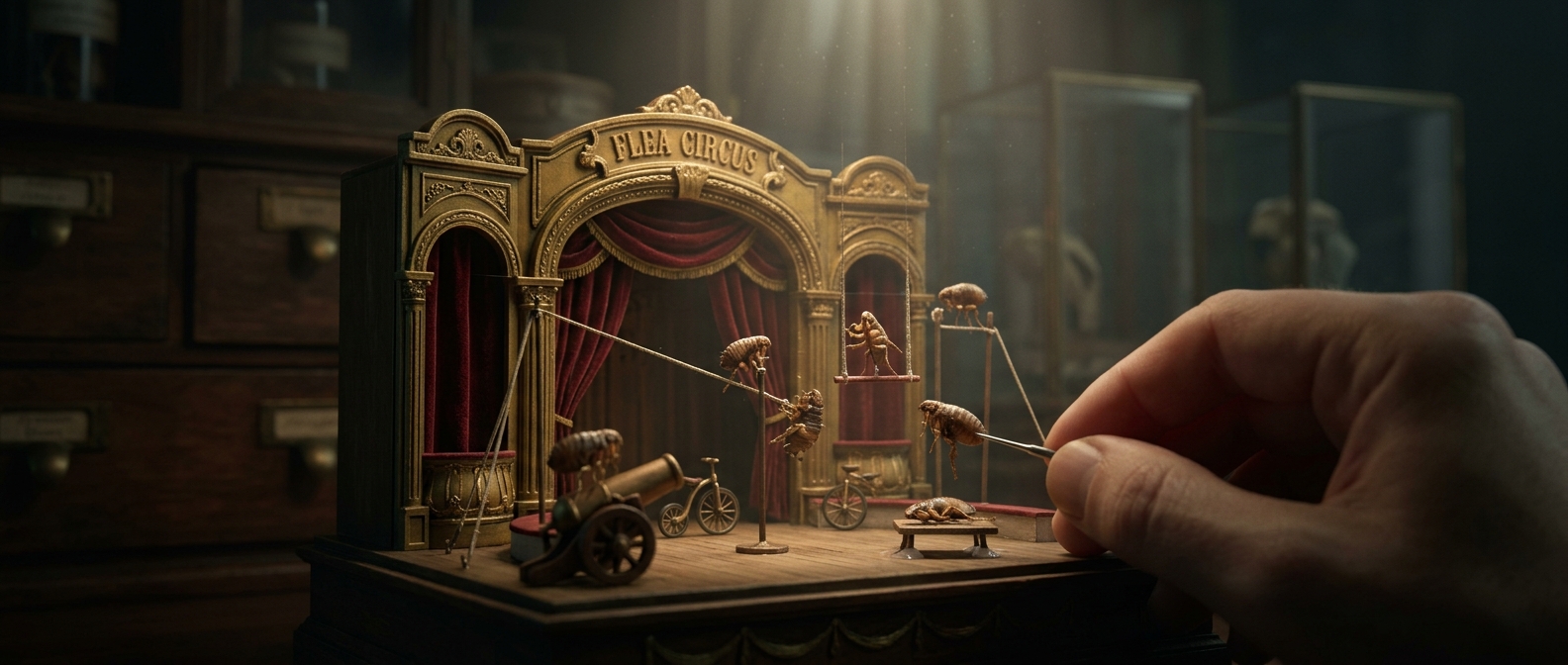
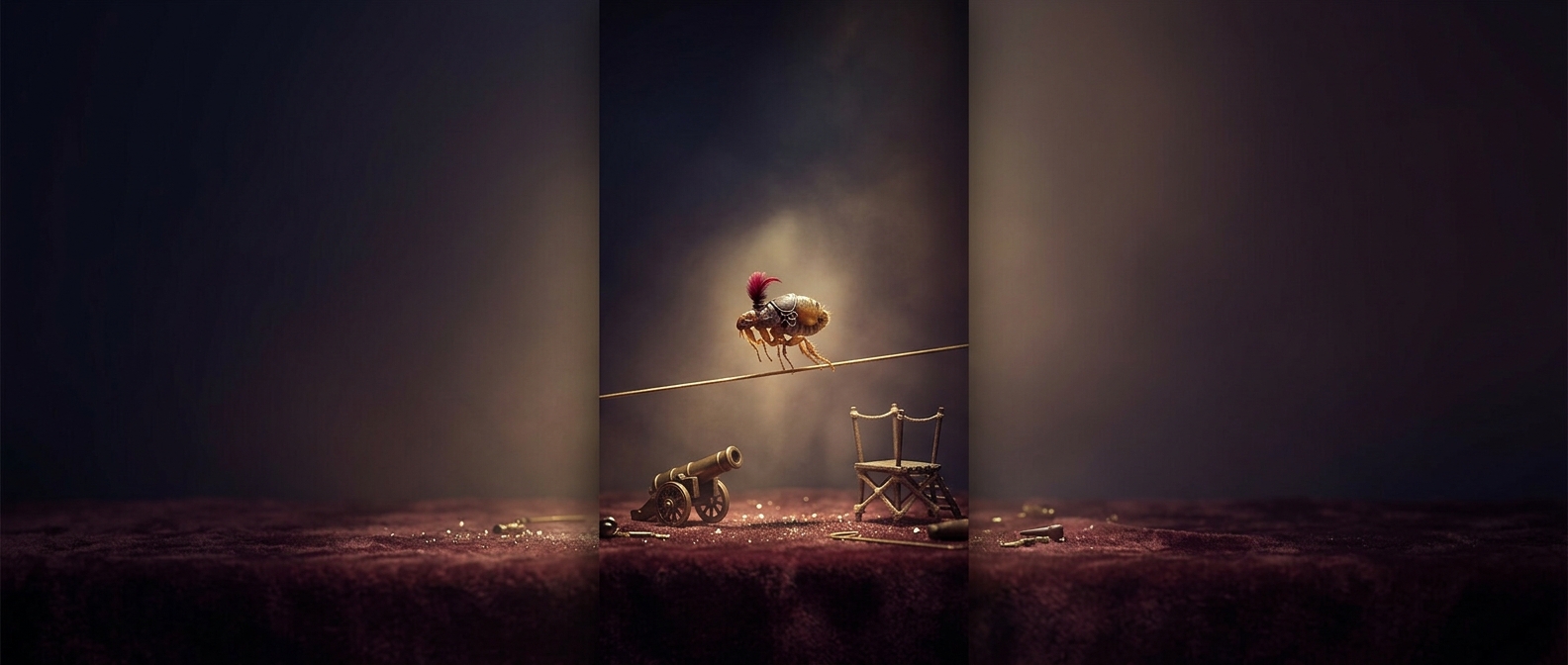
A flea circus turned a small animal’s ordinary movement into a theatrical illusion of strength. A handler attached a tiny cart to a live flea, then relied on the flea’s instinct to jump or struggle. As the flea moved, the cart shifted with it—making the animal appear to push, pull, or perform a feat on cue.
The trick depended on scale. A flea is so small that a miniature cart can look substantial beside it, while the flea’s powerful-looking leaps make even a short movement seem dramatic. The flea was not following a command in the way a trained dog might; the handler arranged the apparatus so that its natural behavior supplied the action.
A Performance Built Around Delicate Handling
Making the spectacle work required attaching the equipment without immobilizing the flea. The harness and cart had to be light enough for the insect to move, yet secure enough to stay connected. The flea’s unpredictable movement was part of the act’s appeal—and part of its practical difficulty: the handler could set up the scene, but could not choreograph every jump.
That uncertainty gave flea circuses their peculiar mix of engineering and showmanship. The audience saw a tiny performer apparently doing purposeful work; behind the effect was a carefully scaled prop and an animal responding to its own instincts. The “strength” was real movement, framed by miniature stagecraft.