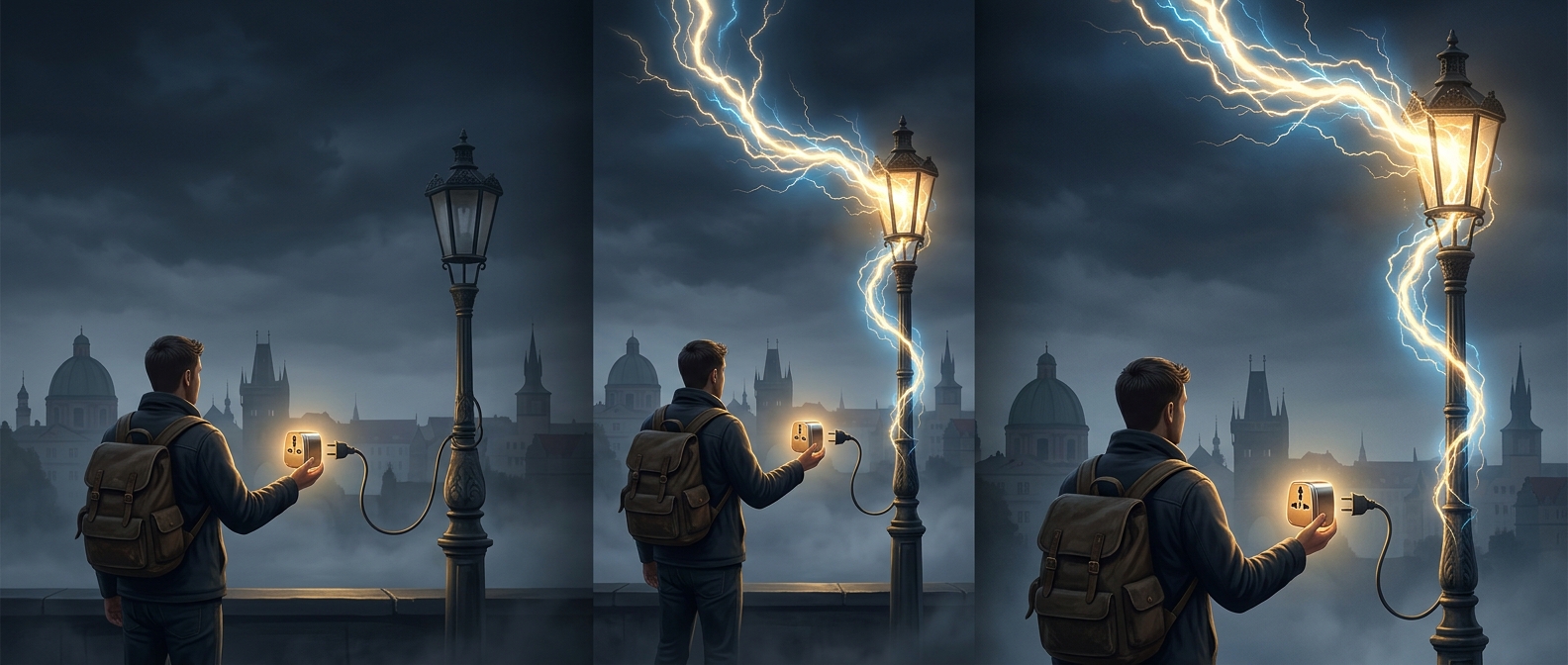
Why the socket has a deep rim
In many European-style outlets, the opening is set back inside a plastic well rather than sitting flush with the wall. That shape changes what happens during the brief moment when a plug is only partly inserted: the plug’s metal pins are surrounded by the socket before they can make contact with its electrical contacts. The well also makes it harder for a finger to reach the pins while the plug is being handled.
This is a physical barrier, not a switch that turns the outlet off. The contacts may still be live, and the recess is only one part of the safety design. Some outlets also have shutters that cover the openings until a plug is inserted; features vary by socket type and country.
A small detail with a practical travel consequence
The well also helps guide a plug straight into the outlet, but it can affect fit. A bulky adapter may not sit securely if its body is wider than the recessed opening, even when its pins match the socket. Travelers may need a compact adapter designed for recessed outlets—and should never force a plug that does not seat properly.
The visible rim is therefore more than a styling choice: it lets the socket surround the pins during insertion, while reminding travelers that matching pin shapes alone does not guarantee a safe or compatible connection.