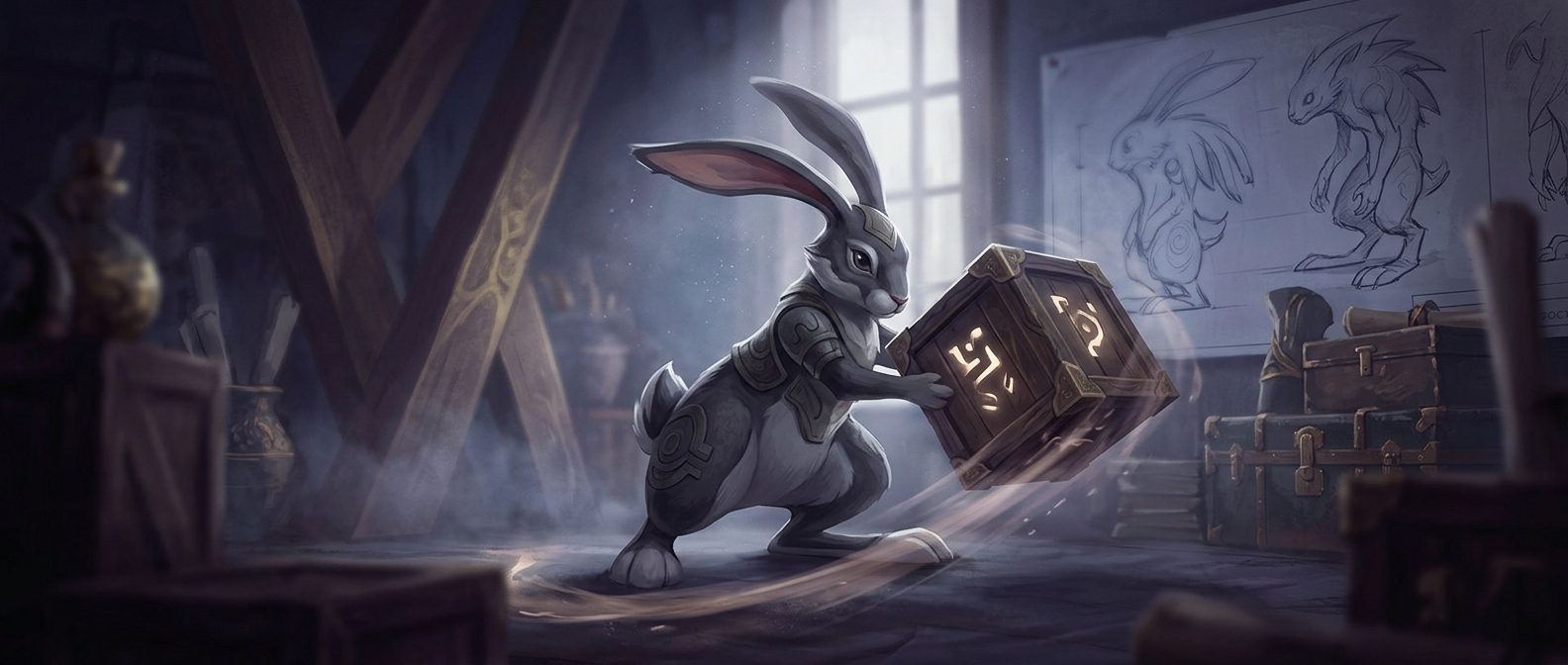
Why a Rabbit Did Not Fit a Speed Game
The rabbit idea made sense as a character concept: long ears could reach out, grab objects, and turn them into weapons. But that ability would ask players to do more than move. They would need to identify something to grab, reach for it, and throw it at the right moment. Each interaction could interrupt the forward rush or make the player stop and aim.
That is a poor match for a game whose central pleasure is moving quickly. If progress depends on pausing to handle objects, speed becomes something the player gives up in order to use the character’s special ability.
The Ability Had to Serve the Pace
This was not just a question of which animal looked appealing. The character’s body and abilities shaped how the game would feel in a player’s hands. A rabbit’s ears suggested a grab-and-throw action; that action, in turn, implied a more deliberate rhythm. The developers set the concept aside because that rhythm worked against the game they wanted to build.
The episode shows how tightly character design and gameplay can be linked: an ability can be memorable on paper yet wrong for the experience around it. In a speed-focused game, even a useful attack has to let the player keep moving. If using it repeatedly brings the action to a halt, the character’s defining trick becomes an obstacle to the game’s defining quality.