Why a Turkey Leg Can Look Almost Too Big to Be Turkey
The drumsticks sold at theme parks really are turkey. Their size comes from the bird—and from the fact that a park serving is chosen to look outsized. Male turkeys, called toms, grow larger than females and have correspondingly substantial legs. A drumstick is the lower leg, with dense muscle built to support and move the bird’s body; it is not an unusual cut from some other animal.
The Meat’s Color Adds to the Mystery
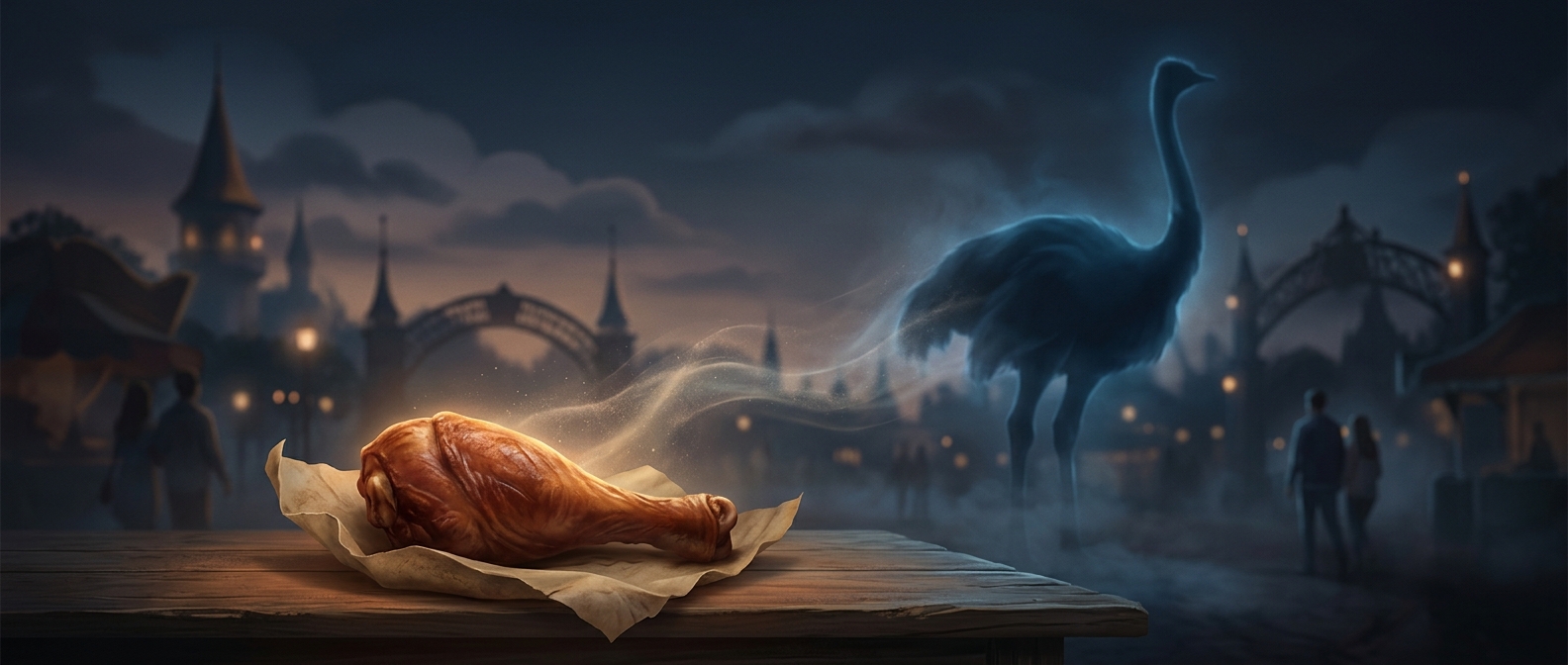
Turkey legs are dark meat, unlike the familiar pale breast meat. Leg muscles work continuously as a bird stands and walks, so they contain more myoglobin, a protein that helps store oxygen and gives working muscle a darker color. That deep hue, along with the leg’s unusual scale beside a person’s hand, helps explain why visitors sometimes guess emu.
Preparation can make the difference more striking. Theme-park legs are often seasoned and smoked, which gives them a pronounced flavor and a darker, more dramatic exterior. The result looks less like the mild turkey people expect from a holiday breast—but the basic ingredient is still turkey.
A Novelty Built on a Real Difference
The appeal is partly practical: a whole drumstick is easy to carry and eat while walking around a park. Its size turns an ordinary poultry cut into a spectacle, while its dark meat and smoky seasoning make it feel like a different food. The “emu leg” impression is a visual mix-up, not a secret menu item.