Why a lawn can fail where crowds gather
Grass survives foot traffic only up to a point. Repeated walking presses soil together and tears at the blades; in a busy queue, plaza, or narrow path, the same strips get trampled day after day. The result can be bare patches and mud—the opposite of the tidy, storybook landscape a park is trying to create.
Keeping turf healthy also takes space and ongoing care. It may need watering, mowing, and time without crowds to recover. In places where guests constantly pass through or stop, those needs can conflict with the park’s operating schedule.
A hard surface dressed to read as soft ground
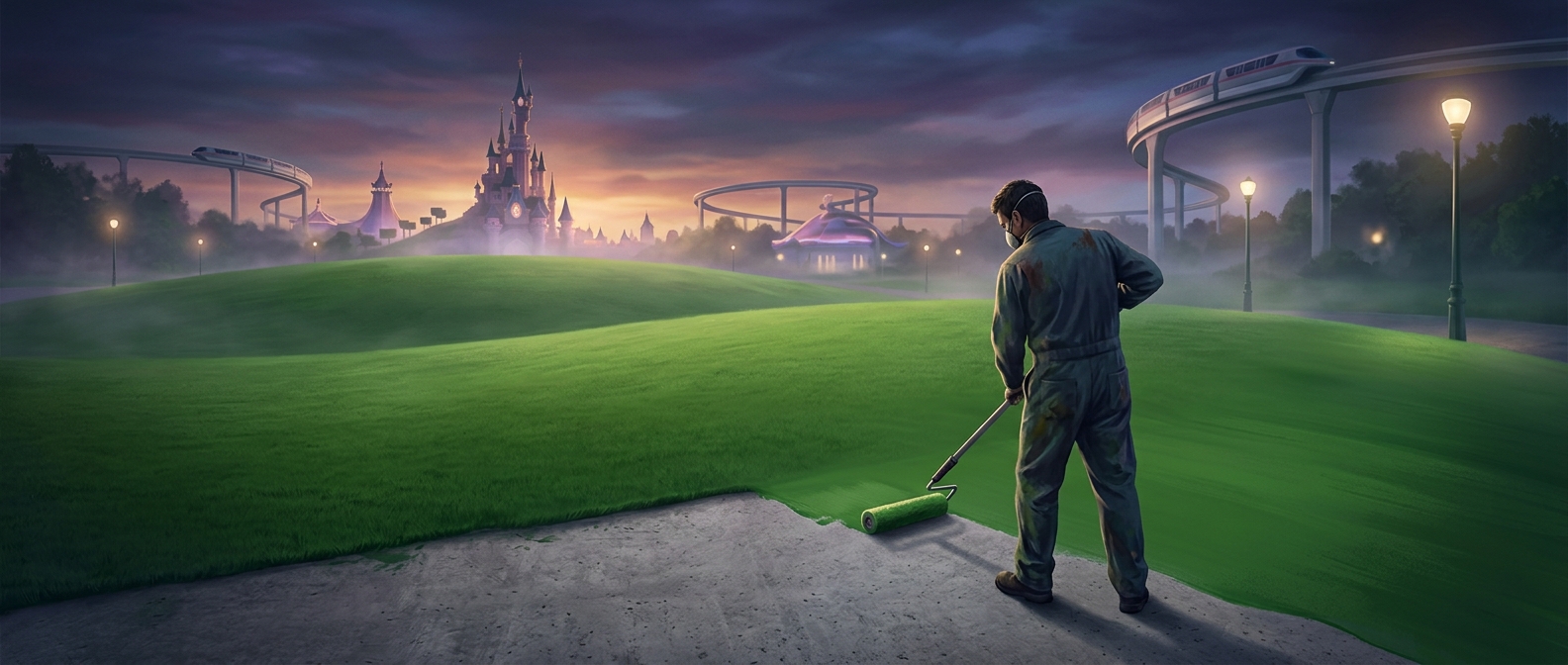
Some parks use textured concrete painted green in these high-wear spots. The color preserves the visual cue of a lawn, while the surface does not depend on living blades or soil. A spongy feel can make it seem less like ordinary paving underfoot, even though it is not grass.
That distinction matters: the design is not simply about painting a walkway for decoration. It separates the appearance of a grassy setting from the upkeep of a living lawn. The park can keep a green visual break in a crowded area without asking turf to withstand constant use.
The tradeoff is that the surface still needs care of its own, and it cannot provide the same living greenery as real grass. But where repeated traffic would quickly turn a lawn into worn ground, a painted, textured surface can keep the scene looking intentional—and keep the route usable.