A grooming rule built into the show
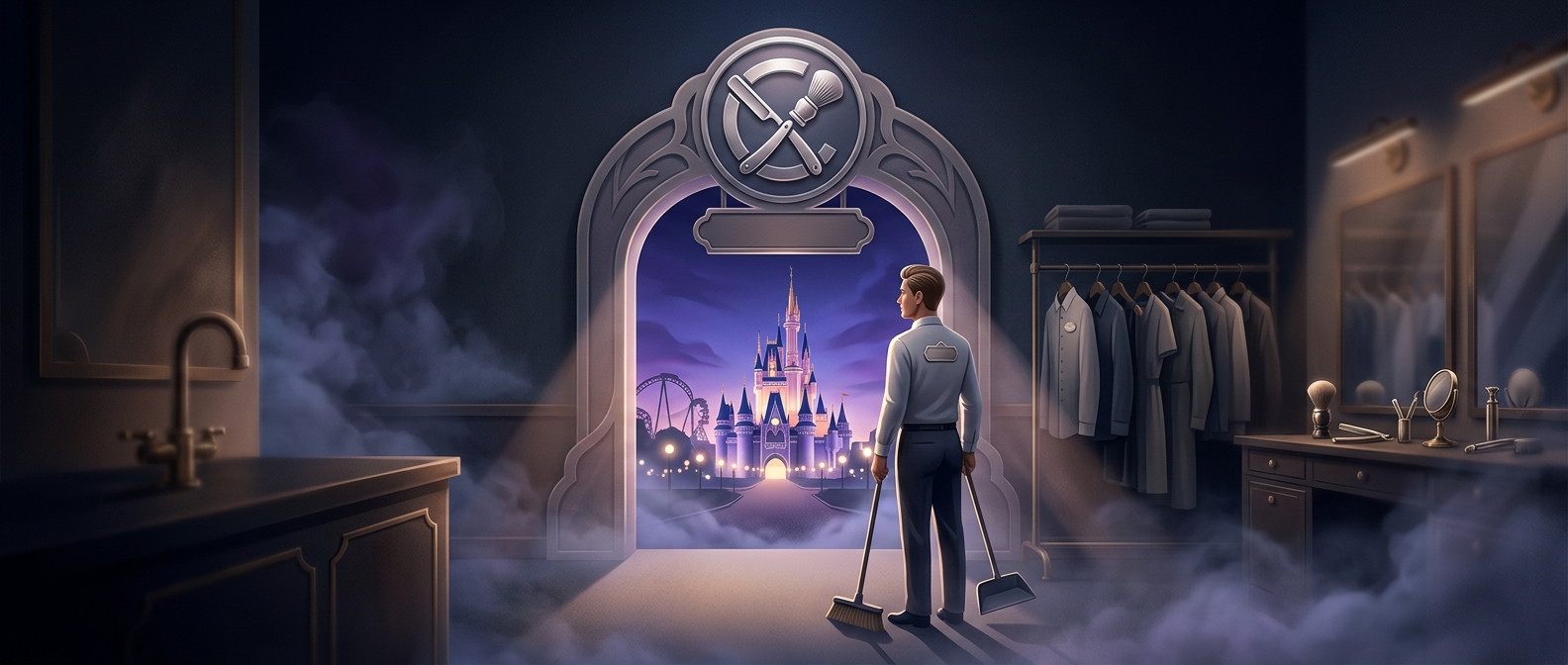
At a Disney theme park, an employee in public is not merely doing a job in front of guests. The employee is also part of the scene. A maintenance worker, cashier, or ride operator can appear in a guest’s view alongside carefully designed costumes and settings, so the company treated personal appearance as one more element of the park’s presentation.
That logic helped make grooming standards unusually strict. For decades, male employees were expected to be clean-shaven, with facial hair barred under the company’s rules. The policy was not just about neatness: it made workers’ appearances more consistent and gave managers a clear standard to enforce across a large workforce.
The difference between a person and a character
Disney’s approach reflects a broader tension in themed entertainment: employees are real people, but guests encounter them inside an environment designed to feel coherent. A visible worker can either blend into that environment or draw attention away from it. Uniforms, grooming, and other appearance rules all help control that boundary.
The restriction also created an obvious irony. Walt Disney’s own mustache became one of his most recognizable features, yet the company he founded imposed a clean-shaven standard on male employees for years. His public image and the park’s workforce rules served different purposes: one made a founder instantly identifiable; the other aimed to make thousands of employees fit a shared presentation. In a place built to manage what guests see, even facial hair became part of the set.