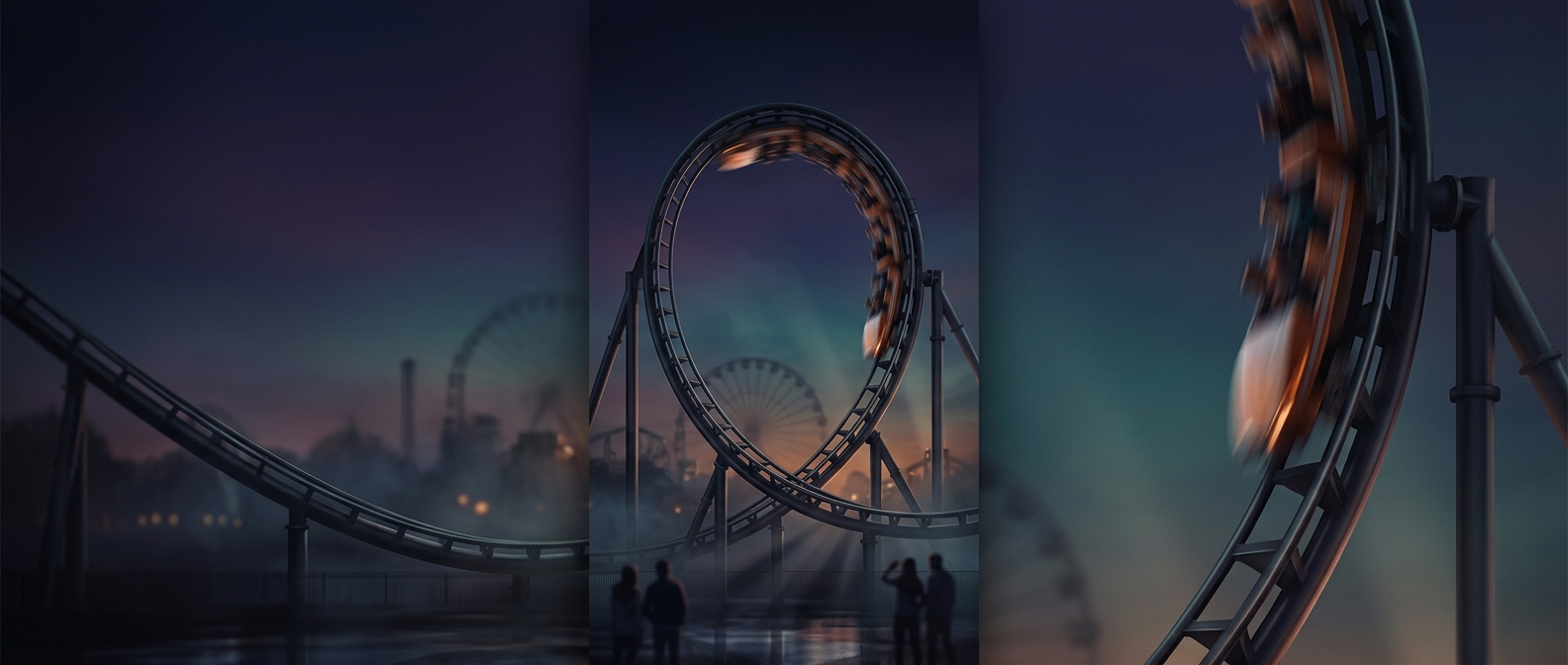
How a coaster car stays captured on the track
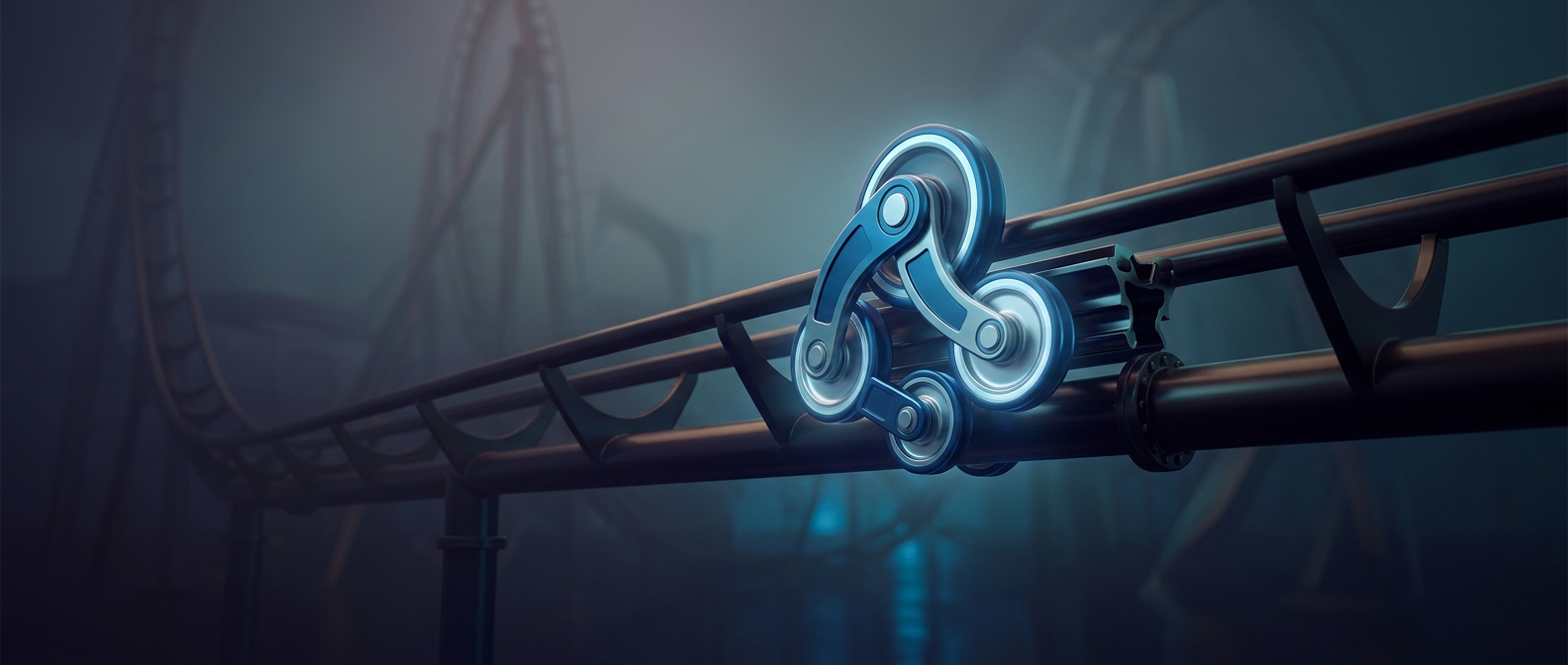
A roller-coaster train does not simply sit on top of a rail. Its wheel assemblies wrap around the track, giving the car contact points on top, underneath, and along the sides. That arrangement lets the train follow the rail when gravity pulls it in an unexpected direction—and keeps it aligned when a turn pushes it sideways.
Each wheel set answers a different force
On a level stretch, the main running wheels carry the car and its passengers. But as the train crests a hill or enters an inversion, its motion can press it away from the top of the rail. The wheels underneath the track—called up-stop wheels—then take the load and prevent the car from lifting off.
Turns create a different problem. The train’s momentum tends to carry it outward, pushing it toward the side of the track. Side wheels resist that motion and guide the car through the curve. Without them, the train could scrape or shift laterally even if it remained on the rail.
Why the three-way arrangement matters
The wheel sets are not all working equally hard at every moment. Their contact and loading change as the track changes direction and the train moves through hills, banks, and loops. Together, they make the track a guide the car is held around, rather than a surface the car merely rides on.
That is what allows a coaster to travel through an inversion: the train can be upside down while its wheels remain securely engaged with the track.