Why a pie to the face worked on screen
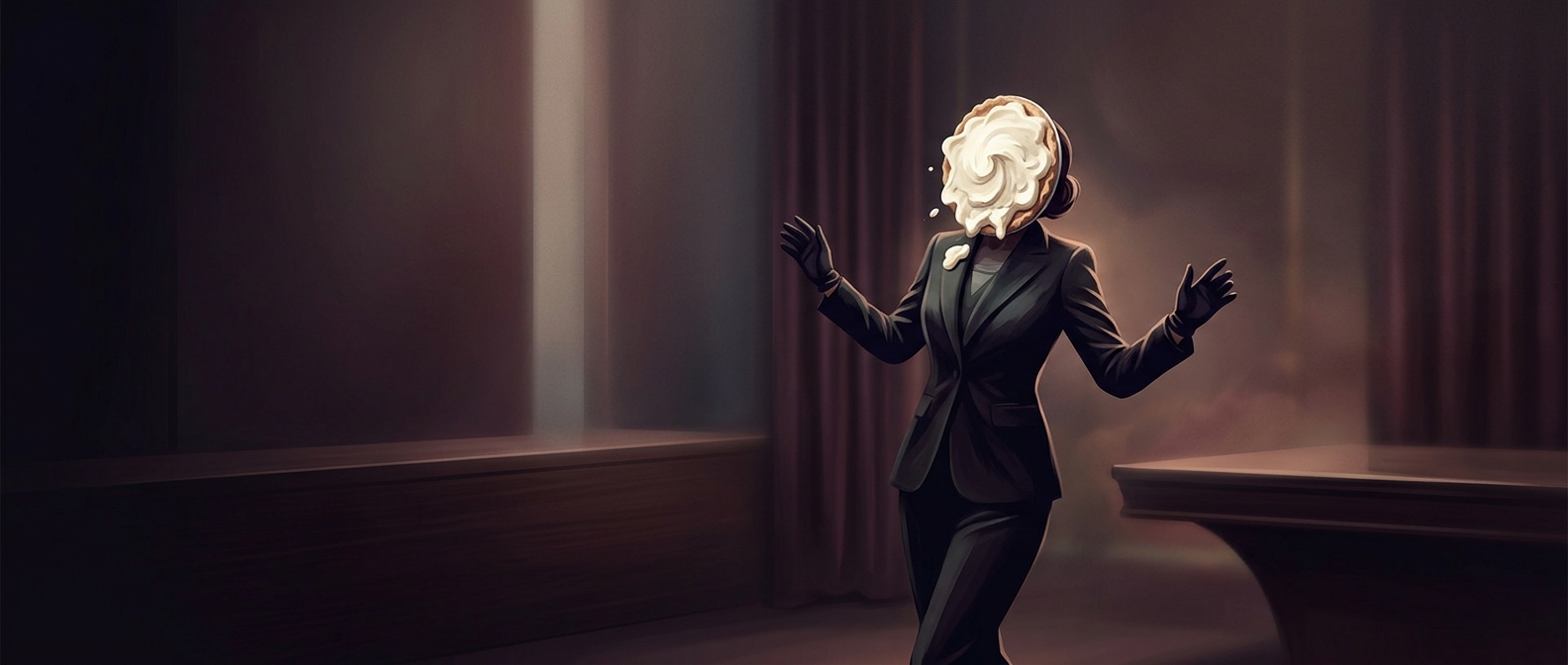
A cream pie is a comedy prop with an unusually clear payoff: it travels, hits, and leaves visible evidence. In silent films, that made the joke easy to understand without dialogue. The audience could follow the windup, anticipate the impact, then read the victim’s expression and the mess as one complete comic beat.
Ben Turpin helped establish the gag in early screen comedy, when performers had to make physical business legible to a camera. His exaggerated facial expressions made the aftermath part of the joke, not just the collision. The camera could hold on the ruined face long enough for viewers to take in the contrast between a dignified person and an absurdly undignified mess.
A gag built around timing
The pie itself was only one part of the trick. A successful scene needed a clear setup, a sudden hit, and a pause for the reaction. If the throw was hard to see or the victim recovered too quickly, the joke lost its shape. A soft, messy prop also gave filmmakers a safer way to create a dramatic-looking impact than a rigid object would.
That simple sequence proved easy to adapt: change who throws, who gets hit, or what social situation is being punctured. The pastry was expendable; the comic structure was reusable. That is why an early film gag could outlast the particular performer and become a shorthand for slapstick itself.