A snack turns waiting into character
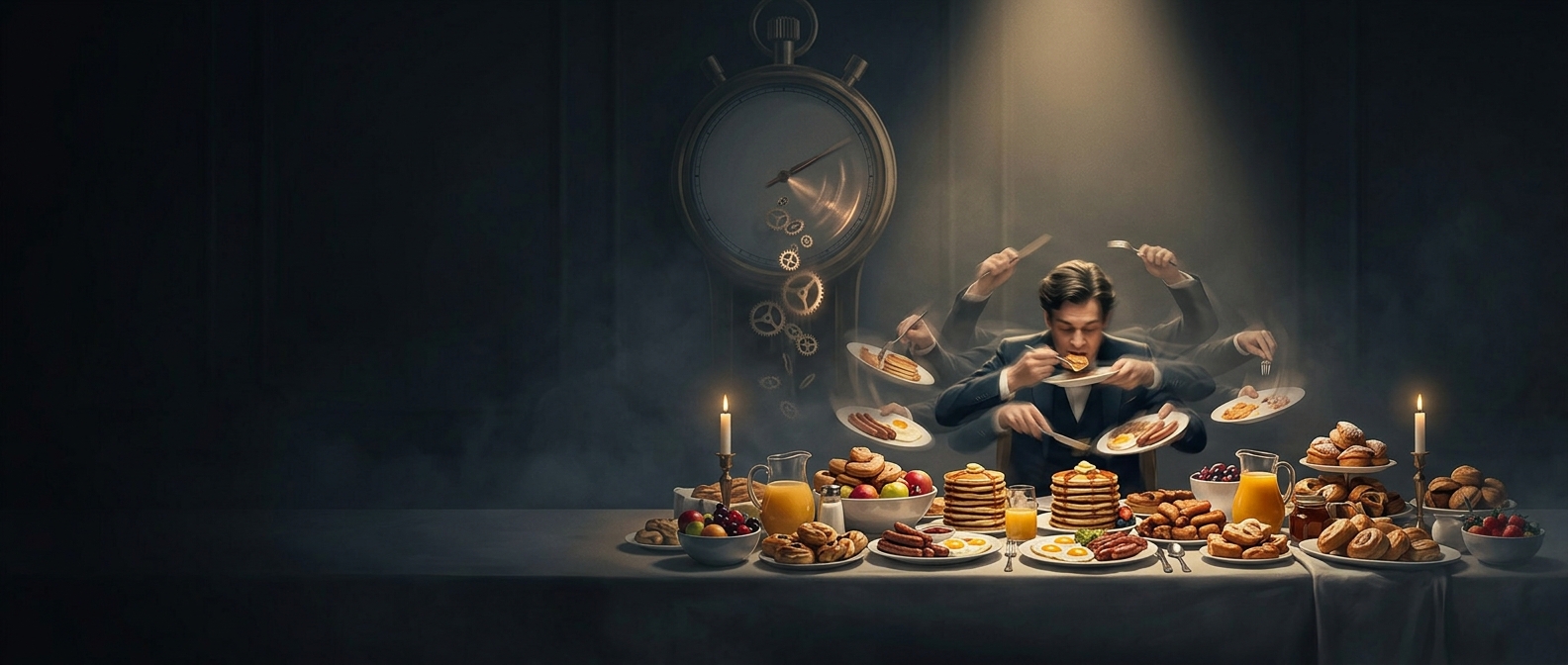
Rusty is often doing something with food while the heist takes shape. That small action gives Brad Pitt’s character a physical rhythm: even when he is listening, planning, or explaining, he seems to be fitting one more task into his day. Instead of pausing for a formal meal, he eats in the gaps.
That makes the habit more than a running visual joke. A planner in a complicated robbery has to keep track of people, timing, and contingencies. Rusty’s casual snacking suggests a man who is always occupied, yet comfortable enough to make the work look routine. The food also gives Pitt something natural to do in scenes built largely around conversation.
A useful contrast in a polished heist
The film’s crew is defined by coordination and control: every person has a role, and each step depends on the others. Rusty’s unceremonious eating adds an everyday detail to that carefully arranged world. He can discuss a high-stakes plan without behaving as though he has stopped living his ordinary life.
Food also helps make his presence legible without another line of dialogue. A bite, a chew, or a casual pause can convey ease and busyness at once. Because the behavior recurs, viewers begin to read it as part of Rusty rather than as incidental business for the actor.
The choice has a practical side
Repeated eating on camera takes coordination: a scene may need several takes, and the food has to remain consistent enough that cuts do not call attention to themselves. But the recurring detail earns that effort by doing character work in the background. Rusty’s snack is a small prop with a large job: it makes a professional schemer seem perpetually in motion, even when he is simply sitting across a table.