Breakfast is a stage, not just a meal
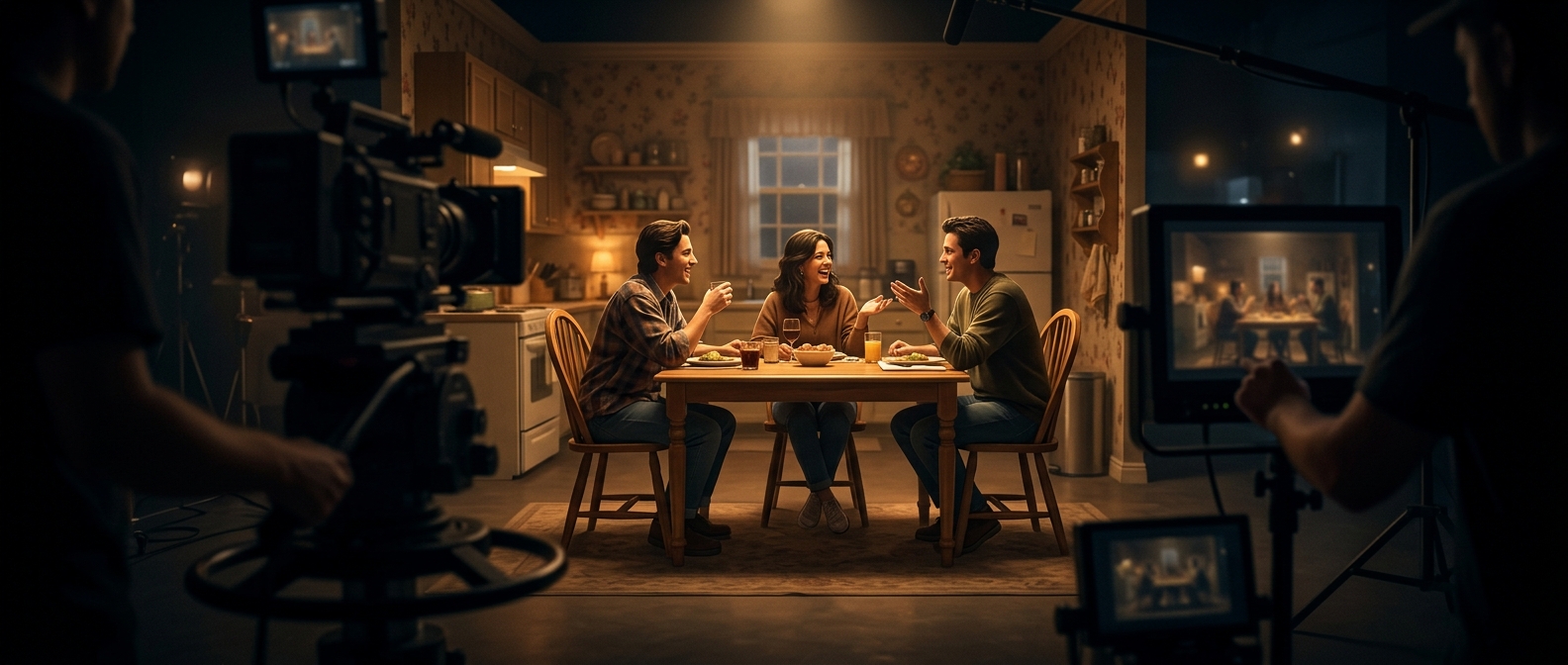
A crowded breakfast table quickly tells viewers what kind of household they’ve entered. Different plates, cereal boxes, and half-poured drinks make the kitchen feel lived in, while gathering everyone in one place gives the scene a natural reason for family members to talk, argue, or deliver urgent news. The food helps establish the setting; the conversation is usually the real event.
That setup also gives a scene useful movement. One character can stand to leave, another can linger, and someone else can cross the kitchen while the dialogue continues. A carefully arranged table makes that activity readable on camera, even if the actors never finish breakfast.
Why the food stays untouched
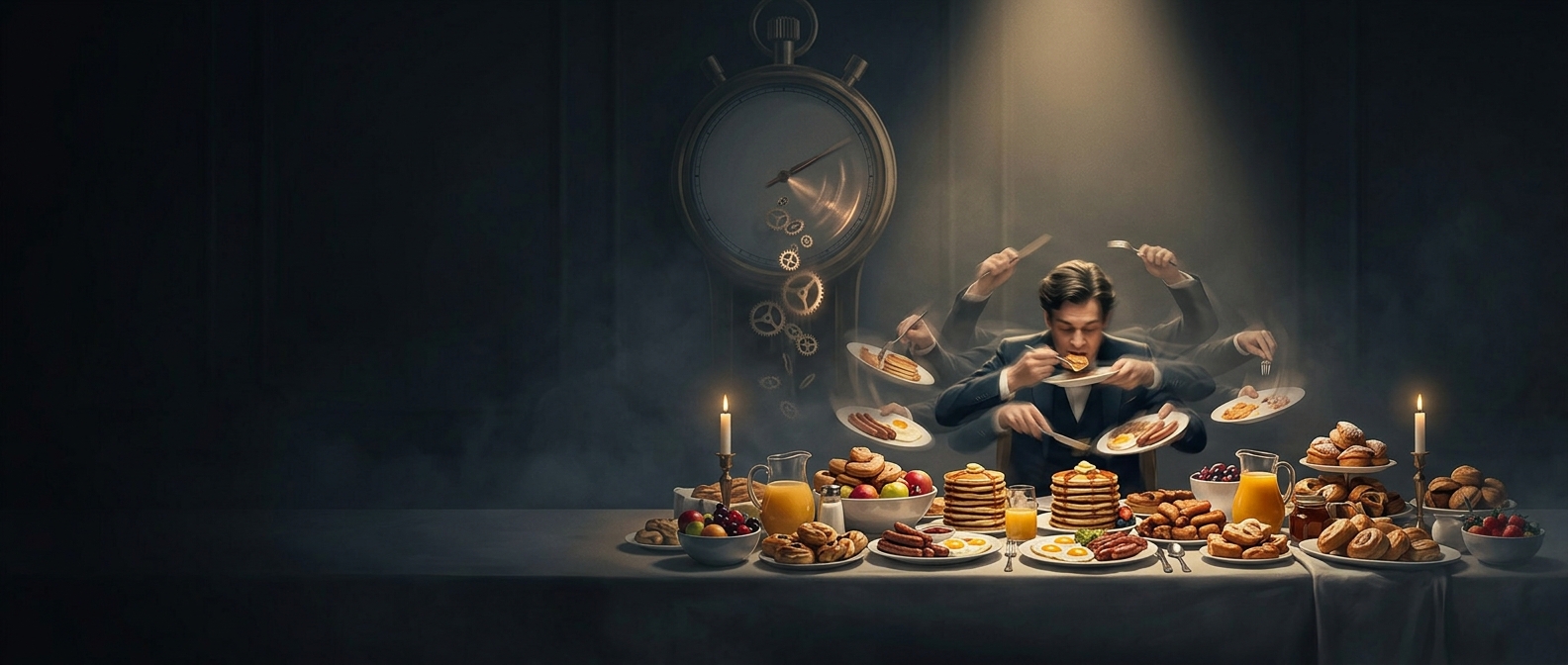
Eating is harder to film than it looks. A scene may be recorded several times, with camera angles and lines repeated. If an actor takes a bite in one take, the next take has to match: the same food must be on the plate, the same amount must be gone, and the actor must be able to speak clearly. Chewing can also obscure dialogue or slow down a fast exchange.
So performers may take small, controlled bites—or leave the food alone—while the table remains fully dressed. When a character abruptly abandons breakfast, that choice can serve the story: it signals that the day’s demands have already taken over. The untouched plate is a practical filming detail that can also make the rush feel visible.