Why Hydrofluoric Acid Attacks Glass
Ordinary acids often damage materials by supplying hydrogen ions, but glass is unusually resistant to that kind of attack. Its rigid structure is built mainly from silicon and oxygen atoms linked into a network. Hydrofluoric acid can break that network because it contains fluorine, which readily bonds with silicon. As the reaction proceeds, silicon-containing products separate from the surface, leaving the glass etched or gradually dissolved.
The Container Becomes Part of the Reaction
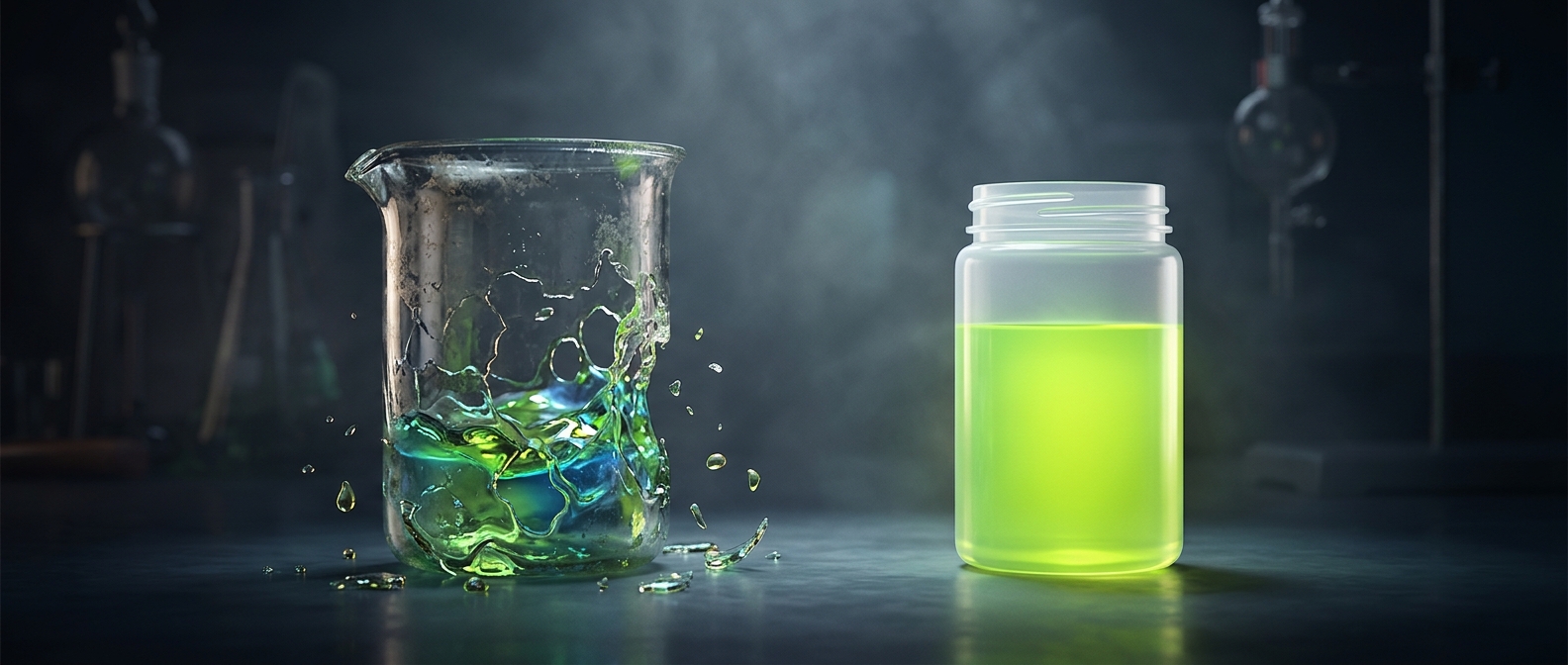
That chemistry changes a basic piece of lab practice: hydrofluoric acid is stored in compatible plastic, not glass. In a glass bottle, the acid would consume material from the container itself. The bottle could become cloudy or weakened, and its contents could be contaminated by products of the reaction.
“Plastic” is not a blanket guarantee of safety; the container material must be suitable for the acid and its conditions. The important distinction is that glass is not an inert backdrop here. Its silica is a reactant, so choosing the vessel is part of controlling the chemistry—not just a matter of preventing a leak.