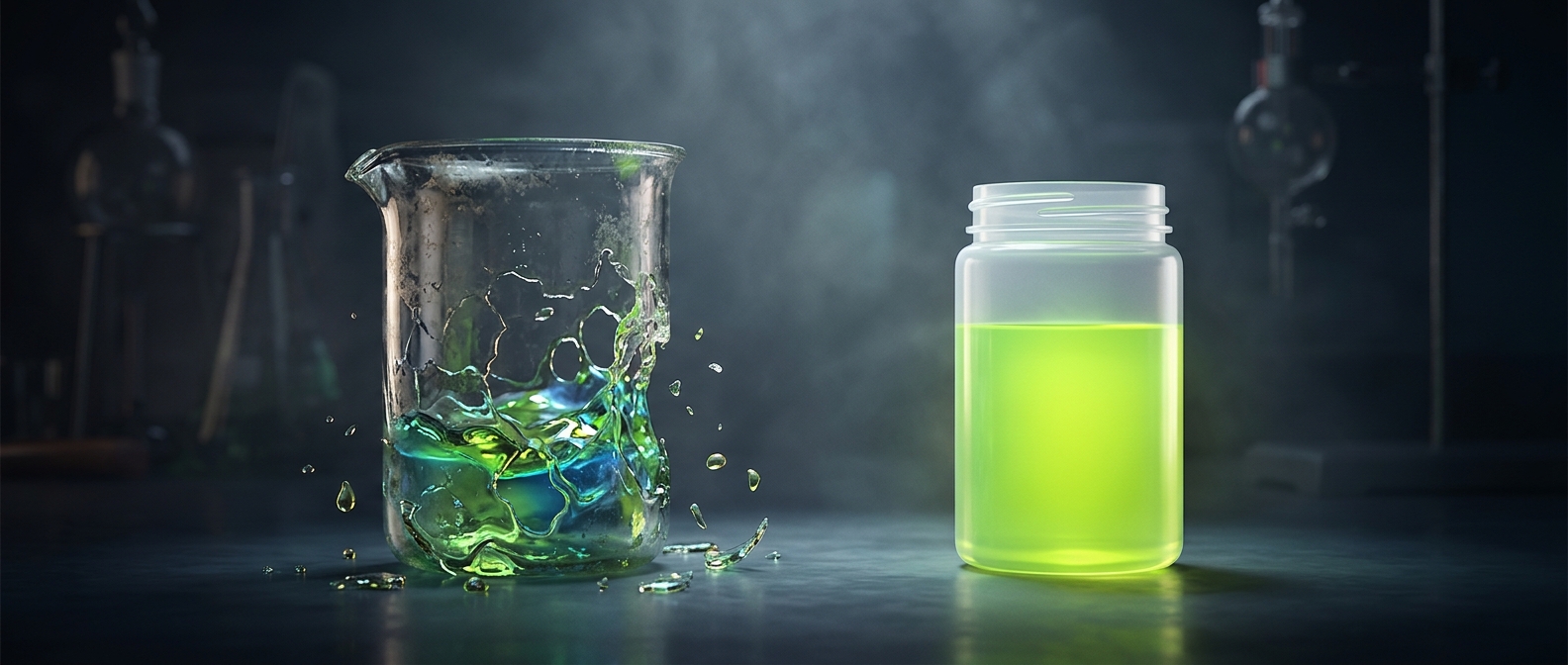
Why glass gives way to hydrofluoric acid
Ordinary glass is largely made from silica, a network of silicon and oxygen atoms. Hydrofluoric acid supplies fluoride, which reacts with silicon in that network. The reaction breaks up the glass surface and forms fluoride-containing silicon compounds, so the container can become etched and, with enough exposure, damaged through.
This is not simply a matter of acid strength. Hydrofluoric acid is not among the strongest acids when judged by how completely it separates into ions in water, but fluoride’s particular chemistry makes it highly reactive with silica.
Why polyethylene can hold it
Polyethylene, a common bottle plastic, has a very different structure: long chains made mostly of carbon and hydrogen. It has no silica network for fluoride to attack, and its chemical bonds do not provide the same reactive target. Under suitable storage conditions, that makes polyethylene a compatible container for hydrofluoric acid where glass would not be.
The distinction is about materials, not a guarantee that every plastic container is safe. Resistance depends on the plastic and the conditions of use; the bottle must be chosen specifically for the chemical.
An intact bottle does not mean a harmless acid
Hydrofluoric acid can penetrate tissue and interfere with the body’s calcium and magnesium balance. Its danger is therefore not measured by whether it visibly eats through its container—or even by the immediate pain of a spill. A plastic bottle can remain intact while holding a substance capable of causing severe injury.