How nitric acid carries copper into solution
Copper does not dissolve in concentrated nitric acid simply because the liquid is acidic. Nitric acid is also an oxidizing agent: it can take electrons from other substances. In this reaction, copper atoms lose electrons and become copper ions, which can remain dissolved in the liquid. Nitrate ions from the acid accept those electrons and are converted into nitrogen dioxide, a gas.
A simplified equation is:
Cu + 4HNO₃ → Cu(NO₃)₂ + 2NO₂ + 2H₂O
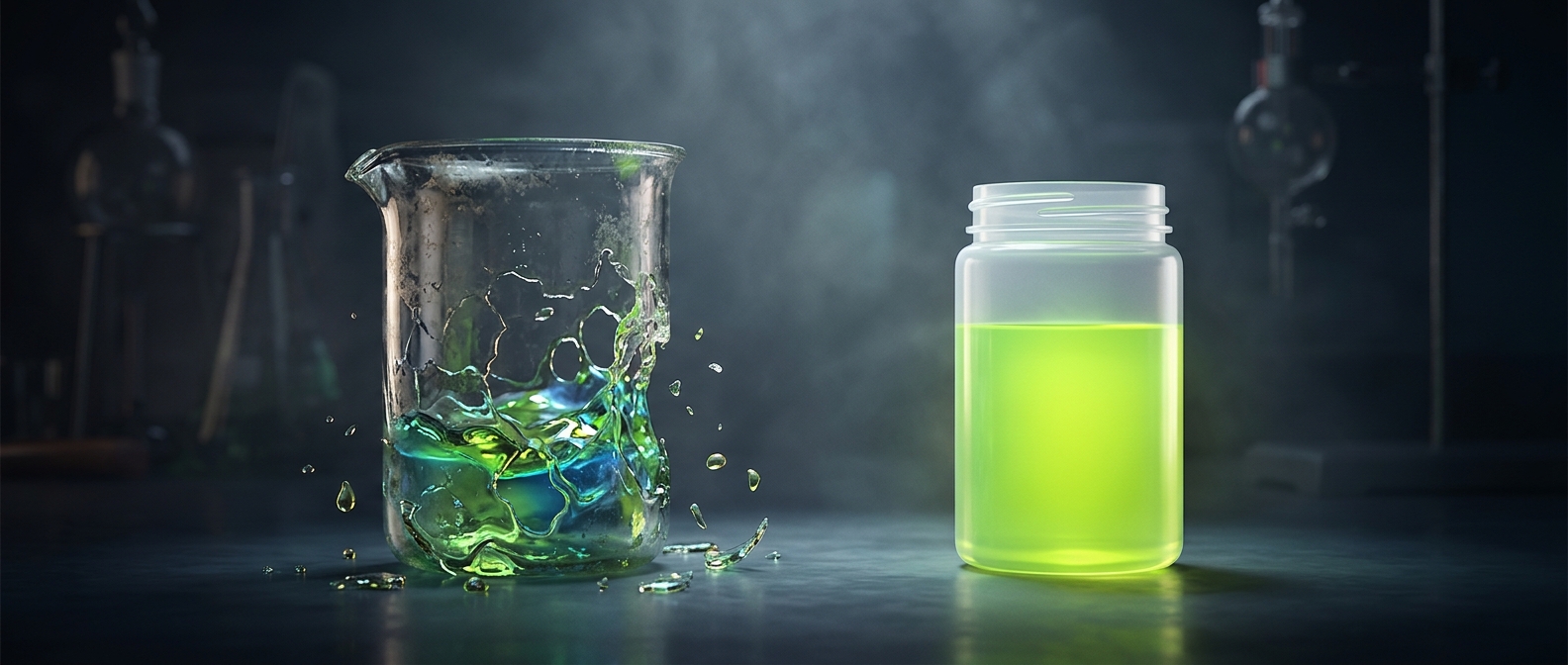
The dissolved copper ions are surrounded by water molecules. That arrangement absorbs and reflects light differently from the original metal, giving the solution its characteristic blue color; the shade can look greener depending on the solution’s composition.
Why the color change comes with a hazard
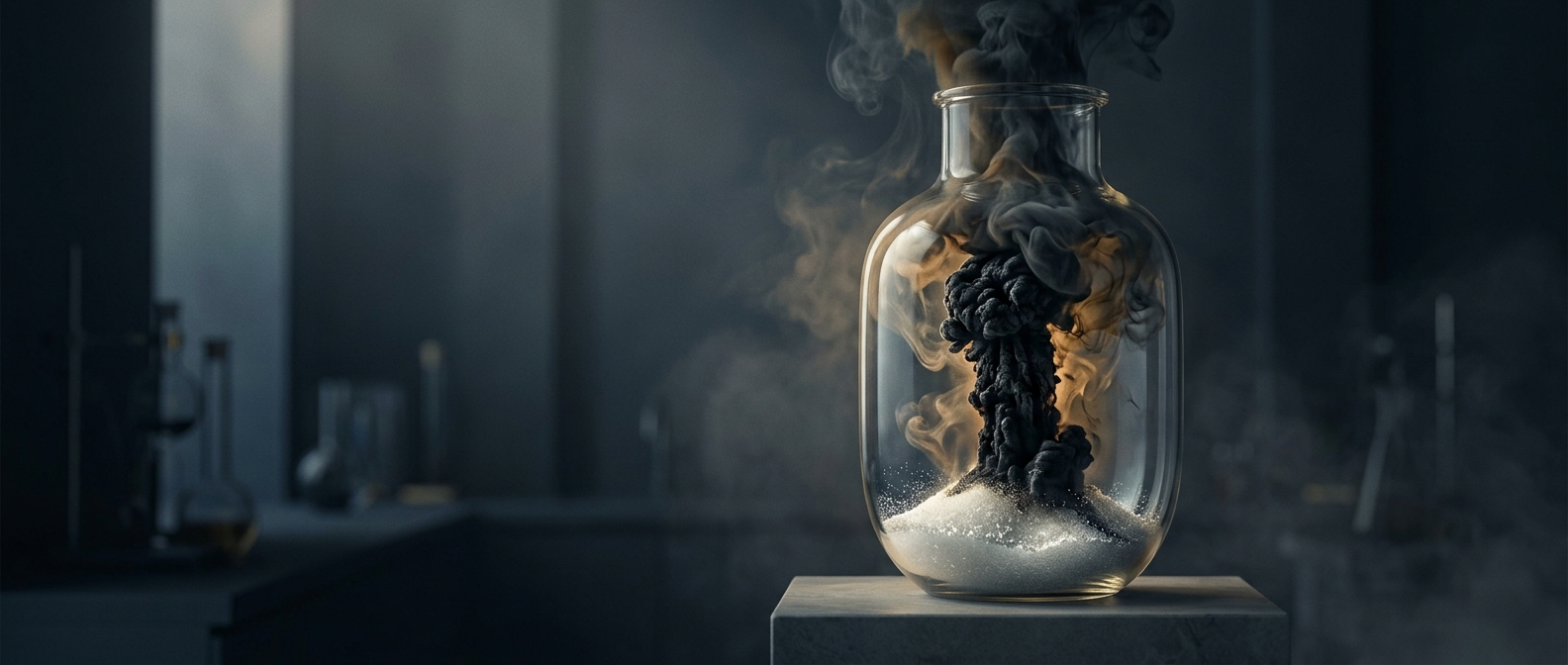
The brown gas is nitrogen dioxide, not harmless vapor. It is toxic to breathe and can injure the respiratory system; exposure is especially dangerous because serious effects may not be obvious immediately. The reaction therefore changes more than the appearance of the copper: it transfers copper into a liquid while producing a hazardous gas.
That is the key chemical tradeoff behind the vivid display. The metal’s visible surface disappears because its atoms have been transformed into dissolved ions, while the acid’s nitrogen-containing component leaves partly as a poisonous gas.