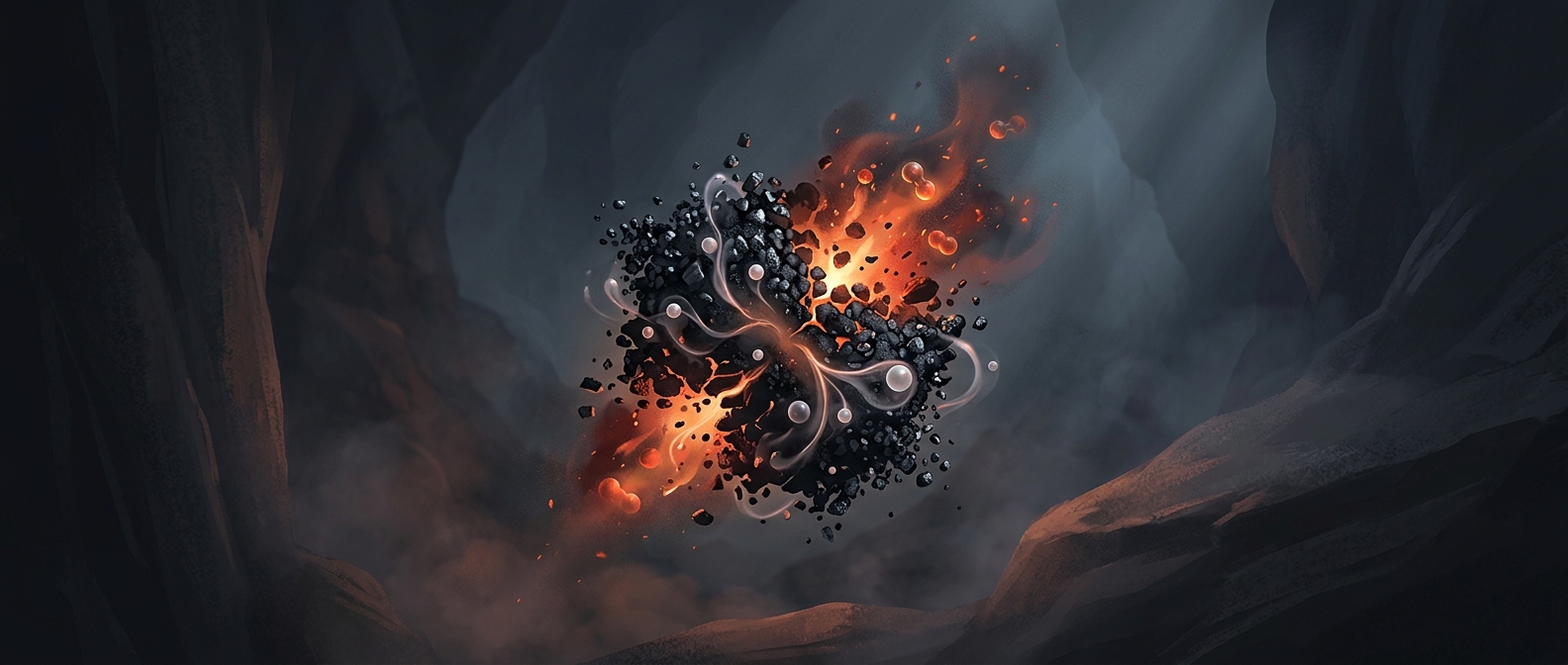
How Gunpowder Keeps a Reaction Going
A flame normally depends on oxygen from the surrounding air. Gunpowder is different: potassium nitrate, one of its ingredients, acts as an oxidizer—a substance that supplies oxygen during a chemical reaction. When heated, it helps the fuel ingredients react rapidly without waiting for fresh air to flow in.
A Reaction That Builds Its Own Pressure
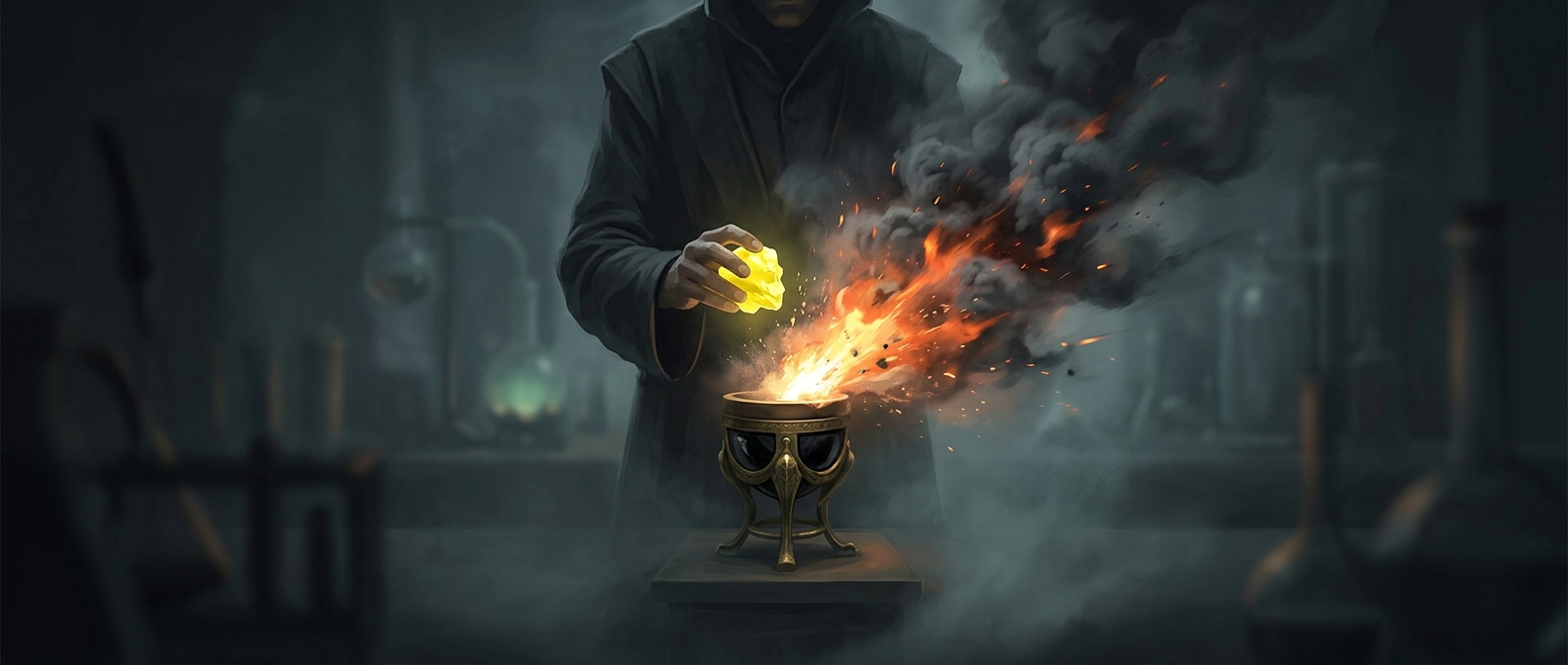
Traditional black powder combines potassium nitrate with charcoal and sulfur. The charcoal and sulfur provide fuel; the nitrate helps that fuel burn. Heat starts the reaction, which produces hot gases and solid reaction products. Because the gases form quickly in a confined space, pressure rises sharply.
That pressure is why gunpowder can propel a projectile or drive a burst of expanding gas. It is not simply a fire that happens to burn intensely: the speed of gas production, and whether the gases have room to escape, shape the result.
Why the Oxygen Source Matters
Air can reach only the exposed surfaces of a burning material. In a tightly packed mixture or enclosed space, that supply may be limited. With an oxidizer mixed throughout the fuel, the reaction can continue across the mixture rather than relying on oxygen to travel in from outside.
The practical consequence is that gunpowder can burn rapidly in places where ordinary flames would struggle to get enough air. The oxygen is not stored as a separate pocket of breathable gas; it is chemically bound in the nitrate and becomes available as the ingredients react.